Entry of the Crusaders in Constantinople
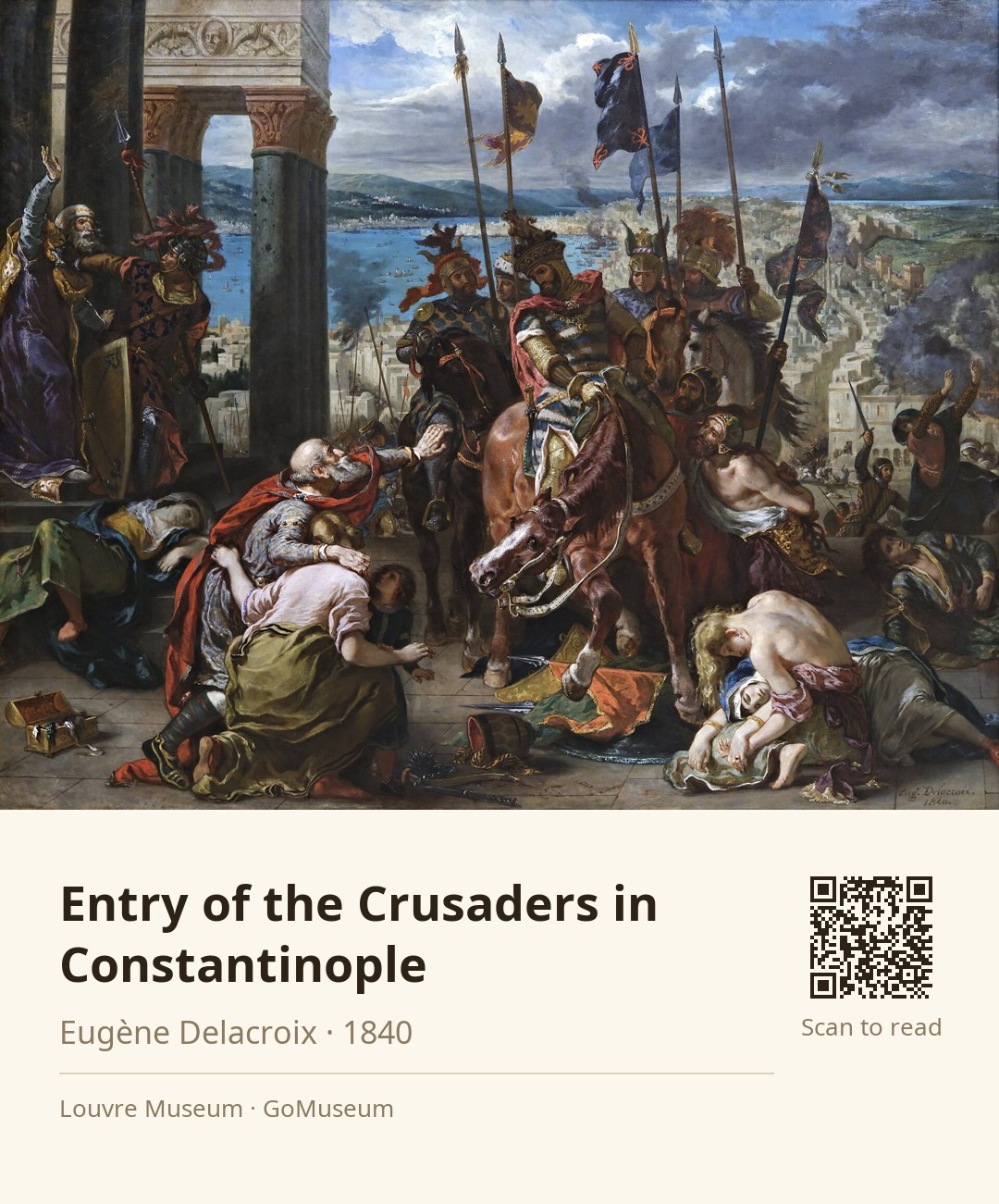
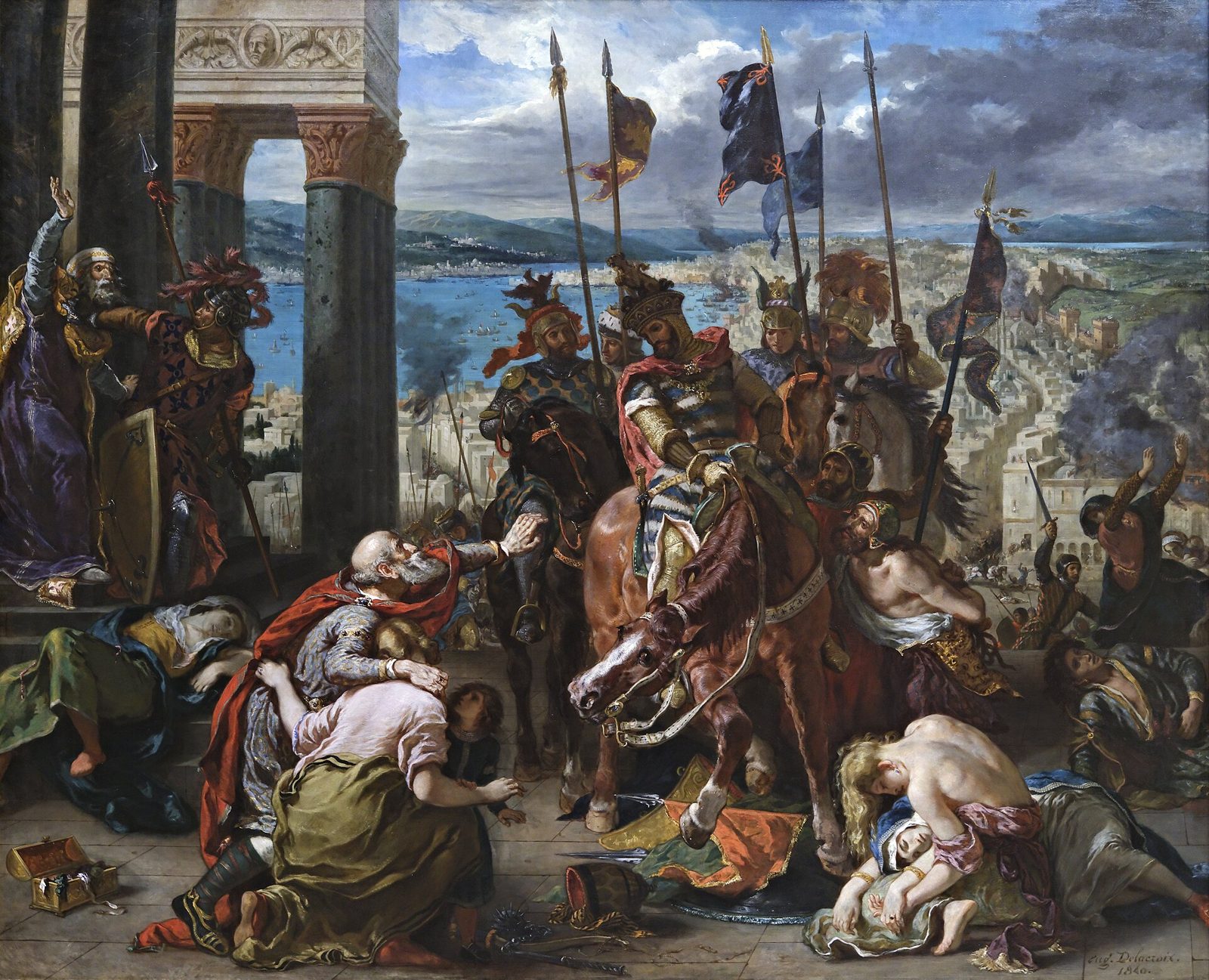
🎧 This work has audio narration — listen in the appAs you stand before Eugène Delacroix's "Entry of the Crusaders in Constantinople," take a moment to let the chaos of the scene wash over you. Notice how the figures seem to tumble into the frame, their expressions a mix of triumph and despair. Look closely at Baldwin I, the central figure on horseback, his lion-emblazoned helmet glinting in the light, while the desperate citizens of Constantinople kneel before him, pleading for mercy.
These details matter because they capture a pivotal moment in history—the Fourth Crusade’s brutal sacking of a city that was once a beacon of civilization. Delacroix’s choice to depict this moment isn’t just about the violence; it’s a commentary on the complexities of power and humanity. The vibrant colors and dynamic brushstrokes evoke the emotional turmoil of the scene, drawing you into the heart of the conflict.
Painted in 1840, this work reflects Delacroix's fascination with dramatic narratives and the human condition, influenced by the tumultuous events of his own time. It was commissioned by Louis-Philippe, a nod to the romantic nationalism that was sweeping through France.
As you take in this powerful tableau, consider: what emotions does this scene stir in you? How does it reshape your understanding of history and the stories we choose to tell?
Eugène Delacroix, born on April 26, 1798, in Charenton-Saint-Maurice, emerged as a pivotal figure in the French Romantic movement. He diverged from the Neoclassical ideals of his contemporaries, such as Ingres, drawing inspiration from the vibrant colors and dynamic forms of Rubens and the Venetian Renaissance. His works, characterized by dramatic themes and a passion for the exotic, often reflected his travels in North Africa and his fascination with the sublime forces of nature, influenced by literary figures like Lord Byron.
Delacroix's career was marked by both acclaim and controversy; his early painting, "The Barque of Dante," stirred public debate but was ultimately recognized by the state. His later masterpieces, including "Liberty Leading the People," showcased his ability to blend historical and contemporary narratives, solidifying his status as a master of expressive brushwork and color theory. His innovative techniques laid the groundwork for Impressionism and inspired the Symbolist movement.
Despite personal struggles, including early orphanhood and financial hardships, Delacroix's legacy endures. He is celebrated not only for his paintings but also for his lithographs and writings, which reveal his artistic philosophy. As one of the last old masters, his influence resonates through art history, marking him as a cornerstone of Romanticism and a precursor to modern artistic movements. Delacroix passed away on August 13, 1863, leaving a profound impact on the art world.
Eugène Delacroix's 'Entry of the Crusaders in Constantinople' was commissioned by Louis-Philippe in 1838, a time when France was deeply engaged in romantic nationalism. The painting was completed in 1840 and first exhibited at the Salon of 1841, where it stirred quite a bit of controversy. Critics were divided; while some, like Baudelaire, praised its emotional depth, others lamented its chaotic composition and muddy colors. This large-scale work, measuring nearly 4 by 5 meters, captures a pivotal moment from the Fourth Crusade in 1204, when the Crusaders turned their swords against fellow Christians in Constantinople. The painting eventually found its home in the Louvre, where it has remained a significant piece of Delacroix's oeuvre, reflecting the tumultuous historical narrative it portrays.
As you gaze at this monumental painting, notice how Delacroix's brushwork creates a sense of movement and urgency. The figures seem to leap into action, their expressions a whirlwind of emotions—fear, desperation, and triumph. The vibrant colors, particularly the deep reds and golds, draw your eye and heighten the drama of the scene. Delacroix's technique of layering paint gives the work a rich texture, while his use of light and shadow adds depth, making the chaos feel almost palpable. The composition is dynamic, with the central figure of Baldwin I commanding attention, surrounded by a tumult of desperate citizens. This arrangement not only captures the chaos of the moment but also emphasizes the stark contrast between the conquerors and the conquered, inviting you to reflect on the complexities of power and humanity.
Completed in 1840, this work broke away from the rigid Neoclassical style that dominated the era, embracing a more expressive and emotional approach. Delacroix's dramatic use of color and movement inspired a generation of artists, paving the way for the Impressionists and even the Symbolists. His ability to convey intense emotion and tumultuous scenes resonated deeply, influencing artists to explore the human experience more passionately. Remember, this painting isn't just about a historical event; it's a reflection of the tumultuous spirit of its time, capturing the chaos and fervor of human conflict in a way that still speaks to us today.
Interestingly, this painting has transcended the art world and found its way into popular culture. It was used as the cover for the album 'The IVth Crusade' by the British death-metal band Bolt Thrower, illustrating how Delacroix's dramatic imagery continues to inspire and resonate across different mediums and audiences.
Delacroix's expressive brushwork and use of color significantly impacted the Impressionists, who admired his ability to convey emotion and movement, paving the way for their own explorations of light and color.
Louis Boulanger assisted Delacroix with the perspective and architectural details of the painting, showcasing the collaborative nature of artistic creation during that period.