 Image: Rama · Rama · Unknown (ancient phoenician)
Statue of Pharaoh Osorkon I
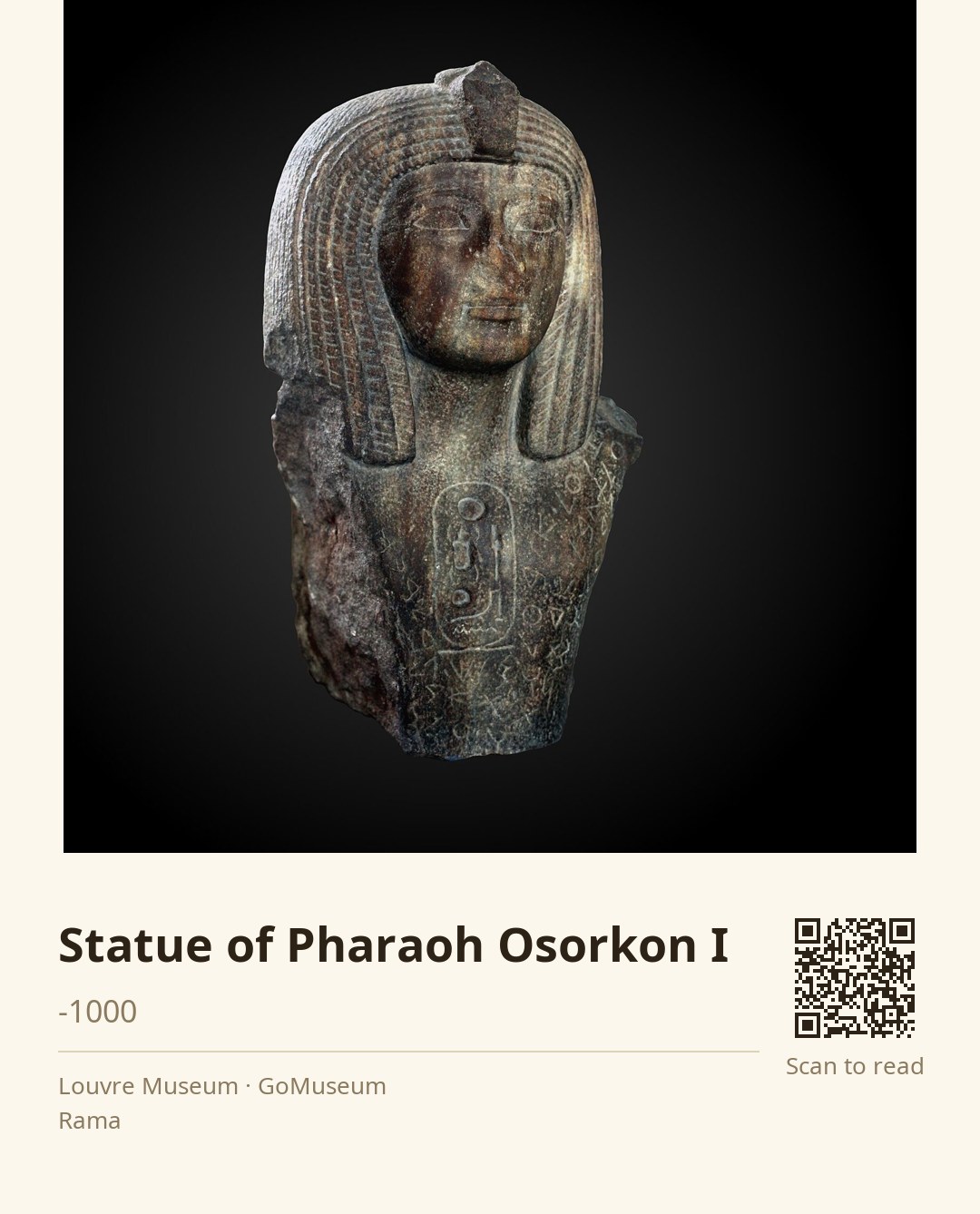
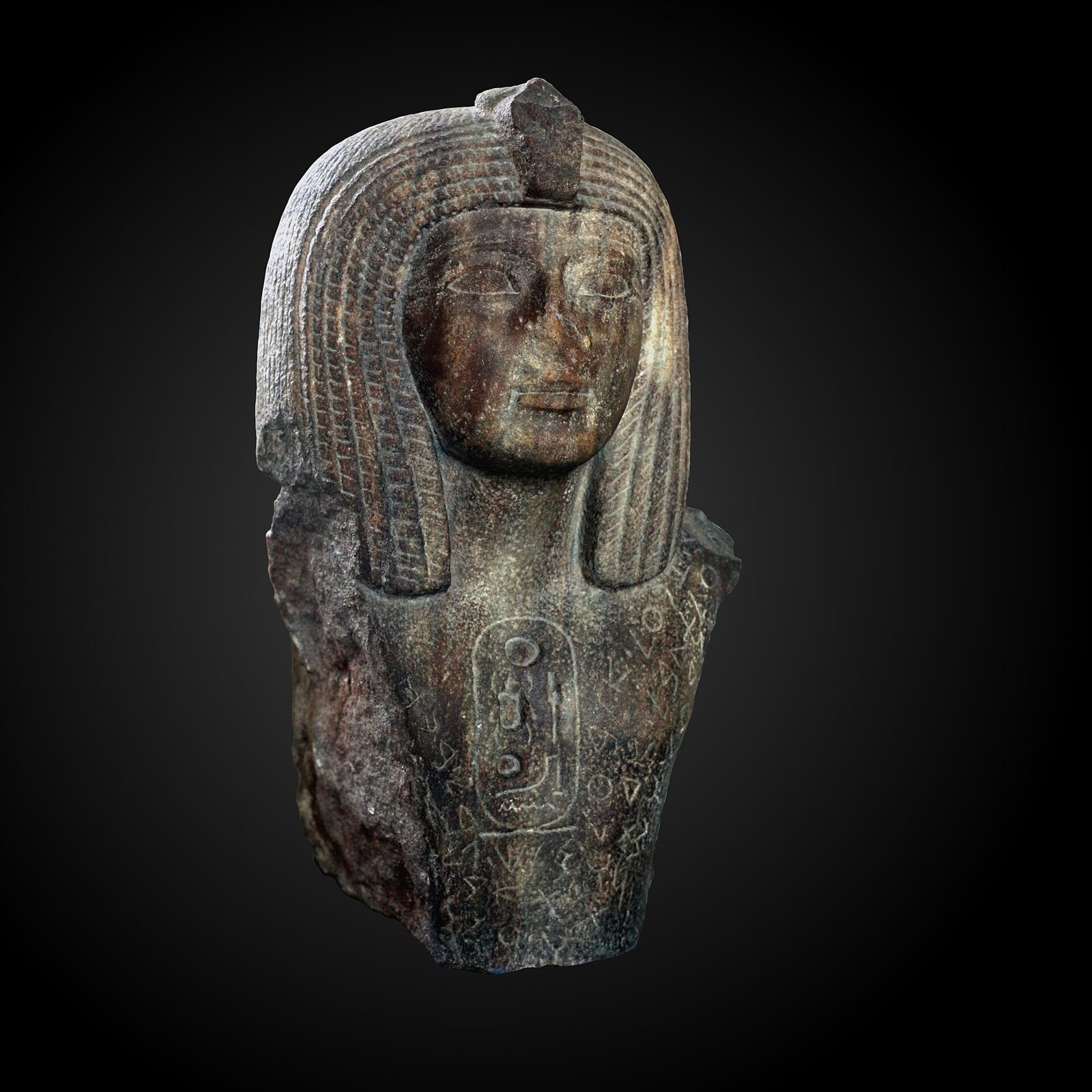
🎧 This work has audio narration — listen in the appTake a moment to really look at the Statue of Pharaoh Osorkon I. Notice how the contours of his face are both regal and serene, almost as if he’s gazing into eternity. Now, focus on the inscriptions carved into the stone—one in Egyptian hieroglyphics and the other in Phoenician script. These aren’t just decorative; they tell a story of two cultures intertwined, a testament to the connections between Egypt and Byblos over three thousand years ago.
This statue, crafted from quartzite, stands as a bridge between two worlds, each with its own language and legacy.
Discovered in the 19th century, this piece has traveled through time, from the temple of Baalat Gebal to here, where you stand today. As you take in the details, think about the conversations that might have taken place around this statue, the stories it has witnessed. What do you think Osorkon I would say if he could speak to us now?
As you stand before the Statue of Pharaoh Osorkon I, take a moment to appreciate the craftsmanship involved in its creation. This bust is sculpted from quartzite, a material known for its durability and fine grain. Notice the smooth finish that highlights the intricate details of Osorkon’s features. The artist’s skill is evident in the way the contours of his face convey both strength and serenity. Look closely at the inscriptions—each letter carved with precision, reflecting the meticulous care taken in the work. The combination of Egyptian hieroglyphics and Phoenician script not only showcases the technical prowess of the sculptor but also the cultural exchange that was happening at that time.
Discovered in the 19th century, this bust was unearthed around 1881 in Byblos, which is present-day Lebanon. It was likely found in the Temple of Baalat Gebal, a site rich in history and significance. The first mention of this statue came from German archaeologist Alfred Wiedemann in 1884, who noted fragments of a large stone statue. By 1895, he had published details about the hieroglyphs on the bust, revealing its connection to Osorkon I. The statue has since been part of significant exhibitions, including the 2026 showcase at the Institut du monde arabe, highlighting its enduring importance in the study of ancient cultures.
Its inscriptions—one in Egyptian hieroglyphics and the other in Phoenician—speak volumes about the interactions between Egypt and the Phoenician city of Byblos. This duality not only highlights the artistic prowess of the time but also marks a significant moment in the evolution of written language, influencing later scripts. The bust's discovery in the 19th century reignited interest in ancient civilizations, prompting scholars to delve deeper into the complexities of cross-cultural exchanges. Remember, this statue isn't just a relic; it's a testament to the interconnectedness of ancient peoples, shaping our understanding of history and art.
Did you know that the Statue of Pharaoh Osorkon I was discovered in Byblos, Lebanon, not Egypt? This bust, made of quartzite, has a fascinating twist: it features two inscriptions, one in Egyptian hieroglyphics and the other in Phoenician script. Imagine the conversations that must have taken place between these two cultures, thousands of years ago, as they crafted this remarkable piece together!
After being unearthed in Byblos, the statue has been part of significant exhibitions, including a planned showcase at the Institut du monde arabe in 2026, which emphasizes its ongoing relevance in the study of ancient cultures.