The Wounded Cuirassier
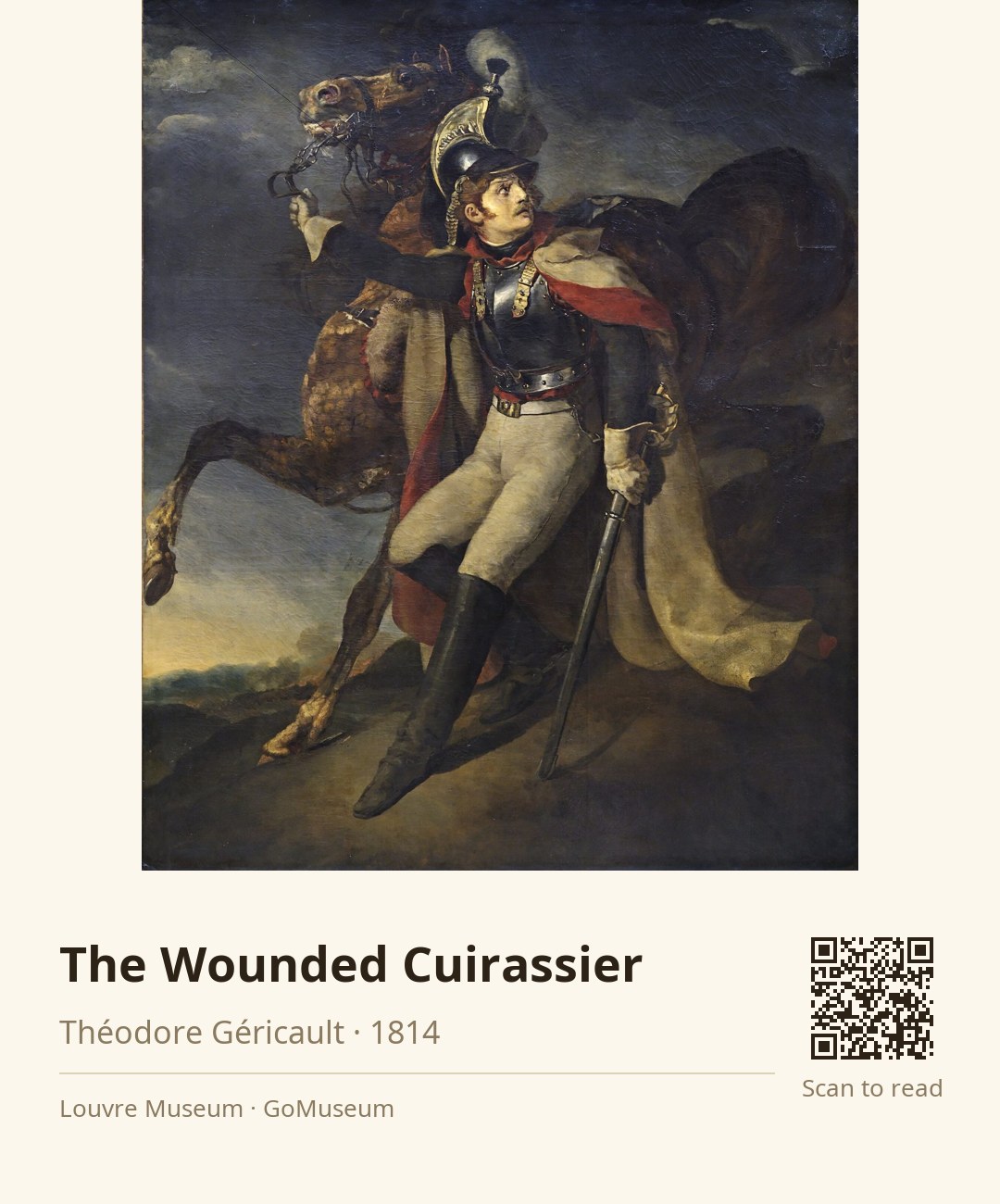
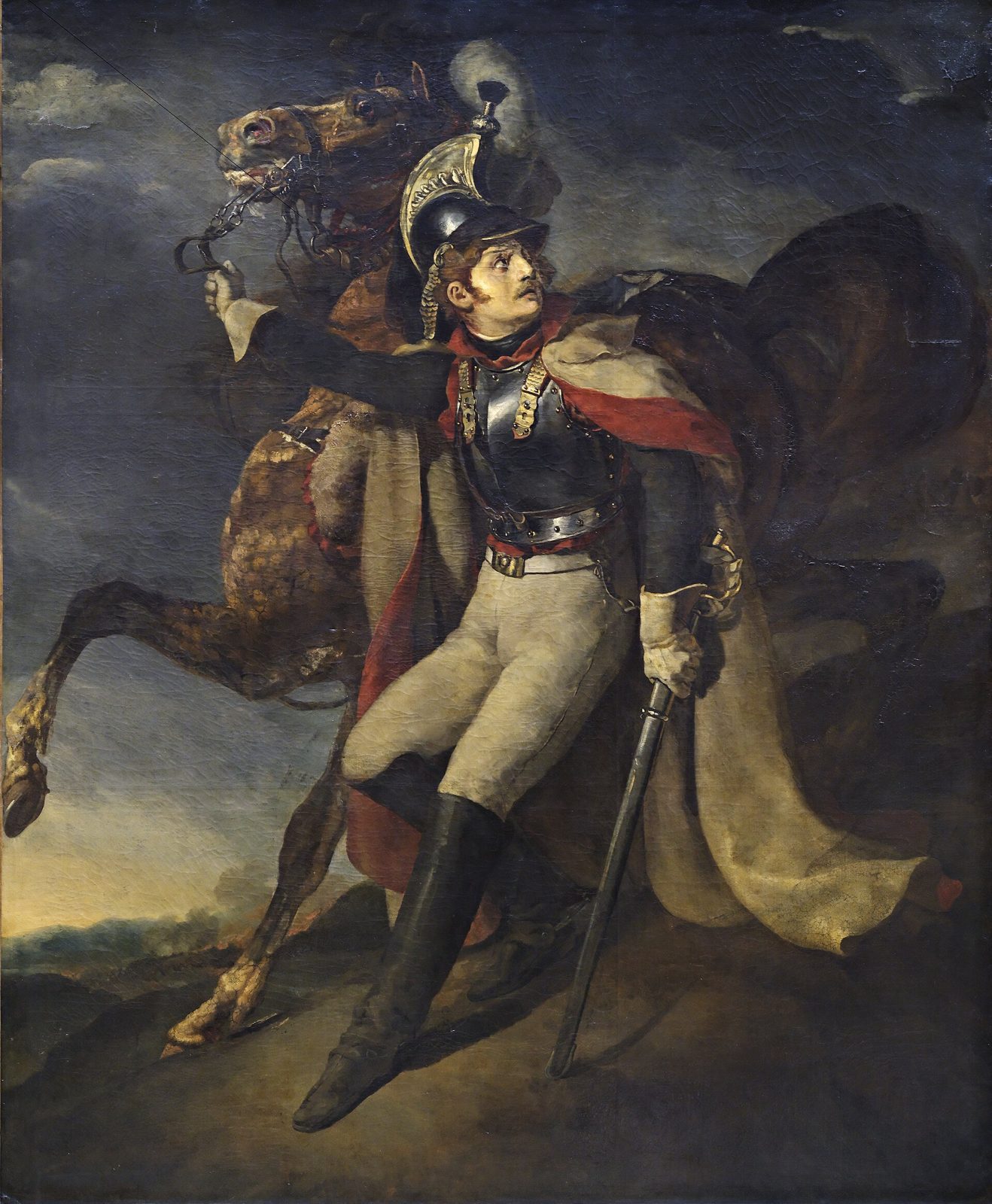
🎧 This work has audio narration — listen in the appTake a moment to really look at "The Wounded Cuirassier." Notice the soldier's tense posture as he leans on his sword, his horse's nervous stance mirroring his own unease. This isn’t just a battle scene; it’s a raw portrayal of vulnerability and defeat. Géricault deliberately chose not to show any visible wounds on the soldier, suggesting that the true injury lies deeper—perhaps in his pride or in the heart of a nation grappling with loss after the disastrous campaign in Russia.
Painted in 1814, this work emerged during a time of national despair for France, contrasting sharply with Géricault's earlier glorifications of heroism. Instead of celebrating victory, he captures a moment of retreat, a poignant reminder of the human cost of war. The painting was initially met with criticism, but it speaks volumes about the emotional landscape of its time.
As you stand here, think about the soldier’s gaze—looking back, perhaps haunted by memories of glory now lost. What do you think he sees in that moment?
Jean-Louis André Théodore Géricault was a French painter and lithographer born on September 26, 1791, in Rouen. He moved to Paris as a child, where his artistic talent was nurtured by family connections in the art world. Géricault's life was marked by a passionate pursuit of art, characterized by a fascination with the human condition and dramatic themes. His early works, influenced by the classical tradition, evolved into a distinctive style that bridged Neoclassicism and Romanticism.
Géricault's most renowned painting, The Raft of the Medusa, created between 1818 and 1819, reflects his deep engagement with contemporary issues, depicting the aftermath of a tragic shipwreck that became a national scandal. This monumental work showcased his ability to convey intense emotion and the struggle against nature, establishing him as a pioneer of the Romantic movement. Despite his brief life—he died at just 32—Géricault's innovative approach and exploration of human suffering left a lasting impact on the art world, influencing future generations of artists. His legacy endures, celebrated for its emotional depth and dramatic intensity.
The Wounded Cuirassier was painted by Théodore Géricault in 1814, a tumultuous time for France following the catastrophic military campaign in Russia. This painting was Géricault's entry for the Salon of 1814, a prestigious exhibition that showcased the best of contemporary art. However, instead of the glory of battle, Géricault chose to depict a moment of defeat, a stark departure from his earlier works like The Charging Chasseur. The painting received a mixed reception, with critics struggling to grasp its deeper message. Some saw it as a symbol of national despair, while others were puzzled by its emotional weight. After the Salon, Géricault faced disappointment and retreated into a period of intense study, eventually leaving France for Rome in 1816 to seek inspiration. The final version of this painting now resides at the Musée du Louvre, while a smaller study can be found at the Brooklyn Museum.
Géricault's technique in The Wounded Cuirassier is strikingly expressive, employing a dynamic brushwork that captures the tension and vulnerability of both the soldier and his horse. The life-size scale of the painting draws you in, making the soldier's struggle feel immediate and personal. Notice how Géricault chose not to depict any visible wounds on the soldier; instead, he uses the soldier's posture—leaning heavily on his sword, which acts almost like a crutch—to convey a deeper sense of injury. The horse's uneasy stance and anxious expression mirror the soldier's turmoil, creating a visceral connection between man and beast. The muted color palette, dominated by somber earth tones, enhances the overall feeling of despair, while the dramatic composition, with the soldier descending a slope, suggests a downward trajectory—both physically and metaphorically.
Interestingly, Géricault created The Wounded Cuirassier in just three weeks, a remarkably short time for such a significant work. This rushed production led to some ambiguity in its message, leaving critics and viewers alike grappling with its emotional depth. Géricault's rapid approach, however, also speaks to his intense passion and urgency to capture the moment, reflecting the chaotic atmosphere of post-Napoleonic France.
Géricault was reportedly in a state of intense passion and urgency while creating The Wounded Cuirassier, which he completed in just three weeks. This rushed production was partly fueled by his disappointment after the negative reception of his earlier works, leading him to pour his emotions into this piece.
Yes, Géricault created five separate sketches and drafts before arriving at the final version of The Wounded Cuirassier. These preliminary works indicate his thorough exploration of the subject, even within the short timeframe he had.
Géricault's earlier works, particularly The Charging Chasseur, celebrated heroism and victory, but The Wounded Cuirassier marked a stark contrast by focusing on defeat and vulnerability. This shift in theme reflects Géricault's evolving perspective on war and its consequences during a time of national despair in France.