 Image: 2010-09-03 18:12 · Jean-Pol GRANDMONT · Jean-Pol GRANDMONT · Jean-Pol GRANDMONT · Mbzt
Venus of Arles
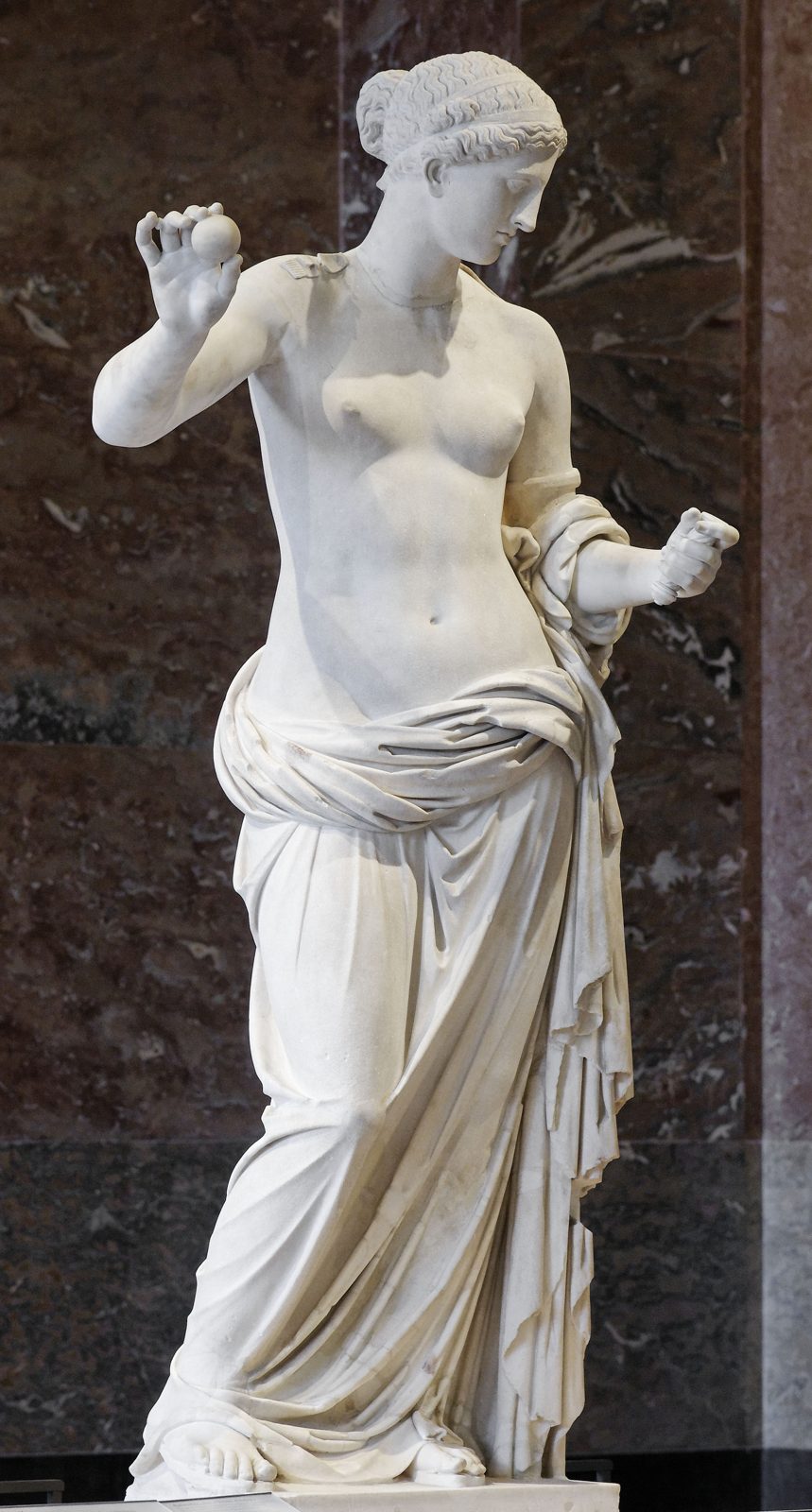
🎧 This work has audio narration — listen in the appAs you stand before the Venus of Arles, take a moment to let your eyes trace the elegant lines of her form. Notice how her body is draped in a flowing garment that clings to her curves, the fabric seemingly alive with movement. Look closely at the bracelet on her left arm; it’s an original detail that marks her as a goddess, a nod to her divine status.
These elements matter because they connect us to the ideals of beauty and femininity that have persisted through centuries. The Venus of Arles is not just a statue; she embodies the grace and allure of the goddess Venus, drawing on the ancient traditions of Greek sculpture, specifically the style of Praxiteles. This connection to the past gives the statue a timeless quality, allowing us to glimpse how ancient cultures viewed divinity and beauty.
Discovered in 1651 in the ruins of a Roman theater in Arles, this sculpture has a rich history. It was restored by François Girardon, who added the apple and mirror to enhance its identity as Venus, but this also means that what you see today is as much Girardon’s creation as it is an ancient artifact.
As you take in her serene expression and poised stance, consider this: what does Venus represent to you? How does her image resonate in today’s world of beauty and art?
As you gaze at the Venus of Arles, take a moment to appreciate the craftsmanship involved in her creation. This sculpture is carved from Hymettus marble, known for its fine quality and subtle sheen. Notice the smoothness of her skin, the way the light dances across the surface, revealing the delicate details of her drapery. The folds of her garment are not just random; they are meticulously sculpted, creating a sense of movement and life. The original marble was likely tinted, giving her a warm, lifelike glow, which has faded over time. The bracelet on her left arm, an original detail, adds a touch of authenticity, connecting us to the ancient world. Can you feel the history embedded in each curve and contour?
Believed to be a Roman copy of a Greek original, it may have been inspired by the Aphrodite of Thespiae, a work attributed to the renowned sculptor Praxiteles. Discovered in 1651 by workmen digging a well near the Roman theater in Arles, the statue was initially found in several pieces, with the head emerging first. It was later restored by François Girardon, who added elements like the apple and mirror to emphasize her identity as Venus. After being gifted to Louis XIV in 1681, it adorned the Galerie des Glaces at Versailles until the French Revolution, when it was moved to the Louvre, where it remains today. This journey reflects not just the statue's physical restoration, but also the evolving understanding of art and history over the centuries.
This sculpture, likely a Roman copy of Praxiteles' Aphrodite of Thespiae, showcases the enduring influence of Greek artistry well into the Roman era. Its discovery in the 17th century reignited interest in classical forms, inspiring artists and sculptors across Europe. The way Girardon restored it, adding elements like the apple and mirror, reflects a shift in how ancient works were perceived and adapted.
Here's a curious tidbit: when Girardon restored the Venus, he not only added the apple and mirror but also refined her figure, making her appear slimmer than the original. This transformation sparked debates among art historians about the authenticity of her current form. Interestingly, a cast made from the statue before Girardon's intervention was discovered in 1911, revealing just how much his restorations altered her appearance. This highlights the delicate balance between preservation and artistic interpretation in the world of sculpture.
Girardon's restoration, which included adding elements like the apple and mirror, as well as refining her figure, sparked debates among art historians about the authenticity of the statue, as it transformed her appearance significantly from the original.
A cast made before Girardon's extensive restorations was discovered in 1911, revealing that the original statue likely had a more robust figure and possibly featured polychrome details that have since faded, challenging the modern perception of her as a purely white marble sculpture.