 Image: Livioandronico2013
Man formed by Prometheus and animated by Minerva
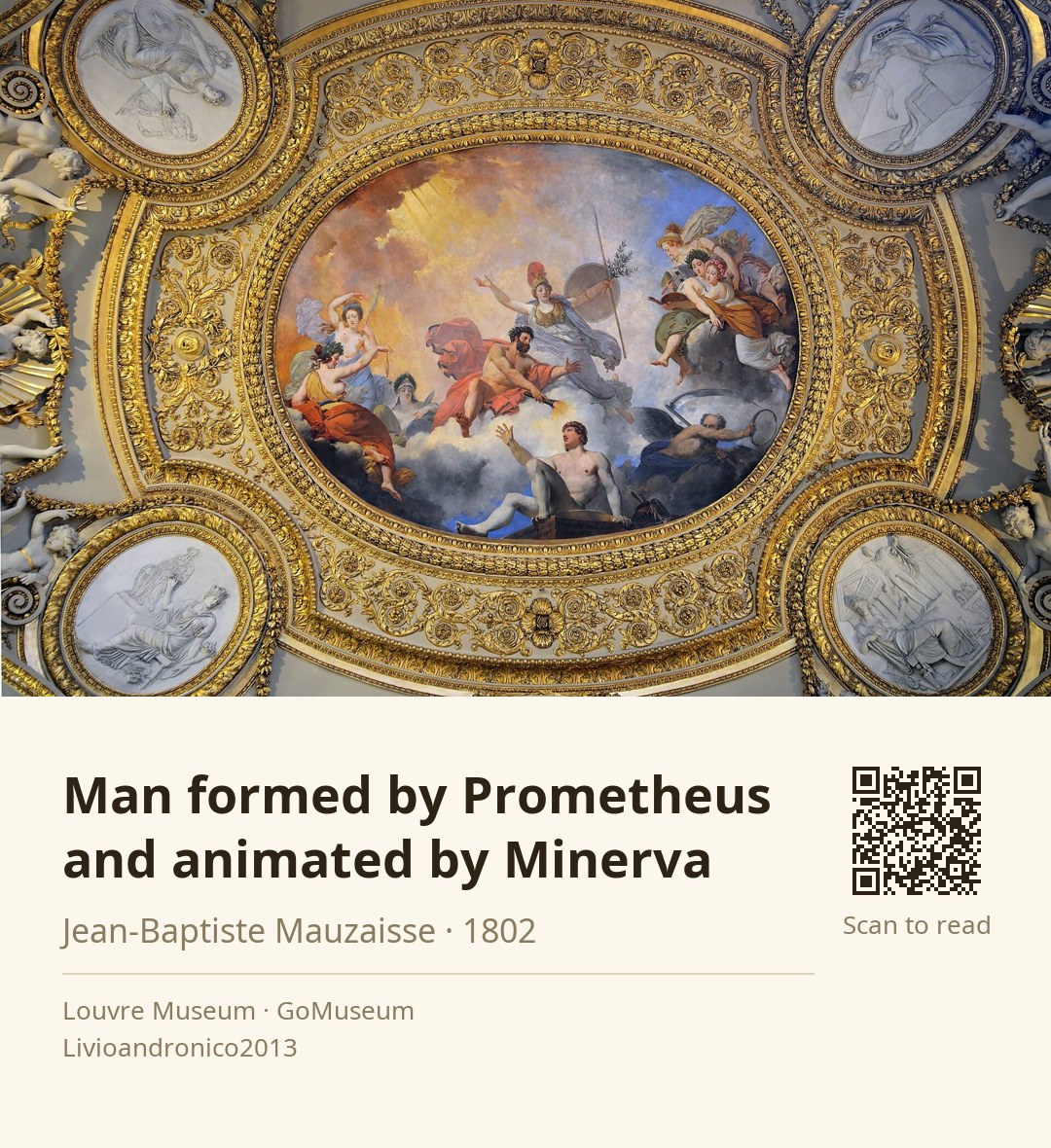
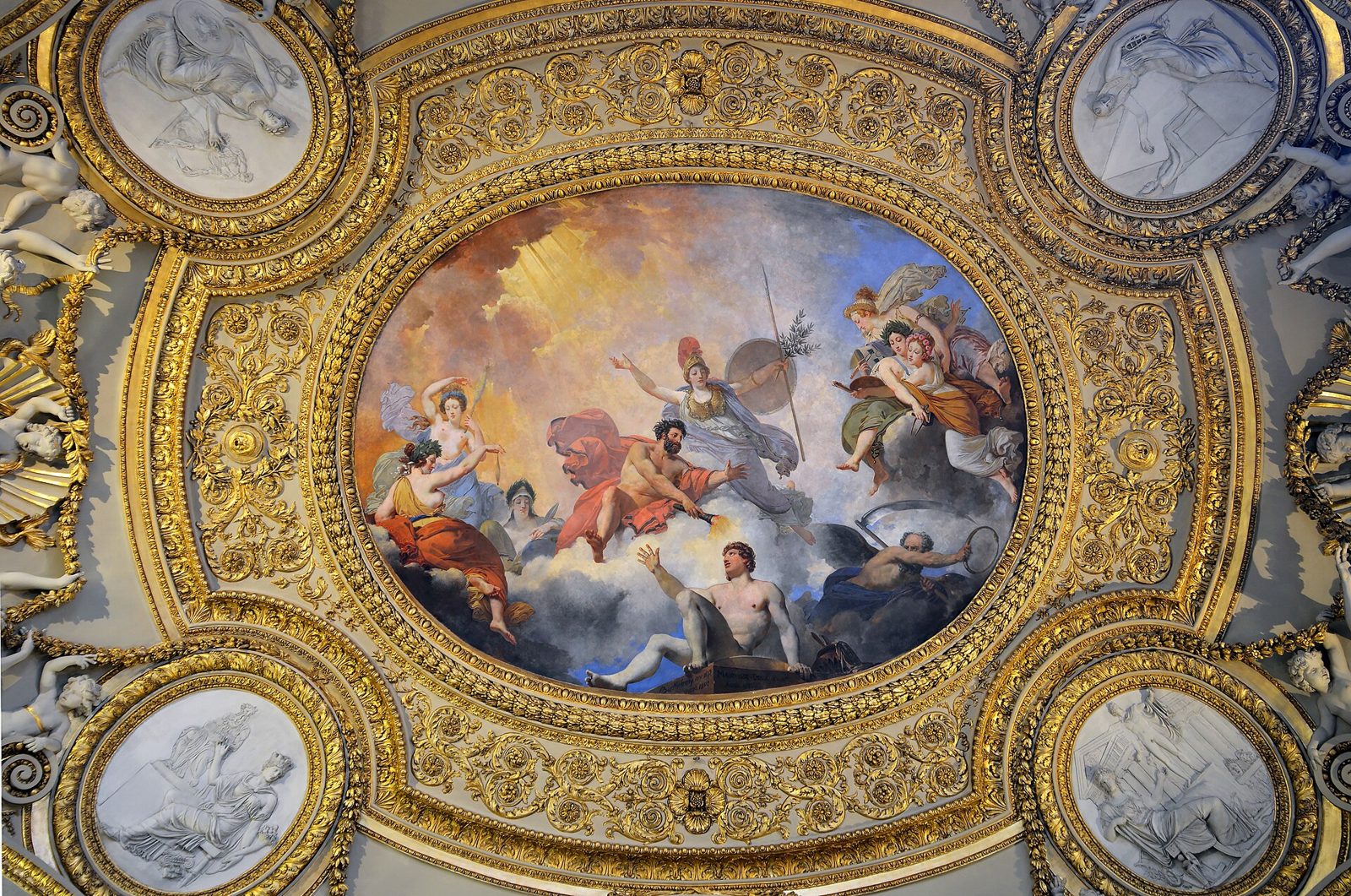
🎧 This work has audio narration — listen in the appPrometheus stands at the center of this grand ceiling painting, surrounded by a dynamic assembly of figures draped in classical attire, all set against a backdrop of luminous clouds. The central figure, adorned with a helmet and grasping a spear and olive branch, commands attention as he engages with those around him, who hold scrolls and instruments, suggesting a gathering of knowledge and power.
This scene encapsulates the mythological narrative of creation and enlightenment, where Prometheus symbolizes the spark of human ingenuity, while Minerva, implied through the olive branch, represents wisdom. The vibrant palette of reds, blues, and golds enhances the opulence of the composition, reflecting the grandeur of the themes it explores. The intricate gold detailing surrounding the painting further elevates its significance, framing the narrative in a way that invites contemplation of the interplay between divine inspiration and human endeavor.
Created in 1802 by Jean-Simon Berthélemy, this work was commissioned for the Louvre, where it contributes to the rich tapestry of mythological art that adorned the ceilings of the palace. Berthélemy’s ability to blend classical themes with the grandeur of his time is evident in this piece, which showcases his skill in creating dramatic, engaging narratives through paint.
Jean-Baptiste Mauzaisse was a French painter and lithographer born on November 1, 1784, in Corbeil. Coming from a modest family, he faced financial challenges early in life, but his talent led him to the École des Beaux-Arts in Paris, where he studied under François-André Vincent. His career took off at the Salon in 1808, culminating in a first-class gold medal in 1812 for his poignant work "Arab Lamenting the Death of His Courser."
Mauzaisse became known for his battle scenes and portraits, often receiving commissions from the government, including significant projects for King Louis XVIII and Louis-Philippe. His notable works include decorations in the Louvre and cathedrals in Bourges and Nantes. In 1823, he was honored as a Knight of the Legion of Honor for his contributions to art.
His legacy includes a variety of works housed in prestigious collections, such as the Louvre and the Metropolitan Museum of Art. Mauzaisse passed away in Paris on November 15, 1844, leaving behind a significant mark on the 19th-century French art scene, particularly in the realms of historical and military painting.
Berthélemy's technique in this ceiling painting is nothing short of masterful. The oil paint is applied with a fluidity that brings the figures to life, creating a sense of movement and interaction among them. The vibrant reds and blues are not just colors; they are carefully chosen to evoke emotion and grandeur, drawing viewers into the mythological narrative. The dynamic arrangement of figures, each engaged in their own action, creates a rhythm that guides the eye across the canvas. The intricate gold detailing surrounding the scene serves not only as a frame but also enhances the opulence of the composition. This lavish use of gold reflects the light beautifully, adding depth and dimension to the work. The overall scale of the painting, designed for a ceiling, invites viewers to look up and immerse themselves in the story unfolding above them, making it a truly immersive experience.
The gold detailing not only frames the painting but also enhances its opulence and adds depth, contributing to the overall dramatic effect.