 Image: Champaigne
La Cène, dite La Petite Cène
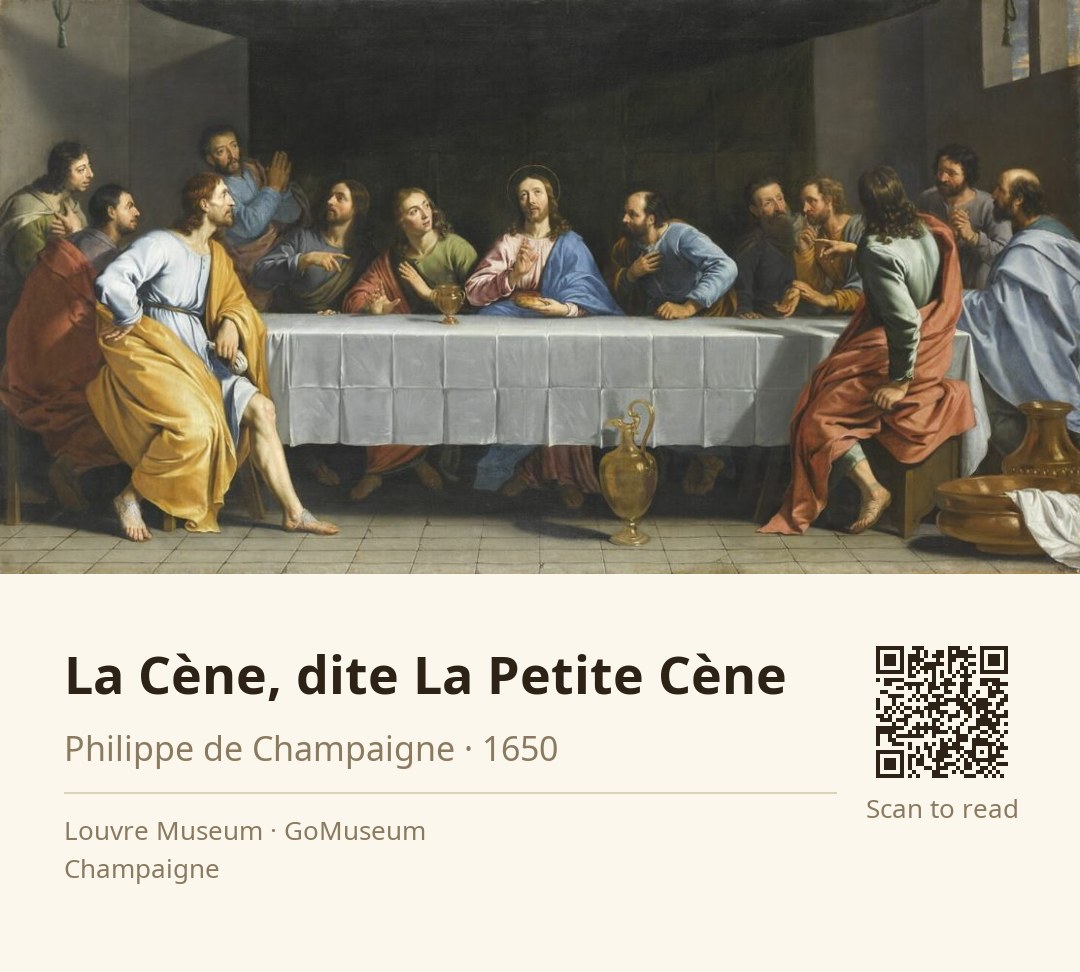
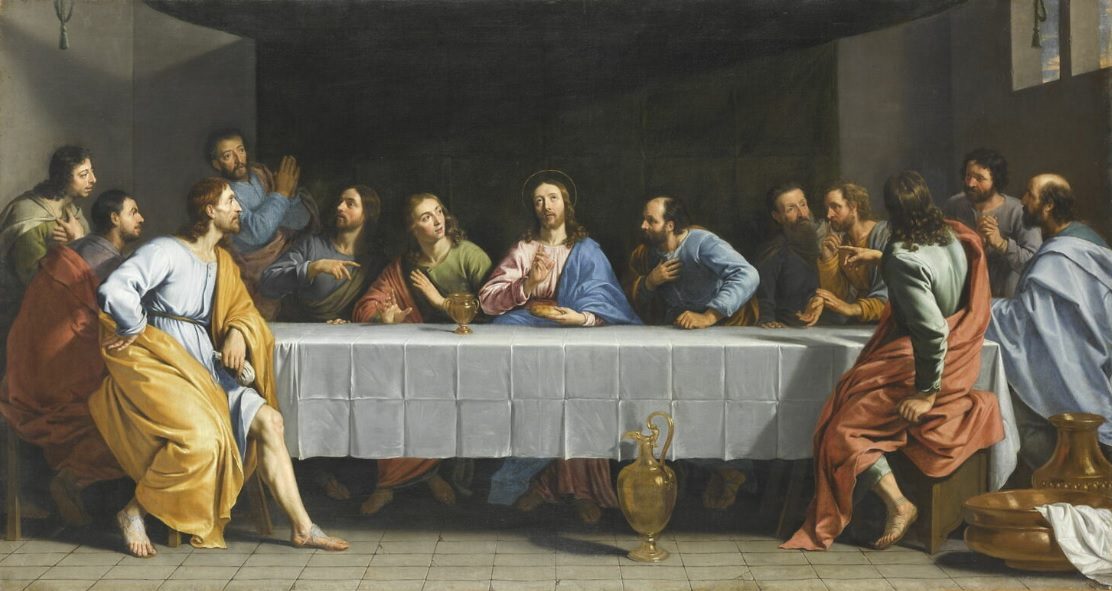
🎧 This work has audio narration — listen in the appSurrounding him are twelve disciples, each animated with distinct expressions and gestures, engaged in a lively discussion. The contrast between their earthy-toned garments and the white tablecloth draws your eye, while the dark background enhances the scene's intimacy.
This composition captures a pivotal moment of communion, emphasizing both the solemnity and the camaraderie of the Last Supper. The ornate jug and basin in the foreground suggest a ritualistic element, grounding the biblical narrative in a tangible setting. The interplay of light entering from a window on the right illuminates the figures, creating a dynamic atmosphere that invites contemplation of their interactions and the significance of the moment.
Philippe de Champaigne, a prominent French Baroque painter, created this work in 1650, reflecting his mastery of color and composition. His career flourished in the royal courts, where he became known for both religious and portrait works, contributing significantly to the artistic landscape of 17th-century France.
Philippe de Champaigne was a prominent French Baroque painter born on May 26, 1602, in Brussels. Coming from a humble background, he trained under notable artists before moving to Paris in 1621, where he became an independent master. Champaigne gained recognition as the Queen's Painter, creating significant works for the royal family and religious institutions. His style evolved from the vibrant influences of Rubens to a more austere approach, characterized by the psychological depth of his subjects.
A founding member of the Académie royale de peinture et de sculpture, he played a crucial role in shaping French art during the Ancien Régime. His notable works include portraits of the French court and religious scenes, such as "Ex-Voto," which reflects his personal life and Jansenist beliefs. Champaigne's legacy endures through his masterful compositions and the emotional resonance of his paintings, securing his place in art history as a key figure of the Baroque era. He passed away on August 12, 1674, leaving behind a rich artistic heritage.
Champaigne's technique in 'La Cène, dite La Petite Cène' showcases his mastery of oil painting, with a meticulous approach to brushwork that brings texture and life to the figures. The earthy color palette, punctuated by vibrant blues, reds, and yellows, creates a sense of warmth and intimacy, drawing viewers into the scene. The light streaming in from the window on the right not only illuminates the central figure of Jesus but also enhances the emotional exchanges among the disciples. The composition is carefully balanced, with figures evenly distributed, allowing each disciple's unique expression to shine through. This attention to detail and the dynamic arrangement of figures contribute to the painting's impact, inviting contemplation of the moment's significance.
An intriguing anecdote about Philippe de Champaigne involves his relationship with Cardinal Richelieu. Champaigne was the only artist permitted to paint Richelieu in his cardinal robes, a privilege he enjoyed eleven times.