 Image: Workshop of Jacques-Louis David
The Death of Marat
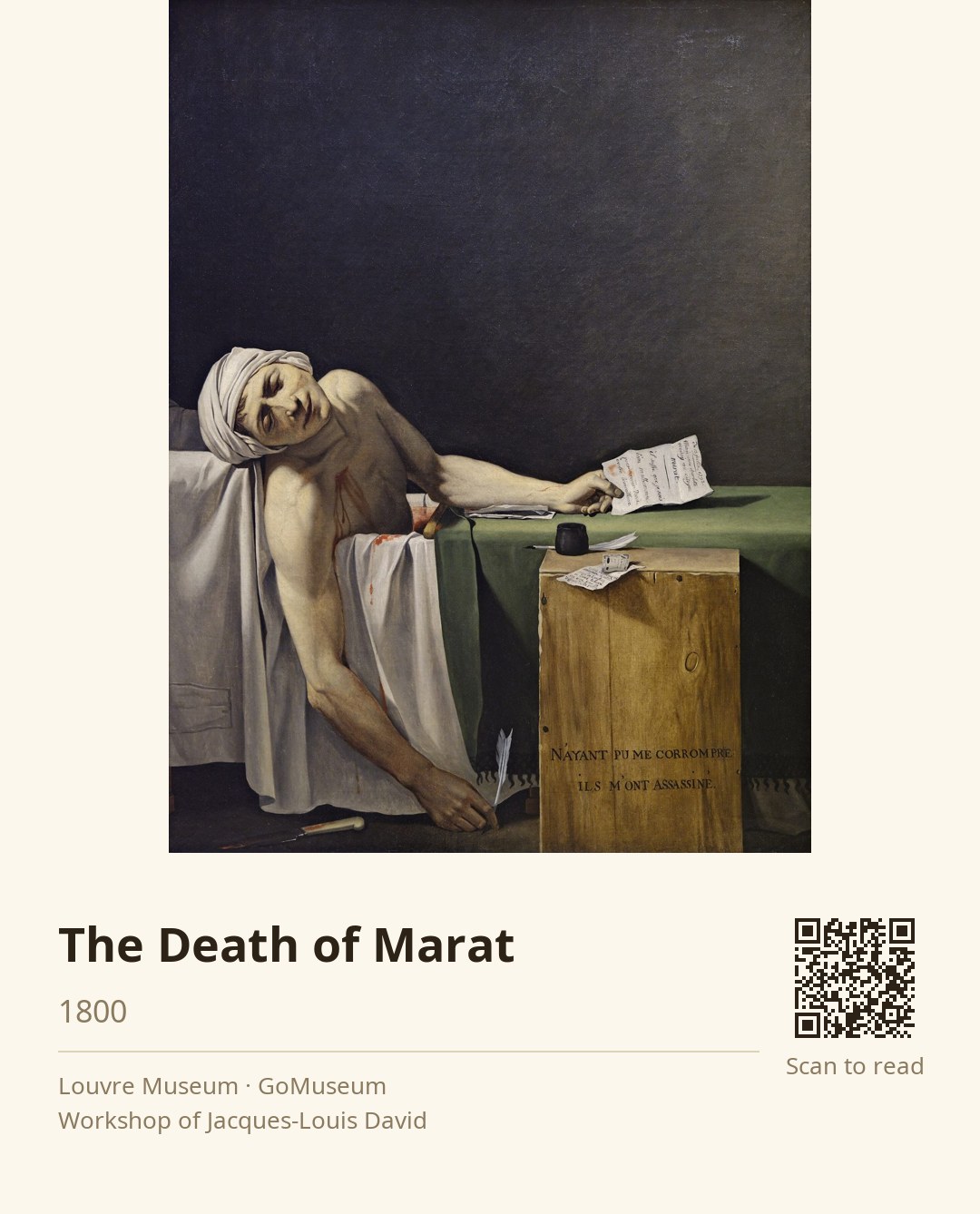
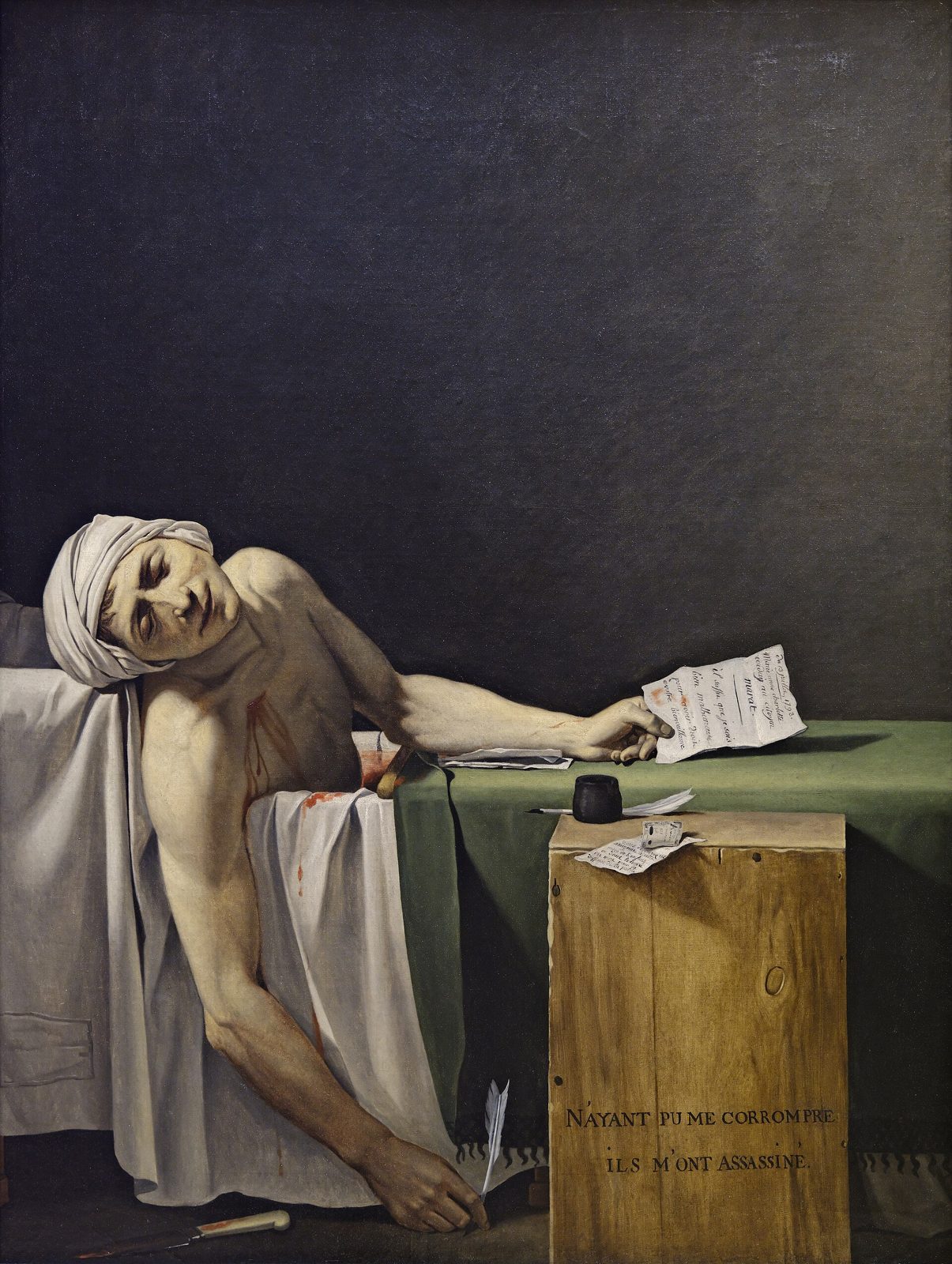
🎧 This work has audio narration — listen in the appAs you stand before “The Death of Marat,” take a moment to really absorb the scene. Notice how the stark contrast between the dark background and Marat’s pale body draws your eye right to him, almost as if he’s the only thing in the room. Look closely at the way his hand rests limply on the edge of the tub, a small detail that speaks volumes about his vulnerability in this moment of betrayal.
This isn’t just a painting; it’s a powerful commentary on the fragility of life and the brutal reality of political upheaval. Created in 1800, it captures the aftermath of a shocking assassination, reminding us that even the most revolutionary figures can fall victim to violence. The artist, Jacques-Louis David, was a close friend of Marat, and you can feel that personal connection in the way he immortalizes this tragic moment.
As you take in the scene, think about what it means to sacrifice for a cause. What emotions does this evoke for you? How does it change your perspective on the struggles of those who fight for their beliefs? Let that linger as you move on.
Jacques-Louis David painted 'The Death of Marat' in 1800, shortly after the assassination of Jean-Paul Marat, a radical journalist and politician during the French Revolution. Commissioned by a close friend of Marat, the painting was intended to serve as both a tribute and a political statement. It was first exhibited at the Salon of 1801 in Paris, where it garnered significant attention and sparked discussions about the role of art in political discourse. The reception was mixed; while some praised David's ability to convey emotion and drama, others criticized the glorification of a controversial figure.
In 'The Death of Marat,' David employs a striking use of light and shadow to create a dramatic focal point on Marat's lifeless body. The stark contrast between the pale flesh and the dark background not only highlights the tragedy of the scene but also evokes a sense of stillness amidst chaos. Notice the meticulous brushwork; David's technique is both precise and expressive, capturing the texture of Marat's skin and the smoothness of the tub. The composition is carefully structured, with Marat positioned in a triangular arrangement that draws the viewer's eye inward. The use of color is equally deliberate; the muted tones surrounding Marat serve to amplify his vulnerability. Every detail, from the bloodstained knife to the crumpled letter, is rendered with a sense of urgency, making the viewer feel the weight of the moment.
Did you know that this painting, 'The Death of Marat,' captures a moment that was not just about the tragic end of a revolutionary figure but also reflects the intense political climate of its time? The artist, Jacques-Louis David, was a close friend of Marat and was deeply influenced by the events surrounding the French Revolution. In fact, David was so committed to the revolutionary cause that he became a member of the Jacobin Club, which was known for its radical views. This painting served not only as a tribute to Marat but also as a powerful political statement, immortalizing him as a martyr for the revolution.
Viewers might overlook the crumpled letter beside Marat, which symbolizes his political struggles and the betrayal he faced, or the bloodstained knife that serves as a stark reminder of the violence that took his life.