Jean-Baptist Isabey, Miniaturist, with his Daughter
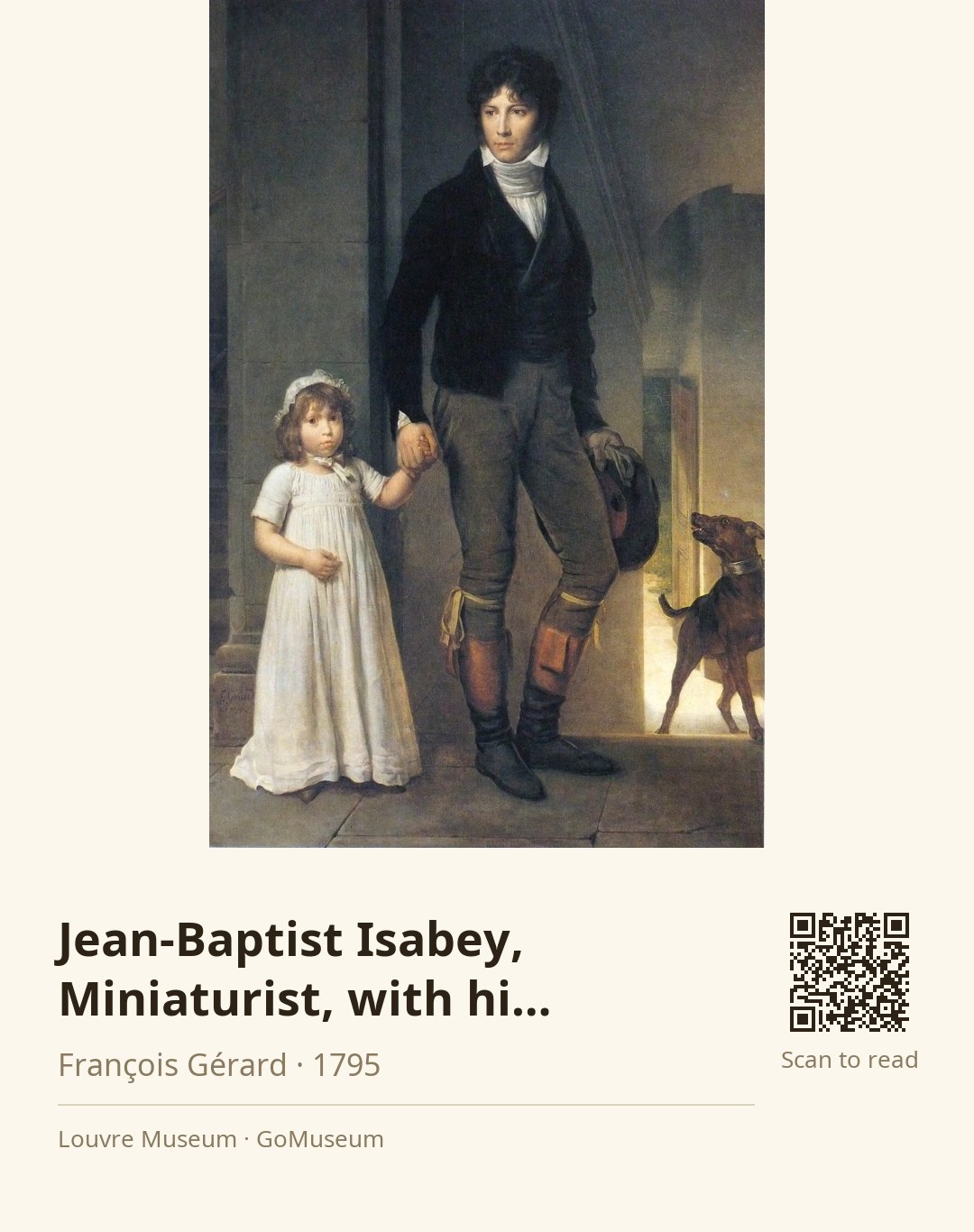
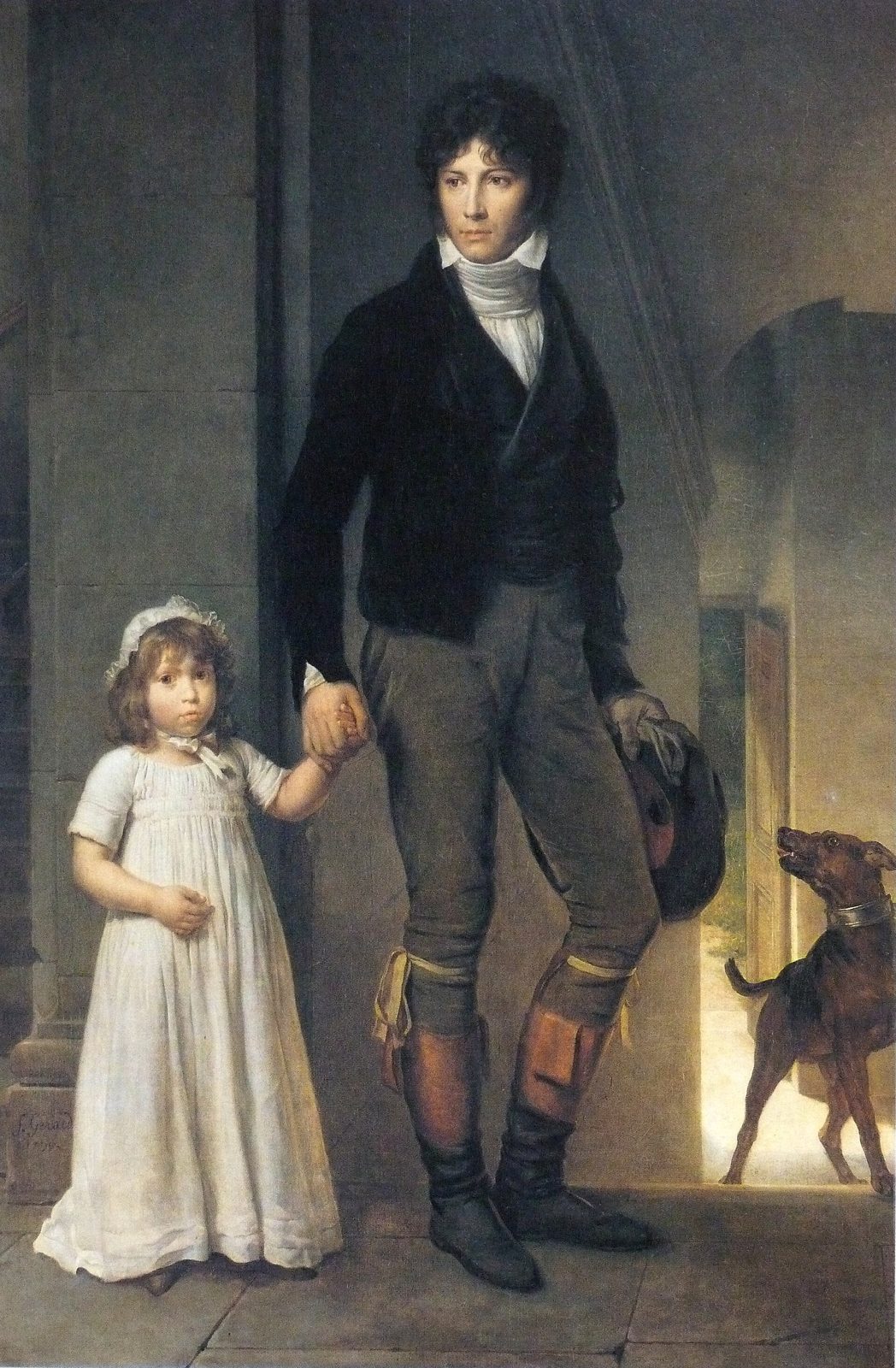
🎧 This work has audio narration — listen in the appTake a moment to really look at this portrait of Jean-Baptiste Isabey and his daughter, painted by François Gérard in 1795. Notice how they stand hand in hand, with Isabey's gaze directed thoughtfully to the left, while his daughter, little Alexandrine, looks straight at us. It’s as if she’s inviting you into their world.
Now, focus on the details of their clothing. Isabey wears a sleek black jacket, a symbol of the era’s fashion, while Alexandrine’s delicate white dress contrasts beautifully against the darker tones. This isn’t just a casual family moment; it’s a statement about their status and the bond they share. The inclusion of their pet dog adds warmth, suggesting a loving, intimate family life amidst the grandeur of the Louvre staircase.
Gérard, a student of the renowned Jacques-Louis David, was a prominent portraitist of his time, capturing the essence of his subjects with striking realism. This painting was exhibited at the Salon of 1796, showcasing not only Isabey’s significance as a miniaturist but also Gérard’s rising fame in the art world.
As you stand here, think about the relationship between father and daughter, and how this moment was preserved for centuries. What stories do you think they shared on that staircase?
François Pascal Simon Gérard, born on May 4, 1770, in Rome, was a prominent French painter known for his exquisite portraits and historical works. As a student of Jacques-Louis David, he emerged as a leading artist during the First French Empire and the Bourbon Restoration. Gérard's talent earned him the title of court painter to Napoleon and later First Painter to Kings Louis XVIII and Charles X, solidifying his reputation across Europe.
His early life was marked by personal loss and financial struggles, which he overcame through determination and talent. Gérard's salon became a cultural hub, attracting influential figures and fostering artistic dialogue. His portraits captured the essence of European royalty, earning him the nickname "the painter of kings, the king of painters."
Despite his success, Gérard grappled with unfulfilled ambitions in history painting, a genre he aspired to master. His notable works, including the dramatic "Bataille d'Austerlitz," showcased his skill but ultimately, he felt overshadowed by the rise of Romanticism. Gérard's legacy endures through his delicate drawings and portraits, characterized by a purity of line and emotional depth. He passed away on January 11, 1837, leaving behind a significant mark on the art world.
This portrait of Jean-Baptiste Isabey and his daughter was painted by François Gérard in 1795, a time when France was in the throes of change and artistic expression was flourishing. Gérard, a student of the influential Jacques-Louis David, was commissioned to create this piece for Isabey, a fellow artist known for his miniatures. The painting was first exhibited at the Salon of 1796, where it garnered attention for its intimate portrayal of familial bonds against the backdrop of the grand Louvre staircase. Following its exhibition, the painting was gifted to Isabey himself, and after his passing, it was bequeathed to his son, Eugène Isabey, who later donated it to the Louvre in 1852.
Gérard's technique in this portrait is striking, showcasing his mastery of light and shadow to create depth and realism. Notice how the brushwork feels both delicate and assertive, particularly in the way he captures the textures of Isabey's sleek black jacket and Alexandrine's soft white dress. The composition is carefully structured; Isabey's body is angled slightly to the right, drawing the viewer's eye towards his thoughtful gaze, while Alexandrine's direct stare engages us, creating a connection that feels almost alive. The inclusion of their pet dog adds a layer of warmth, inviting you to feel the intimacy of their relationship. The vertical format of the painting enhances the sense of stature and presence, making this family moment feel monumental, yet personal.
Gérard, a student of the renowned Jacques-Louis David, was at the forefront of the Neoclassical movement, and his work influenced a generation of artists who sought to blend personal intimacy with grand historical narratives. By capturing the warmth of familial bonds against the backdrop of the Louvre, Gérard set a new standard for portraiture that emphasized emotional depth and connection. This painting not only showcases the skill of a master portraitist but also reflects the shifting values of society during the Napoleonic era, where personal stories began to intertwine with national identity.
The pet dog included in the portrait serves as a subtle symbol of their familial bond, suggesting warmth and intimacy in their relationship, which contrasts with the grandeur of the Louvre staircase.