Madame Lecerf, née Gérard, cousine de l'artiste
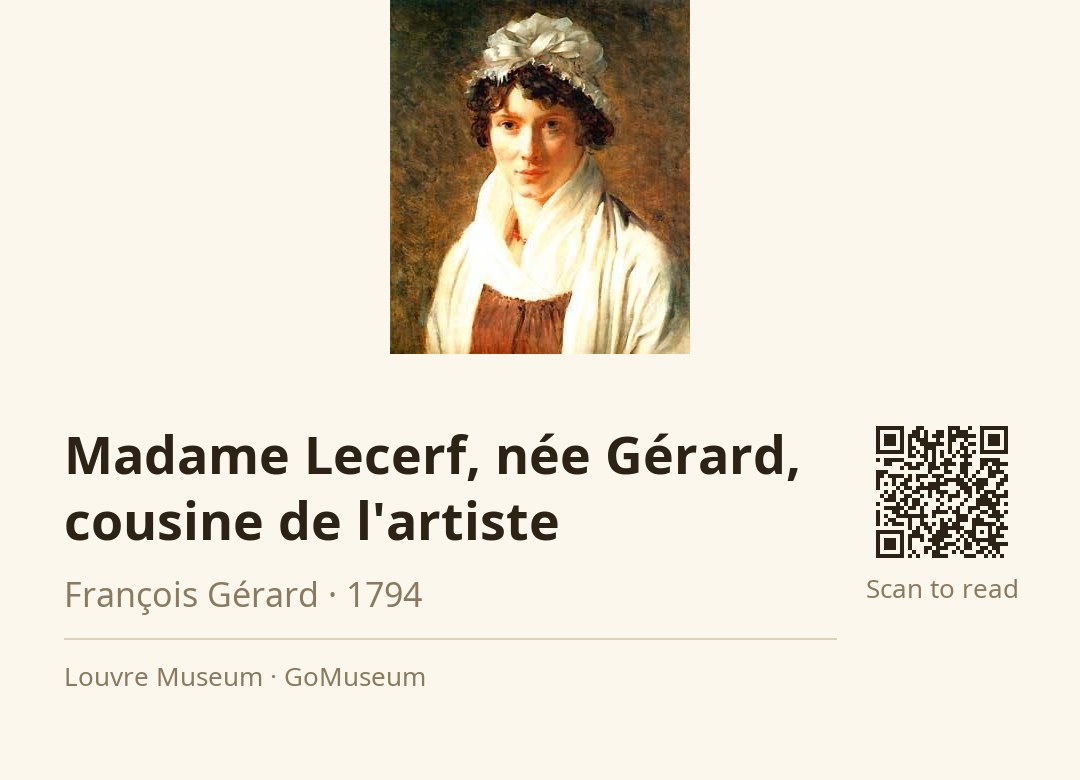
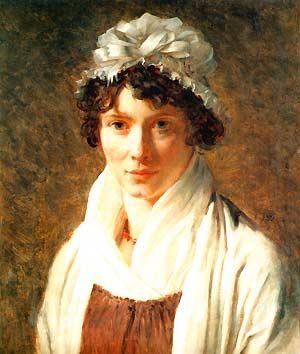
🎧 This work has audio narration — listen in the appMadame Lecerf, wearing a delicate white bonnet and a soft shawl draped over her shoulders, gazes directly at you with a calm expression. The muted red of her dress contrasts beautifully with the warm brown background, drawing your attention to her serene demeanor. This gentle portrayal captures not just her likeness but also a moment of intimacy, as if she is inviting you into her world.
The softness of the brushwork enhances the realism of her features, making her appear almost lifelike. Gérard's choice of colors and textures creates a sense of warmth and familiarity, reflecting the close relationship he had with his subject, who was his cousin. This familial connection adds a layer of personal significance to the portrait, showcasing the artist's ability to blend professional skill with personal sentiment.
François Gérard, a prominent figure in the neoclassical movement, was known for his exquisite portraits that often depicted members of the elite and royal families across Europe. His career flourished during a time of great political change in France, and he became the favored portraitist for many, including Emperor Napoleon and later kings of France. In 1794, the same year he painted this portrait, Gérard was gaining recognition for his work, setting the stage for his future success as one of the leading portrait painters of his time.
François Pascal Simon Gérard, born on May 4, 1770, in Rome, was a prominent French painter known for his exquisite portraits and historical works. As a student of Jacques-Louis David, he emerged as a leading artist during the First French Empire and the Bourbon Restoration. Gérard's talent earned him the title of court painter to Napoleon and later First Painter to Kings Louis XVIII and Charles X, solidifying his reputation across Europe.
His early life was marked by personal loss and financial struggles, which he overcame through determination and talent. Gérard's salon became a cultural hub, attracting influential figures and fostering artistic dialogue. His portraits captured the essence of European royalty, earning him the nickname "the painter of kings, the king of painters."
Despite his success, Gérard grappled with unfulfilled ambitions in history painting, a genre he aspired to master. His notable works, including the dramatic "Bataille d'Austerlitz," showcased his skill but ultimately, he felt overshadowed by the rise of Romanticism. Gérard's legacy endures through his delicate drawings and portraits, characterized by a purity of line and emotional depth. He passed away on January 11, 1837, leaving behind a significant mark on the art world.
In 1794, François Gérard painted 'Madame Lecerf, née Gérard, cousine de l'artiste.' This was a pivotal year for Gérard, as he was emerging from the shadows of his mentor, Jacques-Louis David, and beginning to carve out his own reputation. Commissioned by his cousin, the portrait reflects not only familial ties but also the artist's rising status in the art world. The painting was later exhibited in 1913 at 'David et ses élèves' in Paris, showcasing the legacy of David's influence on his students. Over the years, the painting changed hands, with notable provenance including the Foy comtesse and Carlos de Beistegui, highlighting its journey through the elite circles of art collectors.
The muted red of the dress is not just a color choice; it serves to enhance the warmth of the subject's demeanor against the warm brown background. This choice creates a visual harmony that draws you into the intimacy of the moment. The soft handling of paint allows for delicate transitions in skin tones, giving Madame Lecerf a lifelike quality that feels almost tangible. Gérard's composition centers on her face and upper body, creating a direct connection with the viewer.