Daphnis and Chloe
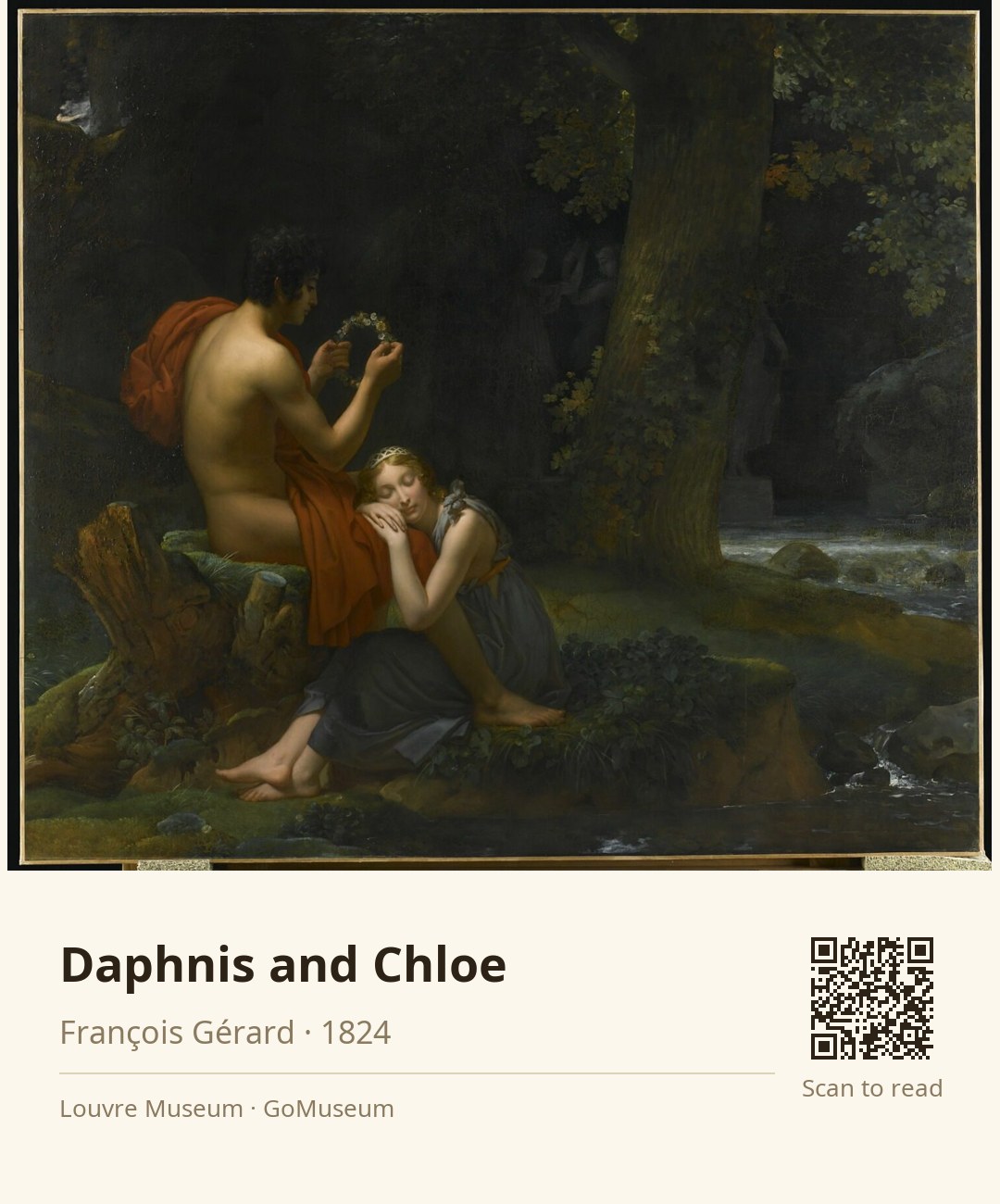
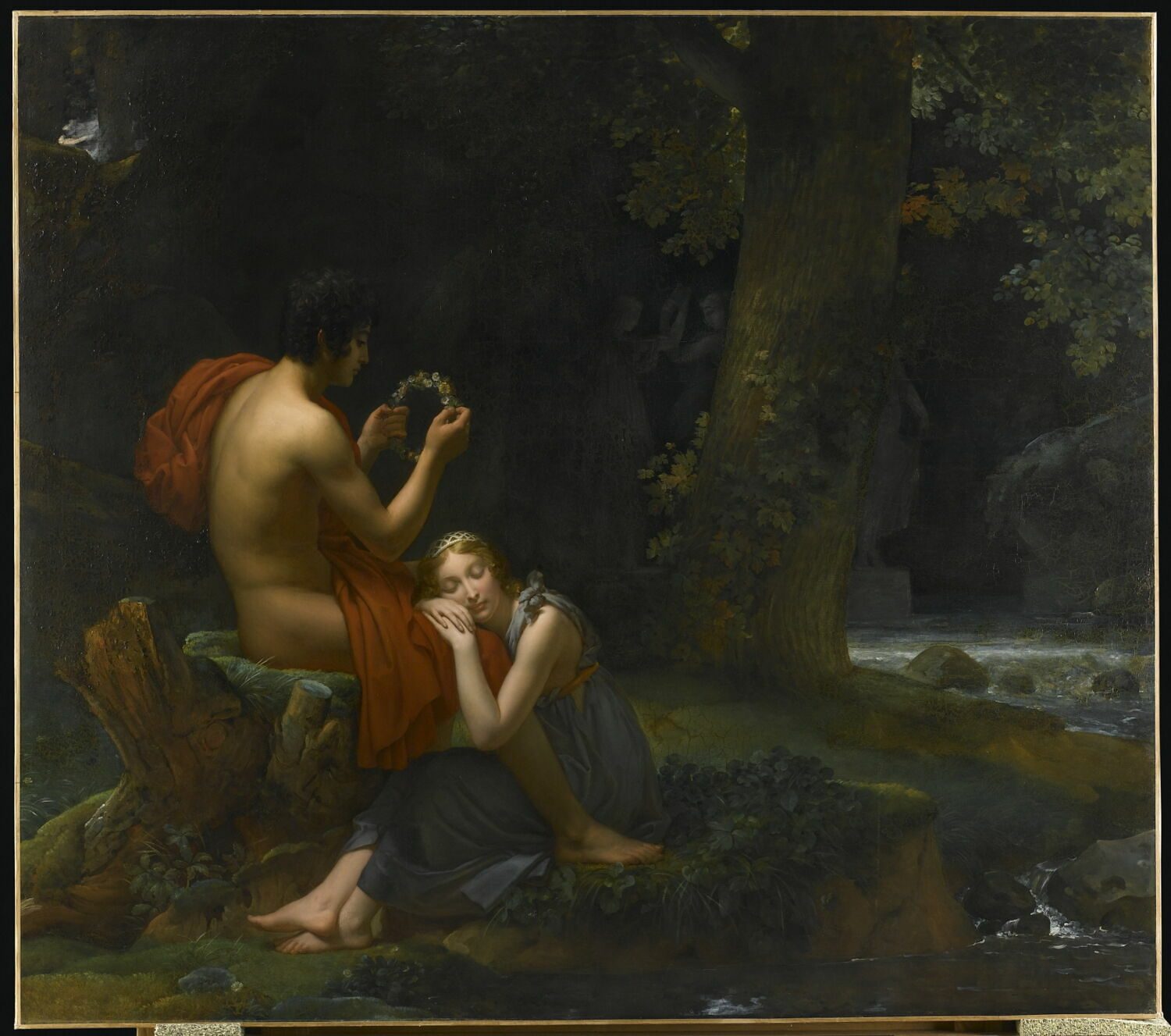
🎧 This work has audio narration — listen in the appDaphnis, seated on a tree stump, holds a delicate floral crown while Chloé, draped in a flowing dress, rests peacefully beside him, a small bird perched on her shoulder. The lush greenery of the forest envelops them, with a gentle stream flowing nearby, creating a serene backdrop that enhances the intimacy of their moment.
This portrayal of Daphnis and Chloé, drawn from ancient mythology, captures the essence of youthful love and innocence. The floral crown symbolizes not just beauty but also the fleeting nature of such moments, while the gentle brushwork and earthy tones evoke a tranquil atmosphere, inviting viewers to feel the warmth of their connection. Gérard’s choice of a mythological theme reflects the Romantic fascination with nature and emotion, allowing the viewer to escape into a world where love is pure and untainted.
Created in 1824, this painting was exhibited at the Salon des artistes français in Paris, showcasing Gérard's mastery of oil on canvas and his ability to blend myth with the natural world.
François Pascal Simon Gérard, born on May 4, 1770, in Rome, was a prominent French painter known for his exquisite portraits and historical works. As a student of Jacques-Louis David, he emerged as a leading artist during the First French Empire and the Bourbon Restoration. Gérard's talent earned him the title of court painter to Napoleon and later First Painter to Kings Louis XVIII and Charles X, solidifying his reputation across Europe.
His early life was marked by personal loss and financial struggles, which he overcame through determination and talent. Gérard's salon became a cultural hub, attracting influential figures and fostering artistic dialogue. His portraits captured the essence of European royalty, earning him the nickname "the painter of kings, the king of painters."
Despite his success, Gérard grappled with unfulfilled ambitions in history painting, a genre he aspired to master. His notable works, including the dramatic "Bataille d'Austerlitz," showcased his skill but ultimately, he felt overshadowed by the rise of Romanticism. Gérard's legacy endures through his delicate drawings and portraits, characterized by a purity of line and emotional depth. He passed away on January 11, 1837, leaving behind a significant mark on the art world.
François Gérard's 'Daphnis et Chloé' was created in 1824 and exhibited at the prestigious Salon des artistes français in Paris that same year. This painting was commissioned during a time when Gérard was already a celebrated figure in the art world, having earned the title of Baron Gérard in 1809. His works were highly sought after, and he was known for his ability to blend mythological themes with natural beauty. The reception of this piece was warm, as it resonated with the Romantic ideals of the era, emphasizing emotion and nature.
In 'Daphnis et Chloé', Gérard employs a masterful technique that brings the serene forest setting to life. The smooth brushwork creates a soft texture, allowing the viewer to almost feel the gentle caress of the breeze through the trees. The earthy palette, dominated by greens and browns, enhances the tranquil atmosphere, inviting a sense of peace. Gérard's choice of oil paint on canvas allows for rich color depth and subtle gradations of light, which contribute to the painting's overall warmth. The composition is carefully balanced, with Daphnis seated prominently on the tree stump, drawing the eye to his delicate floral crown. This positioning, combined with the flowing lines of Chloé's dress, creates a harmonious flow that guides the viewer's gaze through the lush landscape. The gentle stream in the background not only adds to the serene ambiance but also serves as a visual metaphor for the passage of time and the fleeting nature of youth and love.
Interestingly, Gérard's career was not just limited to painting; he was also a prominent figure in Parisian society, hosting a salon that attracted many of the era's intellectuals and artists. This social aspect of his life often influenced his work, as he mingled with some of the most notable figures of his time, including politicians and writers, which enriched his artistic perspective.
Gérard was a significant social figure who hosted a salon that drew many intellectuals and artists of his time, influencing the cultural landscape of Paris.
The use of oil paint on canvas enabled Gérard to achieve rich colors and delicate light variations, enhancing the warm and inviting atmosphere of the painting.