Le général comte François Fournier-Sarlovèze
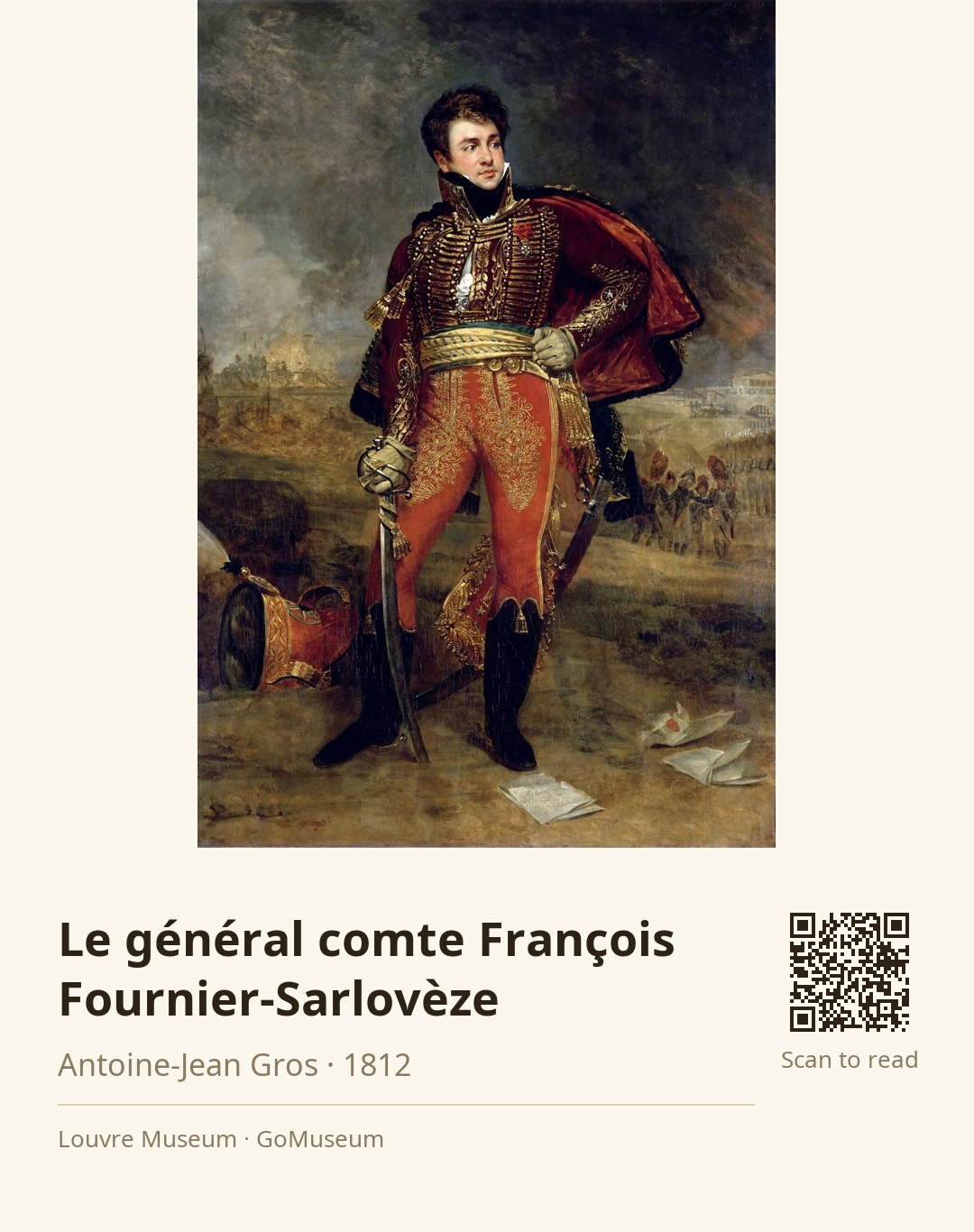
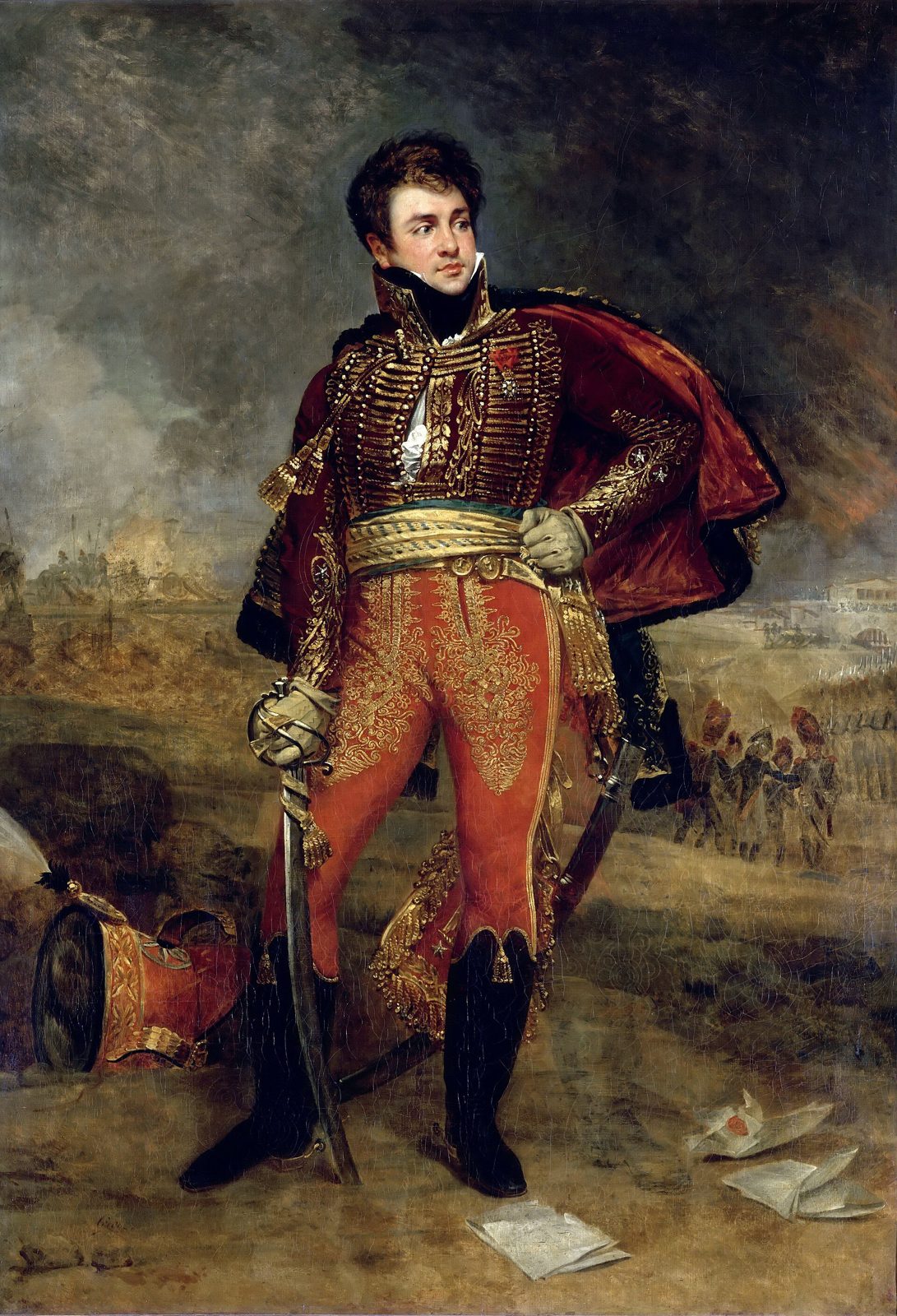
🎧 This work has audio narration — listen in the appFrançois Fournier-Sarlovèze stands tall in his striking military uniform, the intricate gold embroidery catching the light as he confidently rests one hand on his hip and the other on his sword. His red cloak billows dramatically behind him, while the chaotic battlefield in the background, filled with soldiers and swirling smoke, hints at the tumult of war. Scattered papers and a helmet at his feet add a sense of immediacy to the scene, emphasizing the weight of command he bears.
This commanding presence is not just a portrayal of a general; it reflects the era's valorization of military leadership during the Napoleonic Wars. Gros meticulously details the uniform, showcasing the artistry of military attire while also highlighting the individual behind the rank. The deep reds and golds create a striking contrast, evoking the tension and drama of the battlefield, while the brushwork captures the intricate patterns, enhancing the sense of realism and authority.
Antoine-Jean Gros, who painted this work in 1812, was deeply influenced by his experiences with Napoleon, having traveled with the army and painted numerous historical scenes. His ability to blend portraiture with the grandeur of historical events marked him as a significant figure in early 19th-century French art. This painting was exhibited at the Salon des artistes français in Paris the same year it was completed, showcasing Gros's continued prominence in the art world.
Antoine-Jean Gros was a prominent French painter born on March 16, 1771, in Paris. He was a student of Jacques-Louis David, and his early life was marked by artistic promise, nurtured by a family of painters. Gros gained fame during the French Revolution, particularly for his portrait of Napoleon Bonaparte at the Battle of Arcole, which led to a close relationship with the emperor. His works often depicted historical events, blending neoclassicism with emerging romanticism, showcasing both grandeur and emotional depth.
After spending time in Genoa, where he painted portraits, Gros returned to Paris and became a celebrated artist. His notable works include "Bonaparte Visiting the Plague Victims of Jaffa," which served to counter negative propaganda against Napoleon. Despite his success, Gros struggled with the changing artistic landscape, feeling overshadowed by the rise of Romanticism. His later years were marked by personal turmoil, culminating in his tragic suicide in 1835. Gros's legacy lies in his ability to capture the complexities of his subjects, securing his place in art history as a bridge between neoclassicism and romanticism.
Antoine-Jean Gros painted 'Le général comte François Fournier-Sarlovèze' in 1812, a time when France was deeply embroiled in the Napoleonic Wars. This work was commissioned to showcase the valor and leadership of military figures during this tumultuous period. It was exhibited at the Salon des artistes français in Paris the same year, where it garnered attention for its striking portrayal of Fournier-Sarlovèze. The painting's provenance traces back to Fournier-Sarlovèze himself, ensuring its authenticity and connection to the subject. Over the years, it has been referenced in various bibliographies, including the 'Catalogue des peintures du Louvre' and the 'catalogue sommaire illustré des peintures du musée du Louvre et du musée d'Orsay,' highlighting its importance in French art history.
Gros employed oil paint on canvas to create this imposing portrait, which stands at a grand height of 252 cm and width of 174 cm. The brushwork is meticulous, particularly in the intricate gold embroidery of the military uniform, which draws the viewer's eye and emphasizes the subject's authority. The deep reds and golds are not just visually striking; they evoke the drama of the battlefield, contrasting sharply with the darker tones of the chaotic background. The composition centers on Fournier-Sarlovèze, using his confident stance to convey a sense of command. The scattered papers and helmet in the foreground add layers of narrative urgency, suggesting the weight of leadership amidst the chaos of war. This careful handling of color and detail not only captures the essence of the general but also reflects the broader themes of heroism and sacrifice prevalent in the era.