The Feet of Homer, Study for Tha Apotheosis of Homer
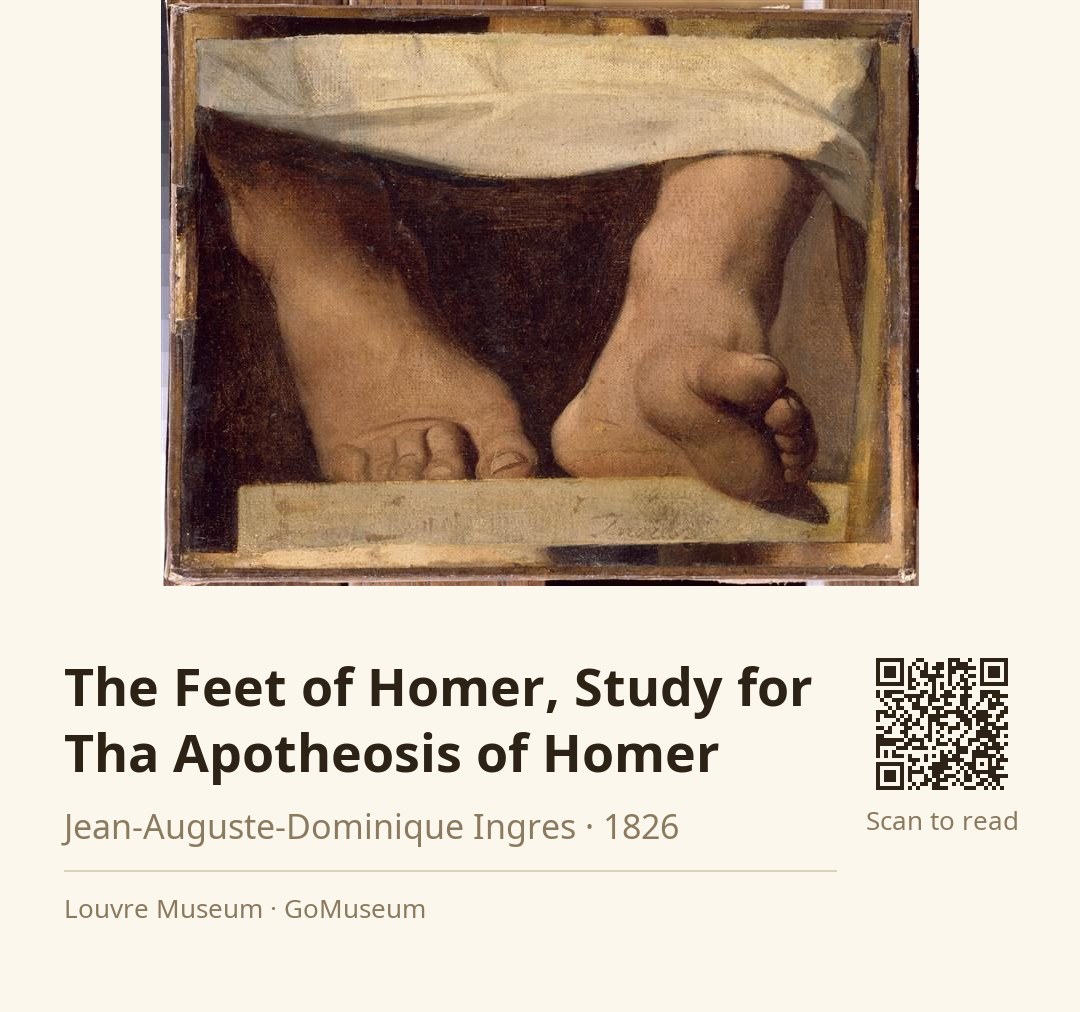
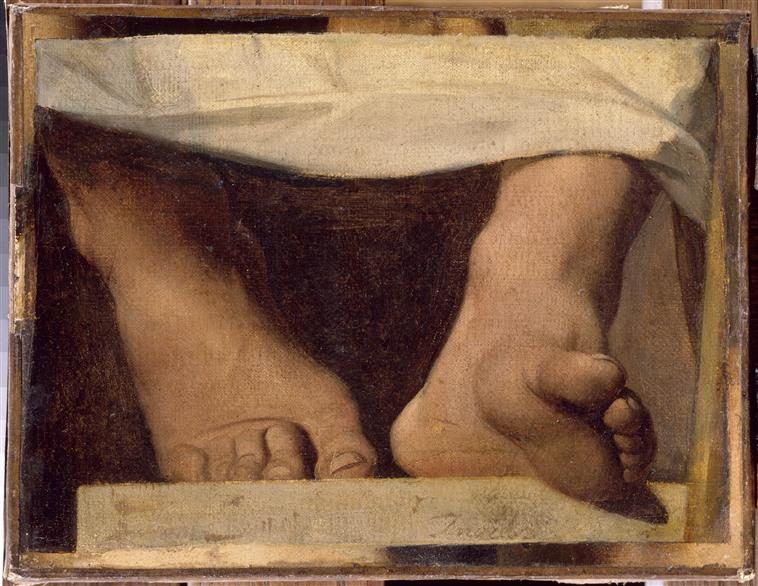
🎧 This work has audio narration — listen in the appThe feet of Homer, depicted here, rest gently on a ledge, their naturalistic form accentuated by the soft draping of a white cloth. The left foot is slightly behind the right, creating a subtle tension, while the dark background enhances the lighter tones of the skin and fabric, drawing your eye to this intimate moment.
These feet symbolize the connection between the physical and the poetic, grounding the legendary figure of Homer in a tangible reality. Ingres, known for his meticulous attention to detail, captures the texture of the skin and the delicate folds of the cloth, inviting contemplation of the human experience behind the myth. This study, created in 1826, serves as a preparatory work for Ingres' larger composition, "The Apotheosis of Homer," where he sought to elevate the poet to a divine status, intertwining the realms of art and literature.
Ingres' career was marked by a struggle for recognition, yet he ultimately became a leading figure of the Neoclassical movement, celebrated for his ability to blend classical ideals with a personal touch. His focus on the human form and the emotional weight it carries would influence generations of artists after him.
Jean-Auguste-Dominique Ingres was a pivotal figure in French Neoclassicism, born on August 29, 1780, in Montauban. He was the son of a versatile artist, which nurtured his early artistic inclinations. Ingres studied under Jacques-Louis David in Paris, where he developed a commitment to academic traditions, aspiring to elevate history painting above all genres. His early career was marked by struggles, as critics dismissed his style as archaic, yet he persevered, achieving recognition with works like "The Vow of Louis XIII" in 1824.
His portraits, characterized by expressive distortions, became his most celebrated contributions, influencing modern artists such as Matisse and Picasso. Ingres's time in Italy, from 1806 to 1824, was crucial; he immersed himself in the study of Renaissance masters, which shaped his distinctive style. Despite facing criticism for his meticulous approach, he remained steadfast in his vision of beauty, emphasizing drawing over color.
Later in life, he returned to Paris, where he continued to create significant works, including "The Turkish Bath." Ingres's legacy endures as a bridge between classical traditions and modern art, embodying the tension between adherence to established norms and the evolving landscape of artistic expression. He passed away on January 14, 1867, leaving behind a profound impact on the art world.
Ingres came from a modest family, being the eldest of seven children, which influenced his early artistic development.
During his time in Italy, Ingres faced criticism for his style, which some critics deemed bizarre and archaic, despite his efforts to send works to the Paris Salon.
Ingres' emphasis on the human form and emotional expression significantly influenced many artists in the generations that followed him.