Portrait of Monsieur Bertin
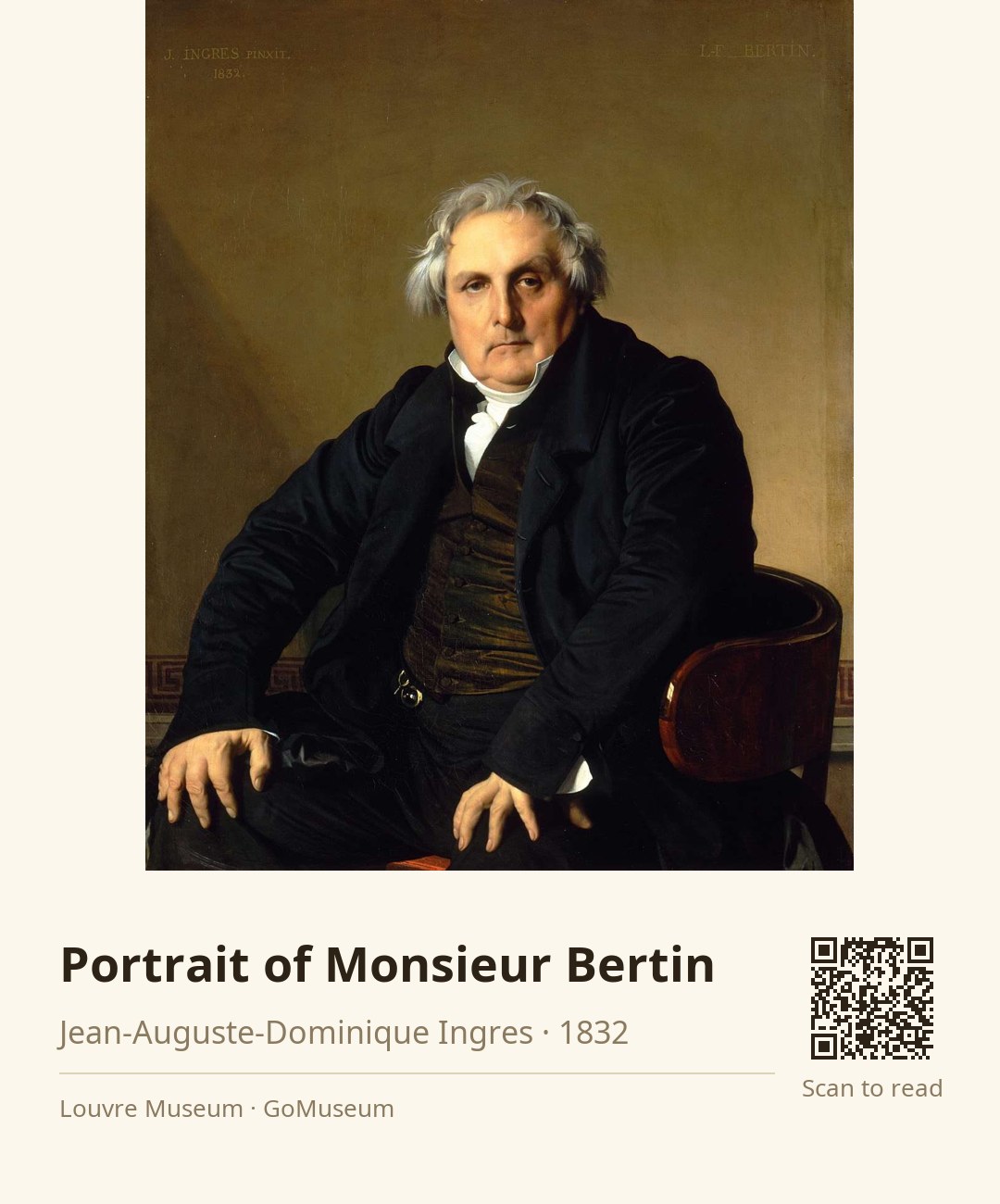
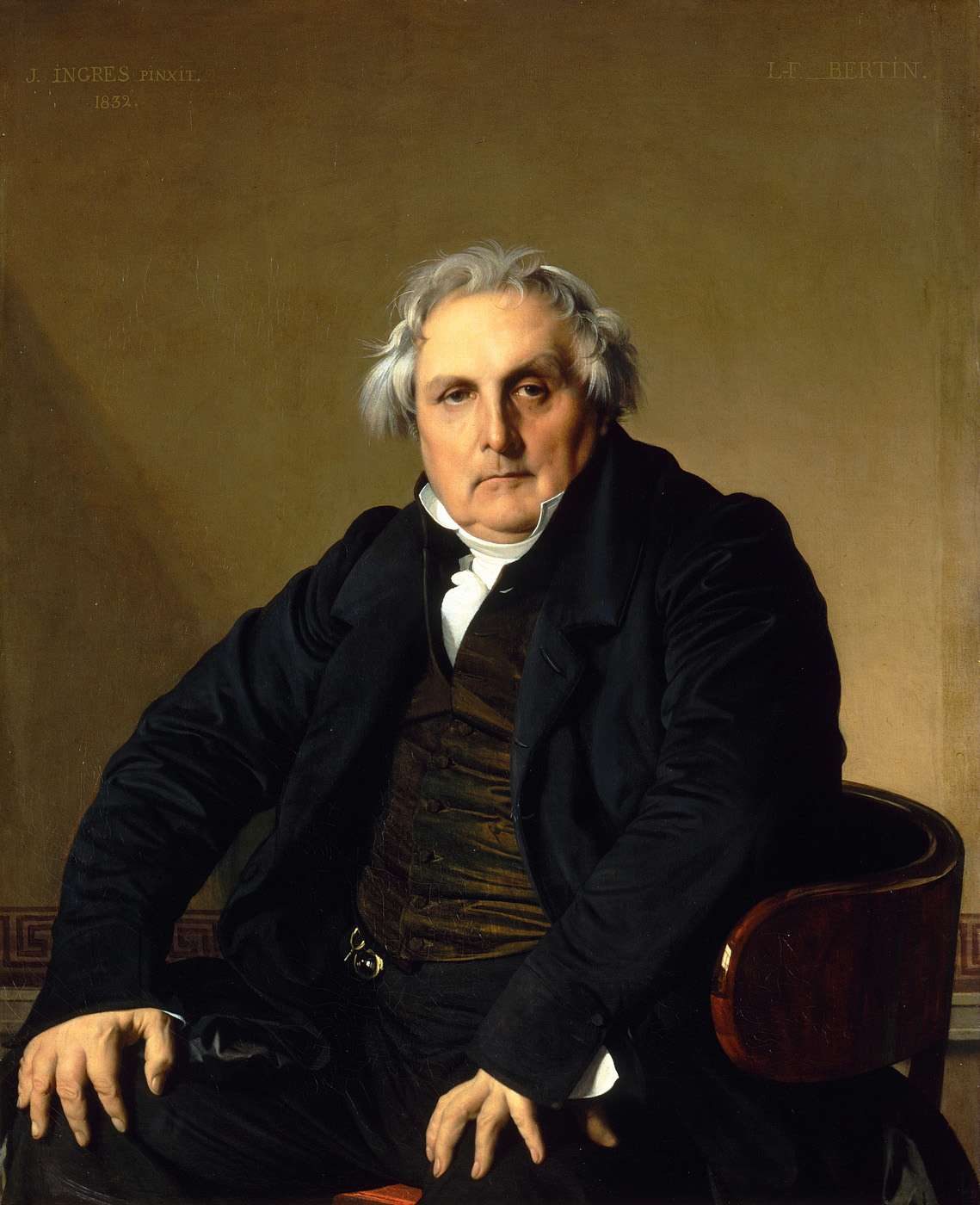
🎧 This work has audio narration — listen in the appTake a moment to really look at Ingres' "Portrait of Monsieur Bertin." Notice how Bertin’s fingers are almost exaggerated in their detail, resting confidently on his thighs. This isn’t just a casual pose; it’s a declaration of his character. The way those fingers are rendered speaks volumes about his personality—assertive yet approachable, reflecting a man who commanded respect but also warmth.
Now, consider the background. That rich brown ground, softly lit from the right, isn’t just a backdrop; it enhances Bertin’s imposing figure, creating a sense of depth and intimacy. Ingres spent considerable time agonizing over this pose, wanting to capture not just Bertin’s physicality but the essence of who he was—a politically savvy art collector and a friend to the artist.
This portrait, painted in 1832, marked a pivotal moment in Ingres' career, transitioning from a reluctant portraitist to one celebrated for his ability to convey the complexities of character. It was a time when Ingres was gaining acclaim, yet he still viewed portraits as a distraction from his grander historical works.
As you stand here, think about the relationship between the artist and his subject. What do you think Ingres saw in Bertin that made him willing to invest so much time and effort into this portrait? What stories might those fingers tell if they could speak?
Jean-Auguste-Dominique Ingres was a pivotal figure in French Neoclassicism, born on August 29, 1780, in Montauban. He was the son of a versatile artist, which nurtured his early artistic inclinations. Ingres studied under Jacques-Louis David in Paris, where he developed a commitment to academic traditions, aspiring to elevate history painting above all genres. His early career was marked by struggles, as critics dismissed his style as archaic, yet he persevered, achieving recognition with works like "The Vow of Louis XIII" in 1824.
His portraits, characterized by expressive distortions, became his most celebrated contributions, influencing modern artists such as Matisse and Picasso. Ingres's time in Italy, from 1806 to 1824, was crucial; he immersed himself in the study of Renaissance masters, which shaped his distinctive style. Despite facing criticism for his meticulous approach, he remained steadfast in his vision of beauty, emphasizing drawing over color.
Later in life, he returned to Paris, where he continued to create significant works, including "The Turkish Bath." Ingres's legacy endures as a bridge between classical traditions and modern art, embodying the tension between adherence to established norms and the evolving landscape of artistic expression. He passed away on January 14, 1867, leaving behind a profound impact on the art world.
At 66, Bertin was a prominent figure in the French upper-middle class, known for his role as the director of the Journal des débats. The genesis of this commission is somewhat shrouded in mystery, but it is believed that Bertin's connection to Ingres was facilitated through his son, Édouard, who was a student of the painter. Ingres completed the portrait at Bertin's estate, Le Château des Roches, where he mingled with notable guests like Victor Hugo and Hector Berlioz. The painting was a critical success, showcased at the Paris Salon of 1833, and it solidified Ingres' reputation as a master portraitist. Despite Bertin's initial concerns about being caricatured, the portrait became widely celebrated, eventually entering the Louvre's collection in 1897 after passing through Bertin's family.
As you gaze at the 'Portrait of Monsieur Bertin,' take a moment to appreciate Ingres' meticulous brushwork and the way he handles light and color. The painting is structured with Bertin sitting in three-quarter profile, which not only enhances his imposing figure but also creates a dynamic composition. Notice the pronounced detail in Bertin's fingers, resting on his thighs—this isn’t just a casual pose; it’s a calculated choice that reflects his assertive yet approachable personality. The rich brown background, softly illuminated from the right, serves to heighten the sense of intimacy and depth, drawing your eye toward Bertin's face. Ingres' technique emphasizes realism, capturing the nuances of aging with furrowed skin and thinning hair, yet there’s a restless energy in the way Bertin is portrayed, suggesting a man of both authority and warmth. The reflective surface of the chair adds another layer of complexity, hinting at the unseen light source and creating a sense of space that envelops Bertin. This careful orchestration of elements showcases Ingres' mastery in blending realism with psychological depth.
The 'Portrait of Monsieur Bertin' stands as a pivotal work in art history, influencing both academic painters and modernists alike. Ingres' ability to convey character through portraiture set a new standard, inspiring artists such as Léon Bonnat and later figures like Pablo Picasso and Félix Vallotton. This painting is often regarded as Ingres' finest male portrait, showcasing his unique blend of neoclassical precision with a modern psychological insight that would resonate through the ages. It marked a shift in portraiture, where the focus moved from mere likeness to a deeper exploration of personality and character, paving the way for future generations of artists to delve into the complexities of human expression.
An intriguing anecdote about the creation of this portrait involves Ingres' struggle to find the perfect pose for Bertin. At one point, he was so frustrated that he nearly abandoned the project. However, during a casual conversation in Bertin's salon, he observed the sitter's demeanor as he engaged with his sons in a spirited discussion. This moment of inspiration led Ingres to declare, 'Your portrait is made,' capturing not just Bertin's likeness but the essence of his authoritative yet warm personality.
The chair in which Bertin sits is not just a prop; its reflective surface adds depth to the composition and hints at an unseen light source, enhancing the overall realism of the painting. This detail showcases Ingres' mastery of light and texture, contributing to the intimate atmosphere of the portrait.
Ingres faced significant frustration while trying to find the right pose for Bertin, even considering abandoning the project. However, a moment of inspiration struck during a lively discussion in Bertin's salon, leading him to capture not just the likeness but the essence of Bertin's character.
The portrait was completed at Bertin's estate, Le Château des Roches, which served as a retreat for Ingres and a social hub where he mingled with notable figures like Victor Hugo and Hector Berlioz. This setting likely influenced the relaxed yet authoritative demeanor captured in Bertin's portrayal.