The Fight Between Mars and Minerva
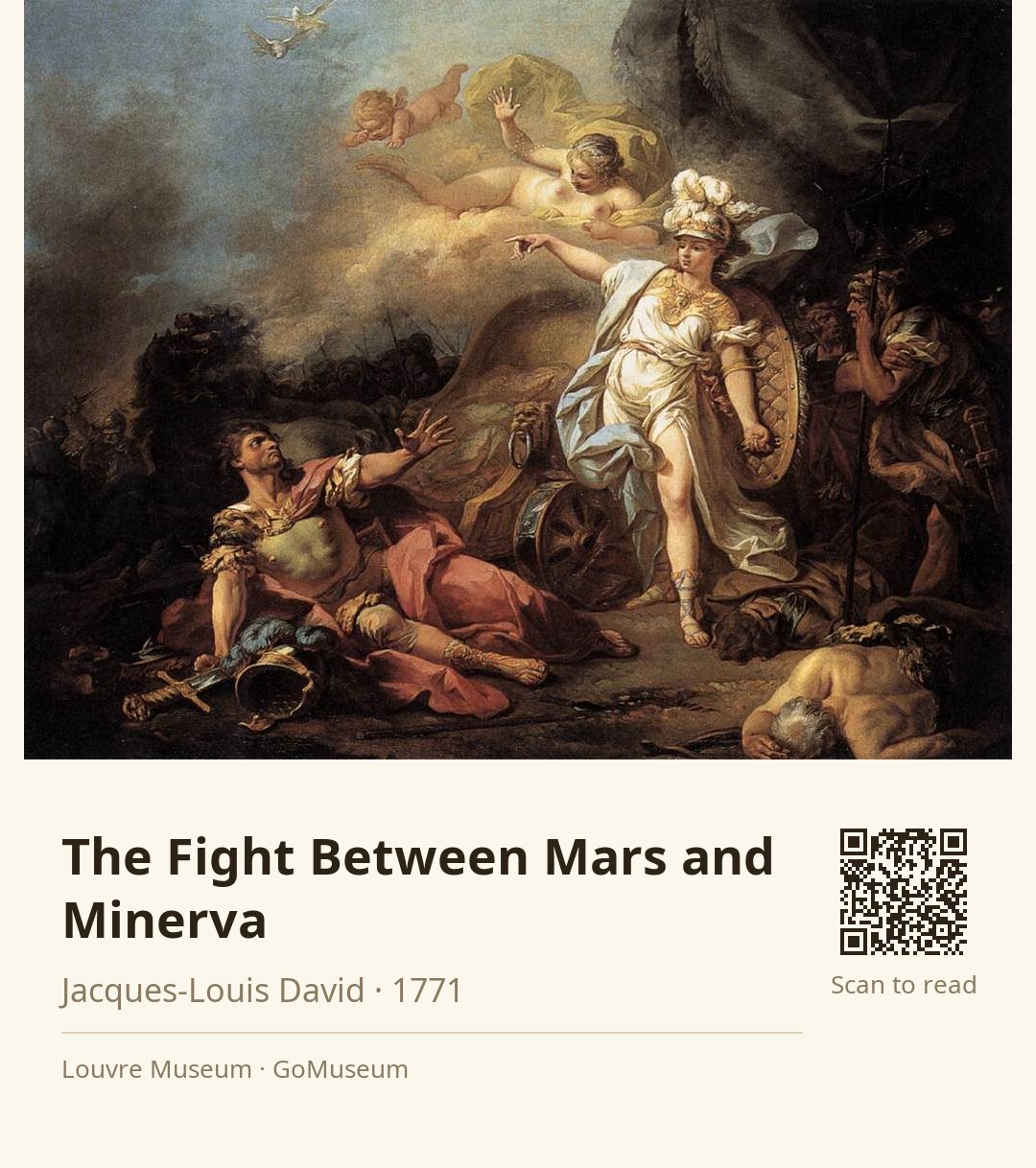
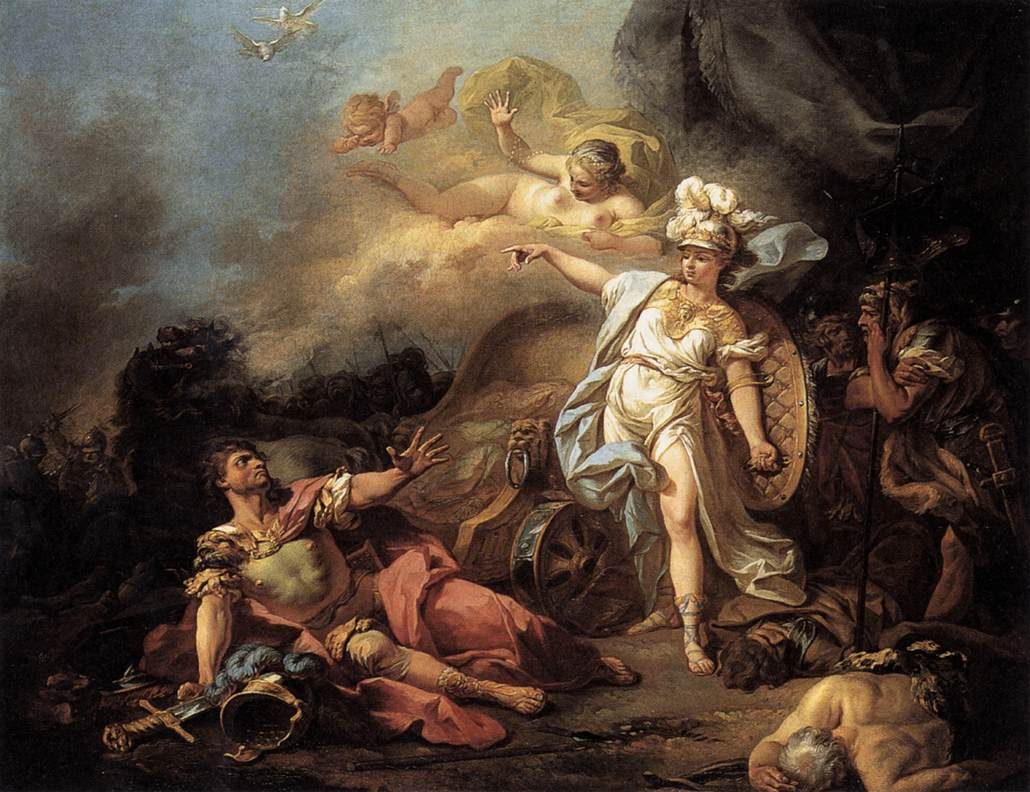
🎧 This work has audio narration — listen in the appTake a moment to really look at "The Fight Between Mars and Minerva." Notice how the figures are locked in a fierce struggle, with Minerva skillfully dodging Mars’s attack. Look closely at the tension in their bodies—Mars, with his muscular frame, reaches out desperately, while Minerva stands poised, her expression fierce and determined.
These details matter because they capture the essence of the conflict between war and wisdom, a theme that resonates deeply in both ancient mythology and David's own time. This painting was created in 1771, during a period when France was grappling with its own identity and values, much like the gods depicted here.
David painted this piece for the Prix de Rome competition, a prestigious art contest that would define his career. Although he didn’t win, this work marked a pivotal moment in his transition from Rococo frivolity to a more serious, neoclassical style that would come to define his legacy.
As you stand here, think about the struggle between these two powerful figures. What do you think David was trying to say about the balance of power in society? How does that resonate with the conflicts we see today?
Jacques-Louis David was a pivotal French painter born on August 30, 1748, in Paris. He emerged as the leading figure of the Neoclassical movement, marking a significant shift in artistic taste from the frivolity of Rococo to a more austere and emotionally charged classical style. His early life was marked by personal tragedy, losing his father at a young age, which shaped his character and determination to pursue art against familial expectations.
David's career flourished during the tumultuous political landscape of France, where he became an ardent supporter of the French Revolution, aligning himself with figures like Robespierre. His political engagement influenced his art, producing iconic works such as "The Death of Marat" and "The Coronation of Napoleon," which reflect both historical narratives and his personal convictions. After the fall of Napoleon, David faced exile but continued to influence generations of artists, establishing a legacy that shaped academic painting in the early 19th century. His works remain celebrated in major museums, particularly the Louvre, solidifying his status as a cornerstone of Western art history. David's life and art were inextricably linked to the evolving identity of France, embodying the spirit of revolution and the quest for artistic integrity.
Jacques-Louis David created 'The Fight Between Mars and Minerva' in 1771 for the Prix de Rome competition, a prestigious event that challenged artists to produce a new work in just ten weeks. The theme that year was drawn from the Iliad, a nod to the era's fascination with classical themes. Despite David's efforts, he only secured second prize, with the top honor going to Joseph-Benoît Suvée. This loss stung, especially as David felt that harsh critiques from his mentor, Joseph-Marie Vien, had unfairly influenced the judges. Disillusioned with the academy, which he deemed corrupt, David's frustration would fuel his artistic evolution. His eventual victory in 1774 with a different piece marked a turning point in his career, but this early setback left a lasting impression on him, shaping his future endeavors and his views on artistic merit.
In 'The Fight Between Mars and Minerva,' David employs a dynamic composition that captures the intense struggle between the two figures. Notice how the diagonal lines created by their bodies draw your eye across the canvas, enhancing the sense of movement and conflict. The brushwork is vigorous, with bold strokes that convey the energy of the fight. David's use of color is particularly striking; the vibrant reds and deep blues contrast sharply, emphasizing the emotional stakes of the scene. Light plays a crucial role too, illuminating Minerva's determined expression while casting Mars in shadow, symbolizing the clash between wisdom and brute force. This careful orchestration of elements not only heightens the drama but also reflects David's shift from the Rococo style towards a more serious neoclassical approach, where every detail serves a narrative purpose.
Created for the Prix de Rome competition, it showcases David's early mastery of Neoclassicism, a style that would later define his career and influence generations of artists. This painting, while not awarded the top prize, reflects David's rejection of the Rococo frivolity that dominated the era, steering art towards a more austere and moralistic approach. His focus on classical themes and dramatic narratives paved the way for a new artistic language, resonating with the political upheaval of his time and influencing the trajectory of modern art. Remember, this painting is more than just a competition entry; it's a statement of intent that helped reshape the artistic landscape of France and beyond.
Did you know that Jacques-Louis David painted 'The Fight Between Mars and Minerva' as part of a fierce competition? In 1771, he had just ten weeks to create a masterpiece that would impress the judges and secure the prestigious Prix de Rome. Despite his talent, he only managed to snag the second prize, losing out to Joseph-Benoît Suvée. This disappointment stoked a fire in David, leading him to criticize the academy as a dishonest institution. His frustration with the competition and the academy would shape his future works and his relationship with the art world.
Yes, there is a smaller copy attributed to David, measuring 28 x 34 cm, which is displayed at the Palais des Beaux-Arts in Lille.