The Duchess of Chaulnes Represented as Hebe
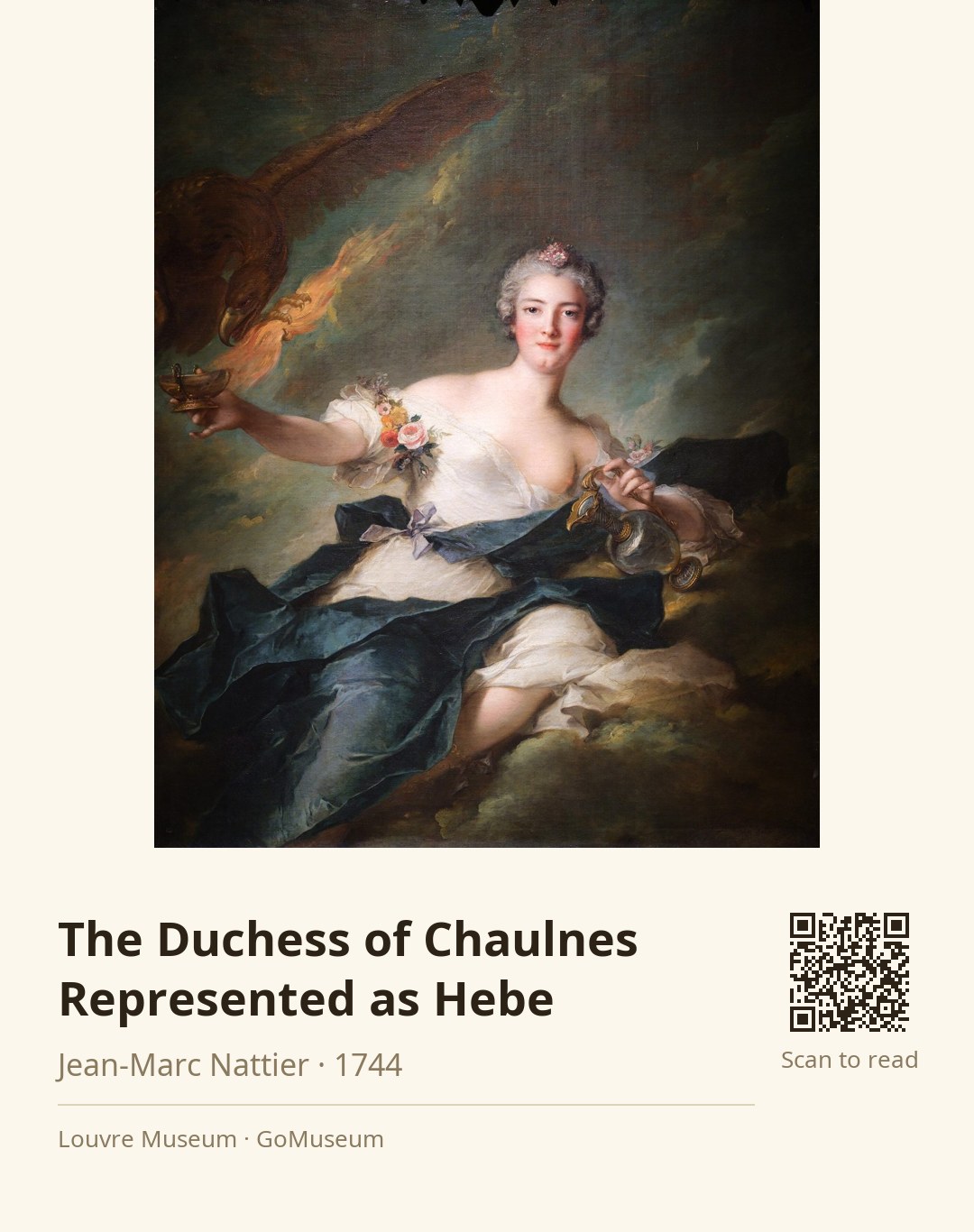
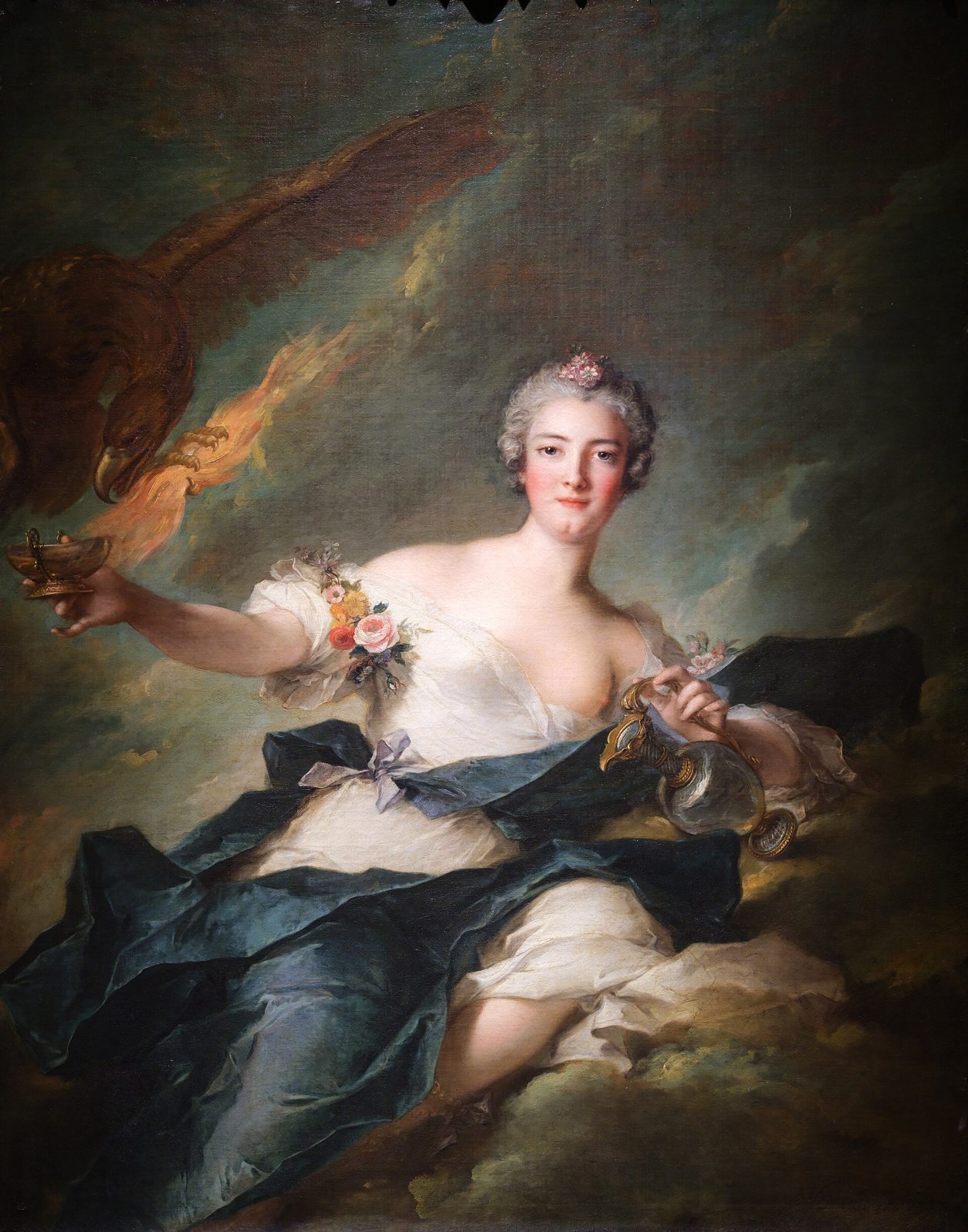
🎧 This work has audio narration — listen in the appThe ornate lamp held by the Duchess of Chaulnes in this painting glows softly, its flame flickering just above the eagle's beak. Dressed in a flowing white gown with a blue sash, she is adorned with flowers, embodying the youthful goddess Hebe, the cupbearer to the gods. The intricate details of the lamp and the vessel shaped like a bird's head highlight the luxurious life of the French aristocracy in the 18th century, while the eagle adds a sense of movement and majesty to the scene.
Jean-Marc Nattier, the artist behind this work, was renowned for his ability to blend realism with mythological themes, often portraying the elite of Louis XV's court as classical figures. His portraits were not merely likenesses; they elevated the sitters, transforming them into symbols of grace and beauty. Nattier's technique involved delicate brushwork and a masterful use of color, capturing the textures of fabric and the softness of skin, which made his works highly sought after in his time.
Created in 1744, "The Duchess of Chaulnes Represented as Hebe" was exhibited at the Salon des artistes français in Paris the following year, showcasing Nattier's skill in allegorical portraiture.
Jean-Marc Nattier was a prominent French painter born on March 17, 1685, in Paris, into a family of artists. His father, Marc Nattier, was a portrait painter, and his mother, Marie Courtois, was a miniaturist, which fostered his early artistic talent. Nattier gained recognition for his portraits of the ladies at Louis XV's court, often depicting them in classical mythological attire. His style combined realism with allegorical elements, allowing him to enhance the beauty of his subjects while maintaining their likeness.
Initially aspiring to be a history painter, Nattier's career shifted due to financial difficulties following the collapse of John Law's financial schemes in 1720. This led him to focus on portraiture, where he excelled and became the official portraitist for the court. His works, characterized by grace and charm, were highly sought after, and he became known for his ability to blend mythological themes with contemporary figures.
Despite his success, Nattier faced personal hardships later in life, including the tragic loss of his son and a decline in public favor. He passed away on November 7, 1766, leaving behind a legacy as one of the leading portraitists of the 18th century, with many of his works housed in major museums today.
Jean-Marc Nattier's painting, 'The Duchess of Chaulnes Represented as Hebe,' was created in 1744 and showcased at the Salon des artistes français in Paris in 1745. This exhibition was a significant event, drawing attention to Nattier's unique blend of mythological themes with the portraiture of the French aristocracy. The painting was well-received, contributing to Nattier's reputation as a leading portraitist of his time. Over the years, it passed through notable collections, including that of Wildenstein and Carlos de Beistegui, reflecting its esteemed status in the art world.
The brushwork is delicate yet confident, allowing for a soft rendering of the Duchess's gown and the intricate details of the lamp she holds. The use of a pastel palette, combined with rich earth tones, creates a harmonious balance that draws the viewer's eye. The central composition, with the figure of the Duchess framed against a swirling backdrop of clouds, enhances the sense of movement and drama. The eagle, positioned near the flame of the lamp, not only adds a dynamic element but also symbolizes power and nobility, reinforcing the Duchess's elevated status. Nattier's ability to capture the textures of fabric and the play of light across surfaces elevates the painting beyond mere likeness, creating an almost ethereal quality.
Interestingly, Nattier's career took a turn due to financial difficulties in the early 1720s, which forced him to focus on portraiture rather than his initial aspirations as a history painter. This shift led to his rise as the favored artist of the ladies at Louis XV's court, where he became known for his ability to beautify his subjects while maintaining their likeness, a skill that made his portraits immensely popular.
Nattier initially aspired to be a history painter, but financial difficulties led him to concentrate on portraiture instead.
Nattier's graceful and charming portraits of court ladies became very fashionable, as he had the ability to beautify his subjects while retaining their likeness.