A Basket of Flowers with a Butterfly
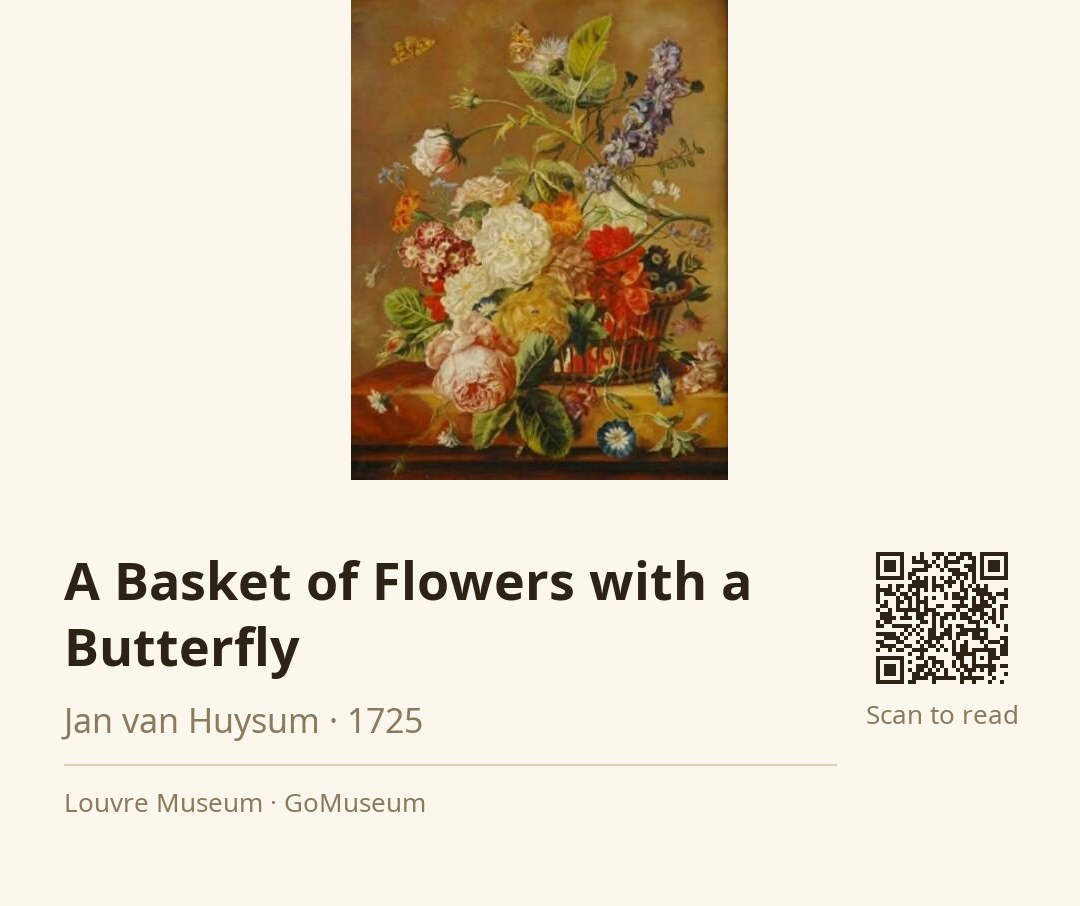
🎧 This work has audio narration — listen in the appThe butterfly perched delicately among the vibrant blooms in Jan van Huysum's "A Basket of Flowers with a Butterfly" draws your eye into a world of exquisite detail. Roses, peonies, and delphiniums burst forth in a riot of reds, pinks, yellows, and blues, their petals so finely rendered that you can almost feel their texture. The butterfly and a bee add a sense of life to this still life, suggesting a moment captured in time, where nature's beauty is both celebrated and preserved.
Van Huysum, renowned as the premier flower painter of his era, meticulously arranged these blossoms, showcasing his mastery of color harmony and composition. His technique involved painting from fresh-cut flowers, allowing him to create lifelike arrangements that reflect the seasonal cycles of nature. The warm, muted brown background enhances the vivid colors of the flowers, creating a striking contrast that highlights their vibrancy. This painting exemplifies the vanitas style, where the beauty of nature is intertwined with the fleeting nature of life, inviting contemplation of both beauty and transience.
Created in 1725, this work is a testament to van Huysum's skill and dedication, as he often spent years perfecting his compositions. His paintings were highly sought after by collectors, including royalty, and his influence on flower painting would resonate for decades following his death.
Jan van Huysum, born on April 15, 1682, in Amsterdam, is celebrated as one of the foremost flower painters of the Dutch Golden Age. The son of painter Justus van Huysum, Jan honed his craft under the influence of his family's artistic legacy. He specialized in still lifes, particularly floral arrangements, where his meticulous attention to detail and vibrant compositions set him apart. His works often featured intricate elements like water droplets and ants, showcasing his ability to capture nature's beauty with remarkable precision.
Van Huysum's secretive nature regarding his painting techniques contributed to his mystique, as he preferred to work in solitude. His paintings were highly sought after during his lifetime, fetching prices that sometimes exceeded those of Rembrandt. He maintained a successful career, with notable patrons including princes and prominent figures of his time. His influence on flower painting persisted long after his death in 1749, shaping the genre for decades.
While he occasionally ventured into landscapes, these works were less celebrated compared to his floral masterpieces. Van Huysum's legacy endures, with his paintings held in prestigious collections worldwide, affirming his status as a pivotal figure in art history.
Jan van Huysum's 'A Basket of Flowers with a Butterfly' was created in 1725, a period when he was already celebrated as the foremost flower painter of his time. The painting has a rich provenance, having passed through the hands of Jean de Jullienne and Madame Montulle in the 18th century before reaching the royal collection. It was admired for its intricate detail and vibrant colors, receiving acclaim that solidified van Huysum's reputation. The painting's journey through history reflects the esteem in which it was held, as it became a sought-after piece among the elite, showcasing the artist's mastery and the cultural significance of floral still lifes in the Dutch Golden Age.
Jan van Huysum's influence on flower painting is profound and long-lasting. His innovative approach to composition and color set a standard that many artists aspired to for decades after his death. The elegance and technical skill evident in his works inspired a generation of painters, including his own family members and contemporaries. His style contributed to the evolution of the vanitas genre, where the beauty of nature is intertwined with themes of mortality and transience. This legacy not only shaped the direction of floral still lifes but also reinforced the cultural appreciation for nature in art, making his work a cornerstone in the history of Dutch painting.
Interestingly, Jan van Huysum was known to be quite secretive about his painting techniques. He preferred to work in solitude, often shunning the presence of others in his studio. The only artist who was allowed to observe him at work was Margareta Haverman, a student who later became a flower painter herself. This exclusivity added an air of mystery to his process, as van Huysum guarded his methods closely, ensuring that his unique style remained his own.