The Adoration of the Magi
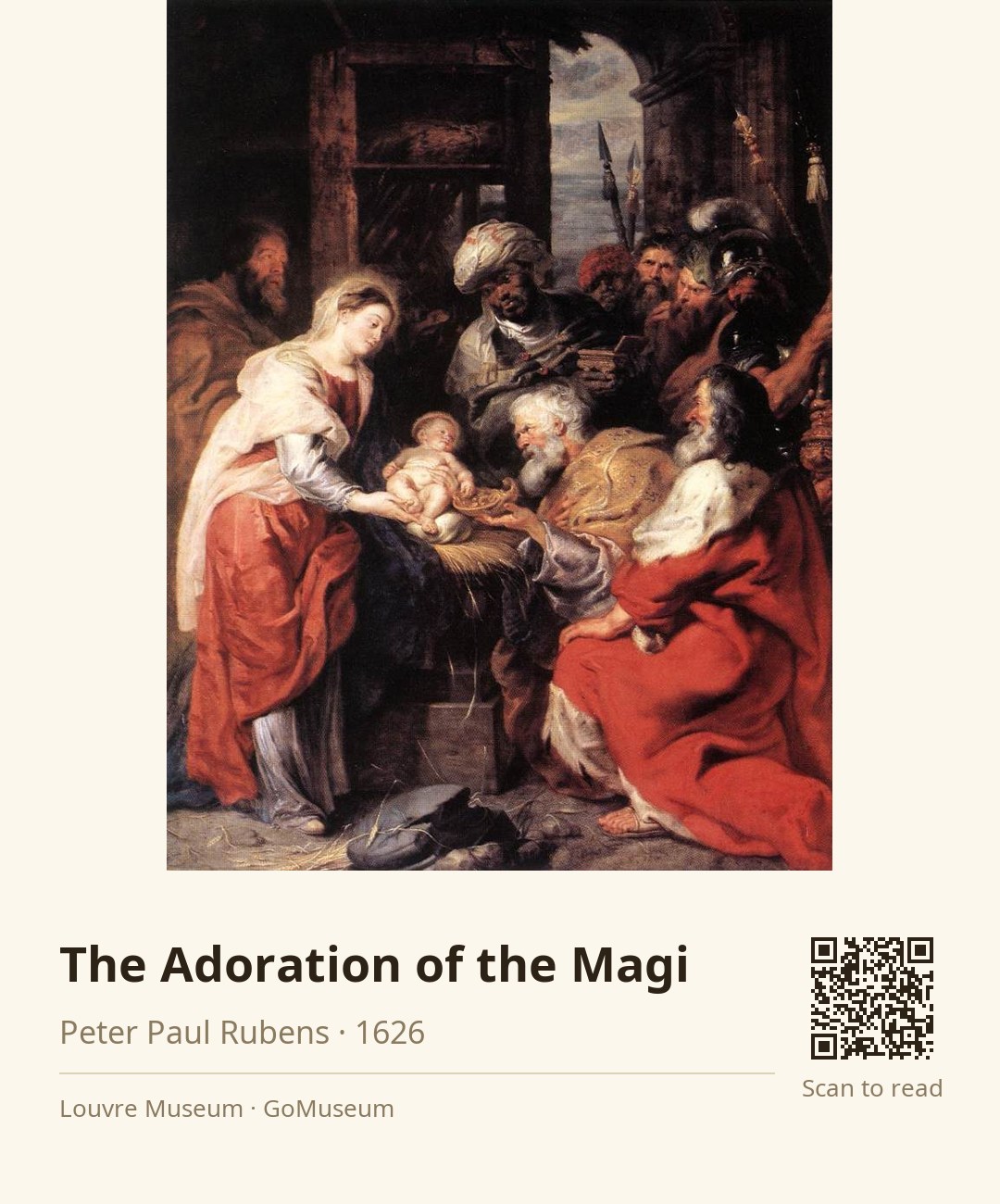
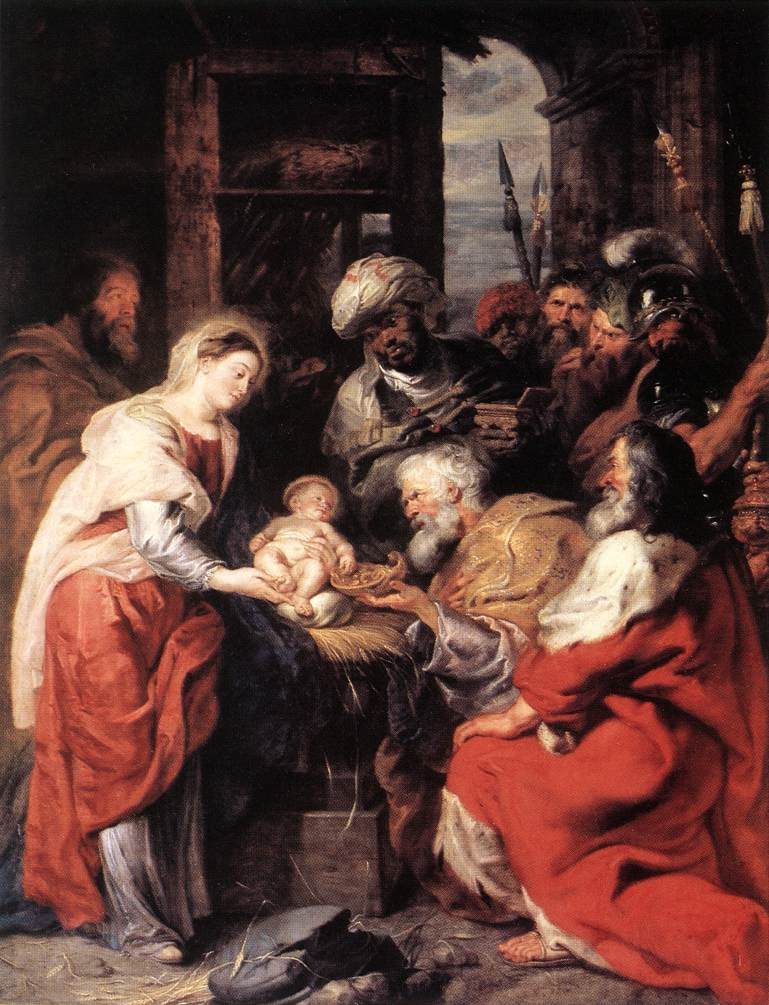
🎧 This work has audio narration — listen in the appA woman in a vibrant red and white garment cradles a baby in a rustic interior, while an elderly man kneels before them, offering a golden object. Behind them, a man in a turban holds a container, and several figures with spears linger in the background, creating a rich tapestry of life and reverence. The warm palette of reds, golds, and browns, combined with Rubens's soft brushwork, invites you into this intimate moment of devotion.
This scene, known as "The Adoration of the Magi," captures the biblical moment when the Magi present gifts to the newborn Christ, symbolizing the recognition of his divine kingship. Rubens’s choice to depict this event with such warmth and detail reflects the emotional depth and grandeur typical of Baroque art, emphasizing movement and the interplay of human connection. The figures are not just characters in a story; they embody the cultural and spiritual significance of this moment, bridging the earthly and the divine.
Created in 1626, this painting showcases Rubens's mastery in blending classical themes with the vibrant energy of his time, illustrating the importance of religious narratives during the Counter-Reformation. The work was part of the collection of Louis XVI and has traveled through history, representing the enduring legacy of Rubens's artistry.
Sir Peter Paul Rubens was a Flemish artist and diplomat born on June 28, 1577, in Siegen, Germany. He is celebrated as a leading figure of the Flemish Baroque tradition, renowned for his dynamic compositions that intertwine classical and Christian themes. Rubens's work is characterized by vibrant color, movement, and sensuality, aligning with the dramatic style of the Counter-Reformation. His prolific output includes altarpieces, portraits, landscapes, and history paintings, with a catalog of over 1,400 works.
Raised in Antwerp after fleeing religious persecution, Rubens was a well-educated humanist and skilled diplomat, knighted by both Philip IV of Spain and Charles I of England. He managed a large workshop that produced art for European nobility and collectors, and he was also an influential art dealer. Rubens's designs extended beyond painting; he created tapestries, prints, and even contributed to architectural projects.
His legacy endures in the art world, where he is recognized for his mastery of color and form, and his ability to convey emotion and drama. Rubens's impact on Baroque art is profound, making him a pivotal figure in the evolution of Western art history. He passed away on May 30, 1640, leaving behind a rich artistic heritage that continues to inspire.
An interesting tidbit about 'The Adoration of the Magi' is that Rubens painted it on a large canvas measuring 290 by 218 centimeters, which was quite ambitious for the time. This scale not only allowed for intricate details but also made the painting a striking centerpiece in any space.
In addition to painting, Rubens was also a prolific designer for Flemish tapestry workshops and created frontispieces for publishers in Antwerp.
Rubens was a passionate art collector and owned one of the largest collections of art and books in Antwerp.
Yes, Rubens wrote a book titled 'Palazzi di Genova' in 1622, which included illustrations of the palaces in Genoa.