 Image: Sailko
Portrait of Mr. Dennery
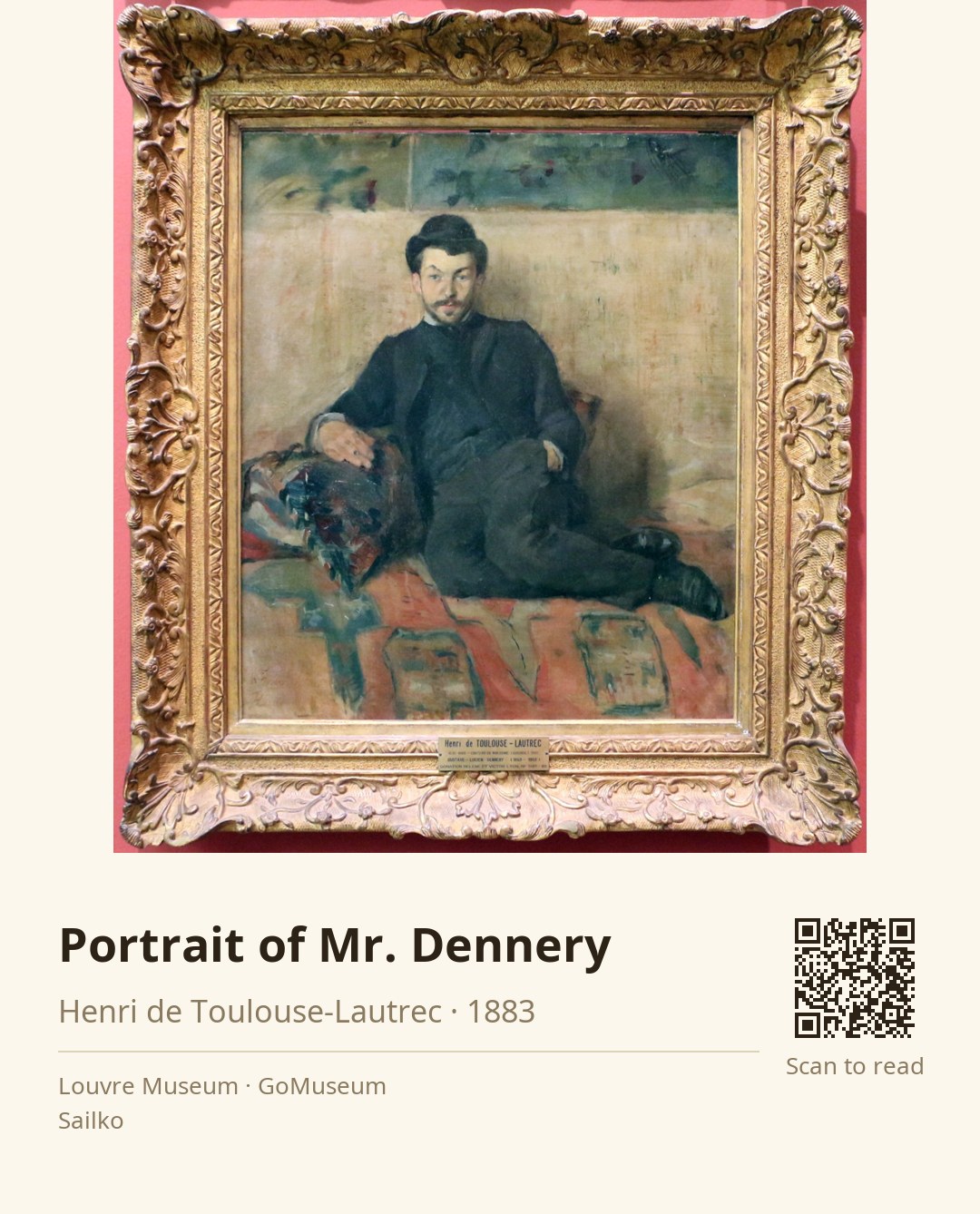
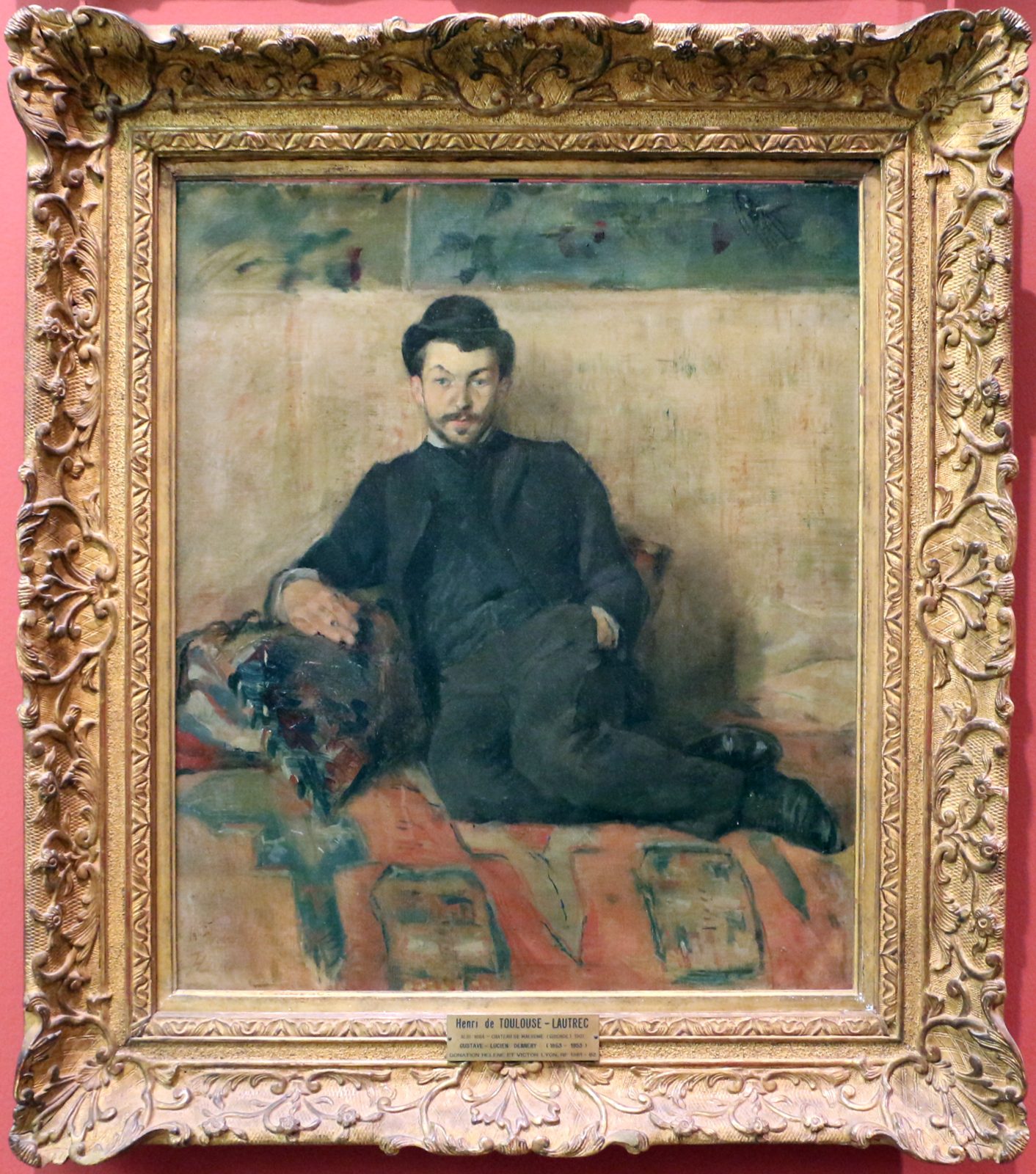
🎧 This work has audio narration — listen in the appLucien Dennery, seated comfortably on a patterned sofa, captures your attention with his relaxed posture, one arm resting on a cushion while the other rests on his knee. Dressed in dark clothing and a hat, his presence is accentuated by the earthy tones of the background, where muted greens and browns create a simple yet intimate setting. The smooth brushwork highlights the textures of his attire and the softness of the fabric, inviting you into a moment of quiet reflection.
This portrayal of Dennery, a fellow artist and friend of Toulouse-Lautrec, reflects the artist's keen ability to convey personality through subtle details. The choice of a muted palette not only emphasizes the subject but also evokes a sense of familiarity and warmth, suggesting a shared space between the artist and his model. Toulouse-Lautrec's focus on the figure, rather than an elaborate background, draws you into the essence of the man, making the viewer feel as though they are part of this intimate gathering.
Created in 1883, this painting exemplifies Toulouse-Lautrec's early exploration of portraiture, a genre that would become a significant aspect of his oeuvre. His unique perspective on the people around him, particularly those within the bohemian circles of Paris, laid the groundwork for the vibrant depictions of life that would follow in his career.
Henri de Toulouse-Lautrec, born on November 24, 1864, in Albi, France, was a pivotal figure in the Post-Impressionist movement. Despite his aristocratic background, his life was marked by physical challenges, including a genetic disorder that stunted his growth. This condition shaped his unique perspective and deep empathy for the marginalized, particularly the vibrant characters of Paris's Belle Époque, including prostitutes and performers.
Toulouse-Lautrec's artistic journey began in earnest when he moved to Paris, where he immersed himself in the bohemian lifestyle of Montmartre. His work, characterized by bold colors and dynamic compositions, captured the essence of nightlife, cabarets, and the human condition. He became known for his posters and illustrations, which brought the world of the Moulin Rouge to life. His relationships with fellow artists, such as Vincent van Gogh, and his romantic entanglements, notably with Suzanne Valadon, influenced his creative output.
His legacy endures as he is celebrated for his innovative approach to art and his ability to convey the spirit of an era. Toulouse-Lautrec's works continue to resonate, offering a glimpse into the exuberance and struggles of a society on the brink of modernity, solidifying his place in art history as a masterful chronicler of the human experience. He passed away on September 9, 1901, leaving behind a rich body of work that remains influential to this day.
Dennery' showcases his mastery of oil paint on canvas, with a focus on smooth brushwork that captures texture and detail. The earthy palette of muted greens and browns not only sets a calming backdrop but also draws attention to the subject's relaxed demeanor. The way he handles light is subtle yet effective, highlighting the contours of Dennery’s face and the fabric of his clothing. The composition is intimate, centering on the figure in a way that invites viewers into a private moment.
Interestingly, Toulouse-Lautrec's physical stature, due to his health issues, often led to him being overlooked in social settings. Yet, this very experience of feeling like an outsider fueled his artistic vision, allowing him to capture the lives of those around him with a unique perspective that resonated deeply with the bohemian lifestyle of his time.