The Sleep of the Child Jesus
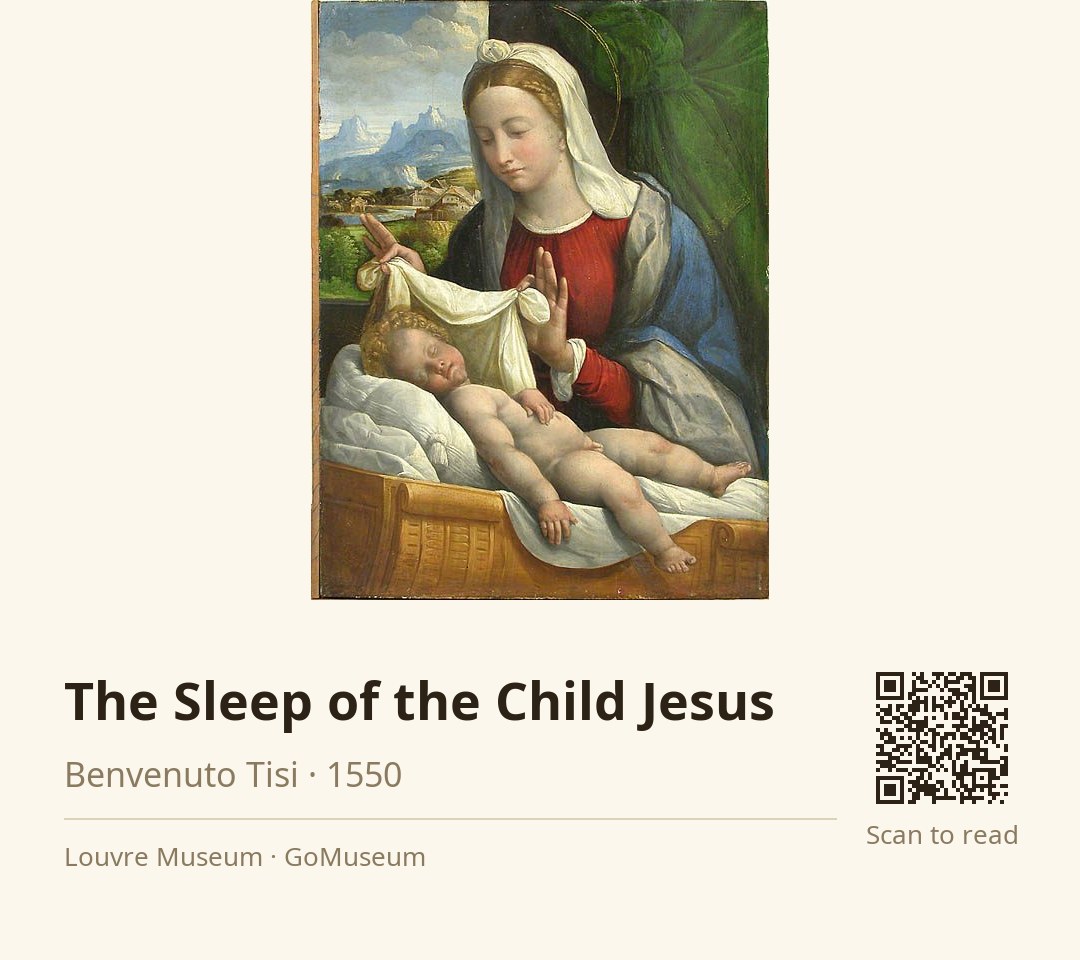
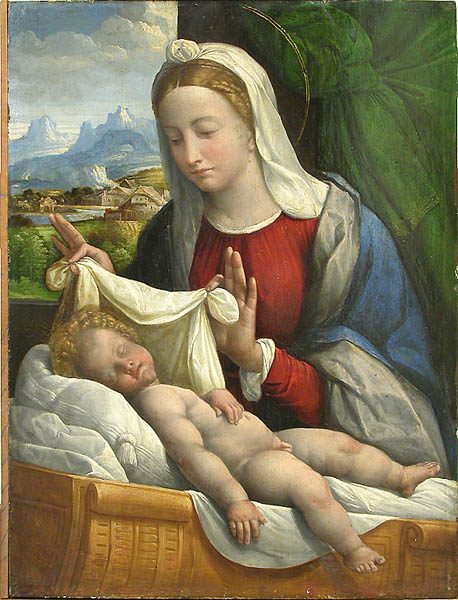
🎧 This work has audio narration — listen in the appThe sleeping infant Jesus cradled in a wooden cradle captures a moment of profound tenderness, with the Virgin Mary gently draping a cloth over him. Her red garment and blue cloak contrast beautifully against the soft earth tones of the landscape behind them, where rolling hills and a distant village create a serene backdrop. The calm expression on Mary’s face reflects a deep bond, emphasizing the intimate connection between mother and child.
This painting, created in 1550 by Benvenuto Tisi, known as Il Garofalo, showcases his mastery of color and detail, particularly in the delicate rendering of fabric and the tranquil landscape. Garofalo, a prominent figure in the Late Renaissance, was influenced by the artistic environment of Ferrara, where he developed a style that blended elements from Lombard, Roman, and Venetian traditions. His works often convey a sense of idyllic beauty, and this piece is no exception, inviting viewers into a sacred moment of peace.
Garofalo continued to paint until the onset of blindness in 1550, a condition that would mark the final years of his life. He passed away in Ferrara in 1559, leaving behind a legacy of works that reflect both his technical skill and the spiritual themes prevalent in his time.
Benvenuto Tisi, known as Il Garofalo, was an influential Late Renaissance painter born in 1481 near Ferrara, Italy. His artistic journey began at the court of Duke d'Este, where he developed a style that blended the elaborate aesthetics of the Ferrarese court with influences from Lombard, Roman, and Venetian art. Tisi's early works were characterized by idyllic themes, but he later embraced a more stylized classical approach, shaped by his time in Rome and his brief collaboration with Raphael.
Throughout his career, Garofalo produced significant works, including "Massacre of the Innocents" and "Betrayal of Christ," showcasing his mastery in both oil and fresco. His paintings often reflect a harmonious Venetian color palette, even in his less successful pieces. Despite losing his sight in 1550, he continued to paint, driven by a deep devotion to his craft and faith. Garofalo's legacy endures through his influence on students like Girolamo da Carpi and his recognition by art historians, including Vasari, who noted his contributions to the Ferrarese school. He passed away in 1559, leaving behind a rich artistic heritage.
Garofalo's technique in 'Le Sommeil de l'Enfant Jésus' is a captivating blend of meticulous brushwork and a harmonious color palette. The oil paint, applied with precision, allows for a rich texture that brings the fabric of Mary’s garments to life. Notice how the reds and blues of her clothing contrast with the soft earth tones of the landscape, creating a visual dialogue that enhances the intimacy of the scene. The composition is structured to draw your eye toward the tender interaction between mother and child, with the cradle acting as a focal point. The gentle curves of the hills in the background echo the peacefulness of the moment, while the cloudy sky adds a layer of depth, suggesting a divine presence. This careful orchestration of elements showcases Garofalo's ability to evoke emotion and narrative through his craft.
One intriguing anecdote about Garofalo is that he was known to sign some of his works with a small image of a carnation, a nod to his nickname. Despite facing the challenge of blindness later in life, he continued to paint, demonstrating an unwavering dedication to his craft and a profound love for art.
Even after becoming blind, Garofalo continued to paint, showing his deep commitment to art and his passion for his craft.