 Image: Sailko
Portrait of Juliette de Villeneuve
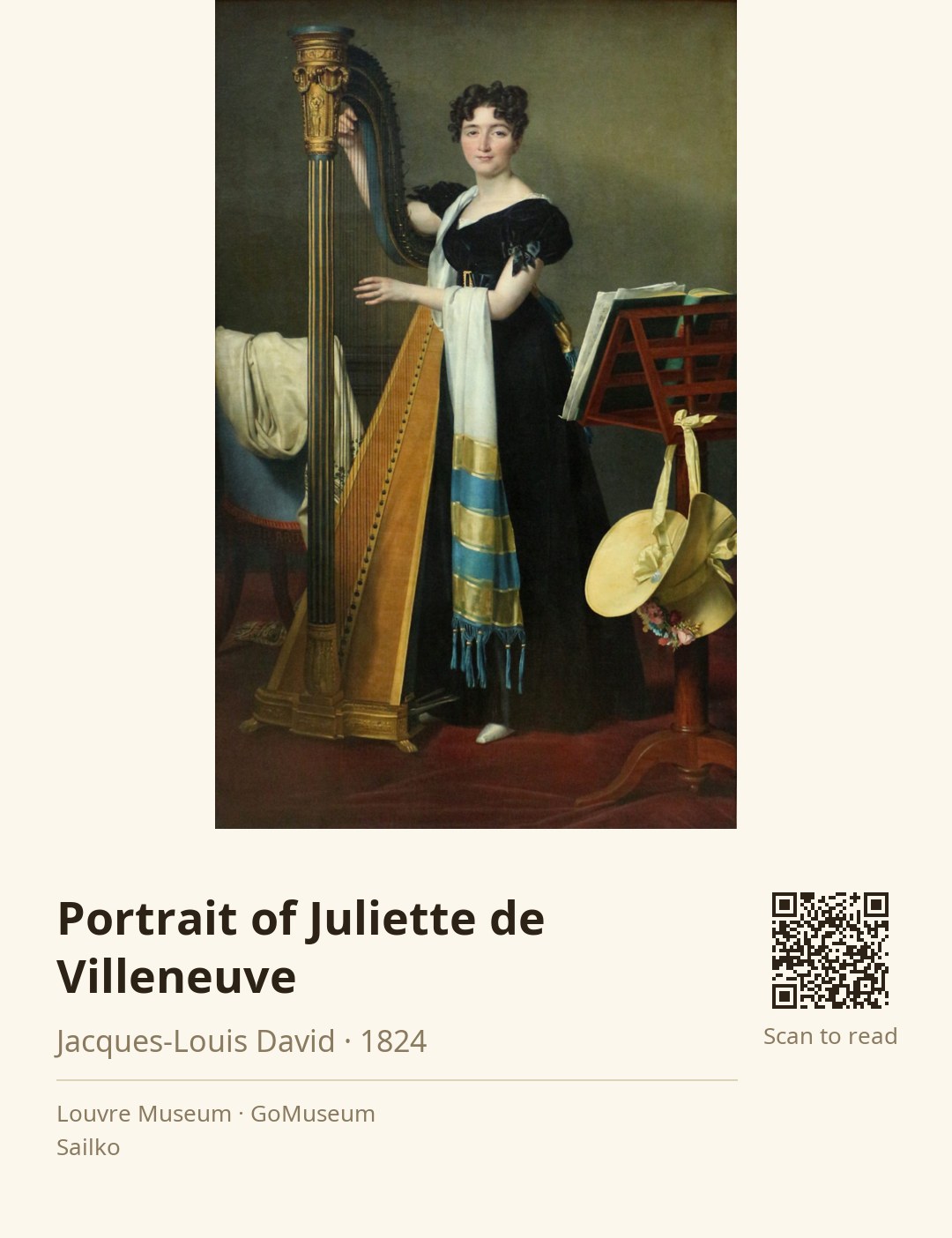
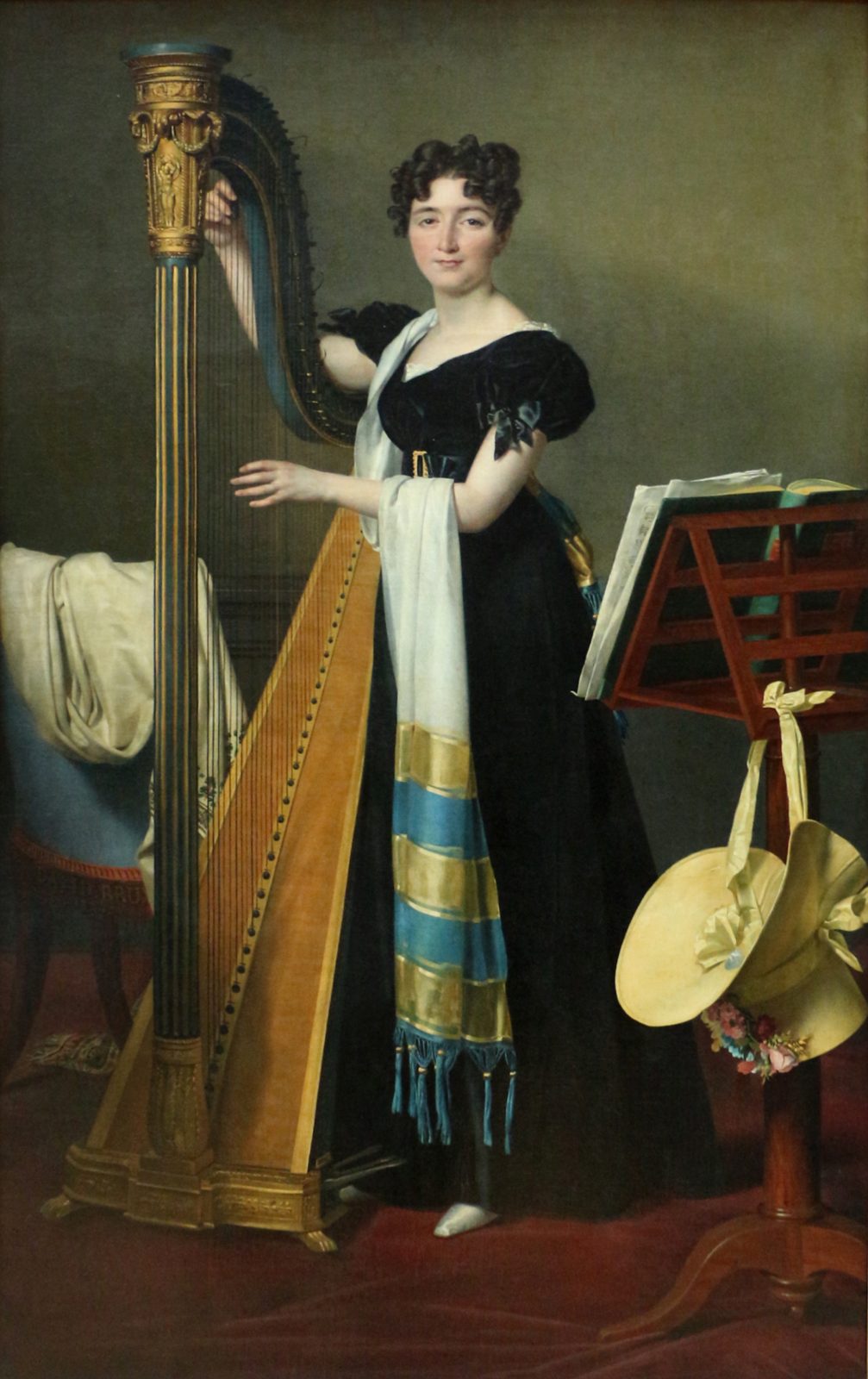
🎧 This work has audio narration — listen in the appTake a moment to really look at the "Portrait of Juliette de Villeneuve." Notice how Juliette's fingers delicately rest on the strings of her harp, as if she’s about to play a haunting melody. Her gaze meets yours, inviting you into her world, a world filled with music and perhaps a touch of melancholy.
These details matter because they reveal more than just her beauty; they hint at her life as part of the Napoleonic exiles in Brussels. This was a time of upheaval, and her harp symbolizes the solace of art amidst chaos. Jacques-Louis David, the artist, was also navigating his own tumultuous journey, having fled France after the fall of Napoleon. This portrait, painted in 1824, was his last original work before he passed away, making it a poignant farewell to a life steeped in dramatic change.
Juliette was not just a subject; she was connected to the very fabric of European history, being the niece of Julie Clary, who was married to Joseph Bonaparte, Napoleon’s brother. David received a substantial commission for this piece, reflecting the deep ties he had with the exiled community.
As you stand here, think about what stories this portrait could tell if it could speak. What emotions do you think Juliette felt as she posed for David? What music might she have played?
Jacques-Louis David was a pivotal French painter born on August 30, 1748, in Paris. He emerged as the leading figure of the Neoclassical movement, marking a significant shift in artistic taste from the frivolity of Rococo to a more austere and emotionally charged classical style. His early life was marked by personal tragedy, losing his father at a young age, which shaped his character and determination to pursue art against familial expectations.
David's career flourished during the tumultuous political landscape of France, where he became an ardent supporter of the French Revolution, aligning himself with figures like Robespierre. His political engagement influenced his art, producing iconic works such as "The Death of Marat" and "The Coronation of Napoleon," which reflect both historical narratives and his personal convictions. After the fall of Napoleon, David faced exile but continued to influence generations of artists, establishing a legacy that shaped academic painting in the early 19th century. His works remain celebrated in major museums, particularly the Louvre, solidifying his status as a cornerstone of Western art history. David's life and art were inextricably linked to the evolving identity of France, embodying the spirit of revolution and the quest for artistic integrity.
In 1824, Jacques-Louis David painted the 'Portrait of Juliette de Villeneuve,' a striking image of a young woman poised with a harp. This was a significant moment in David's life, as it marked the last original work he created before his death in 1825. After the fall of Napoleon and during the Bourbon Restoration, David found himself in Brussels, a city that became a refuge for many Napoleonic exiles, including Juliette, who was the niece of Julie Clary, the wife of Joseph Bonaparte. Juliette's mother commissioned this portrait, paying David a handsome sum of 6,000 francs. The painting eventually made its way to the Louvre in Lens, where it has been housed since its acquisition in 1997. David's final years were shaped by the support of these exiles, who provided him with commissions during a tumultuous period of his life, reflecting a poignant chapter in both his career and the broader narrative of post-Napoleonic Europe.
As you gaze at the 'Portrait of Juliette de Villeneuve,' pay attention to the delicate brushwork that brings Juliette to life. David's technique is masterful; the soft strokes create a sense of intimacy, inviting you into her world. Notice how the light dances across her face, highlighting her features while casting gentle shadows that add depth. The color palette is warm, with rich tones that evoke a sense of nostalgia and longing. The composition is carefully structured, with Juliette's harp positioned prominently, symbolizing her connection to music and art. David's choice to depict her in this moment, fingers poised over the strings, captures a fleeting sense of anticipation, making you wonder what melody she might play. This interplay of light, color, and composition creates an emotional resonance that lingers long after you look away.
David, who had been a titan of the Neoclassical movement, influenced generations of artists with his dramatic compositions and moral seriousness. In this portrait, you see a young woman poised with a harp, a symbol of both elegance and the quiet resilience of the Napoleonic exiles. This painting, commissioned by Juliette's mother, reflects the personal connections David maintained with his sitters, even in exile. It matters because it marks the end of an era—David's last original work before his death—and serves as a bridge to the evolving styles that would follow. Remember this: in Juliette's serene expression lies the weight of history, a testament to the enduring spirit of art amidst political upheaval.
Did you know that this painting, 'Portrait of Juliette de Villeneuve', was actually the last original work created by Jacques-Louis David before his death? After this, he only produced a replica of one of his earlier pieces.
Juliette was the niece of Julie Clary, who was married to Joseph Bonaparte, Napoleon's brother, linking her to the Bonaparte family and the broader Napoleonic history.
David was paid 6,000 francs for the portrait by Juliette's mother, a substantial sum that underscores the importance of his commissions from the exiled community during his time in Brussels.