Liberty Leading the People
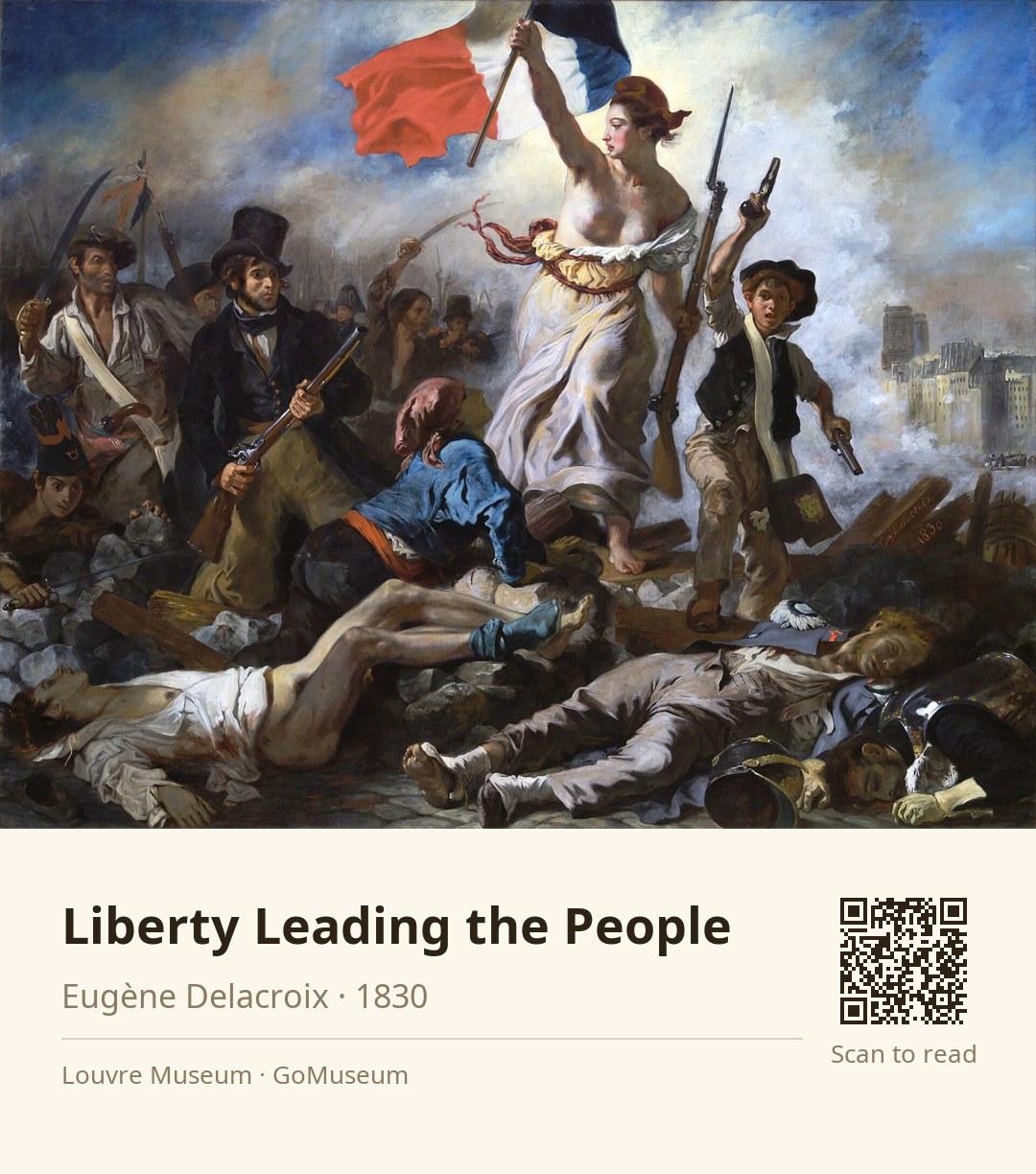
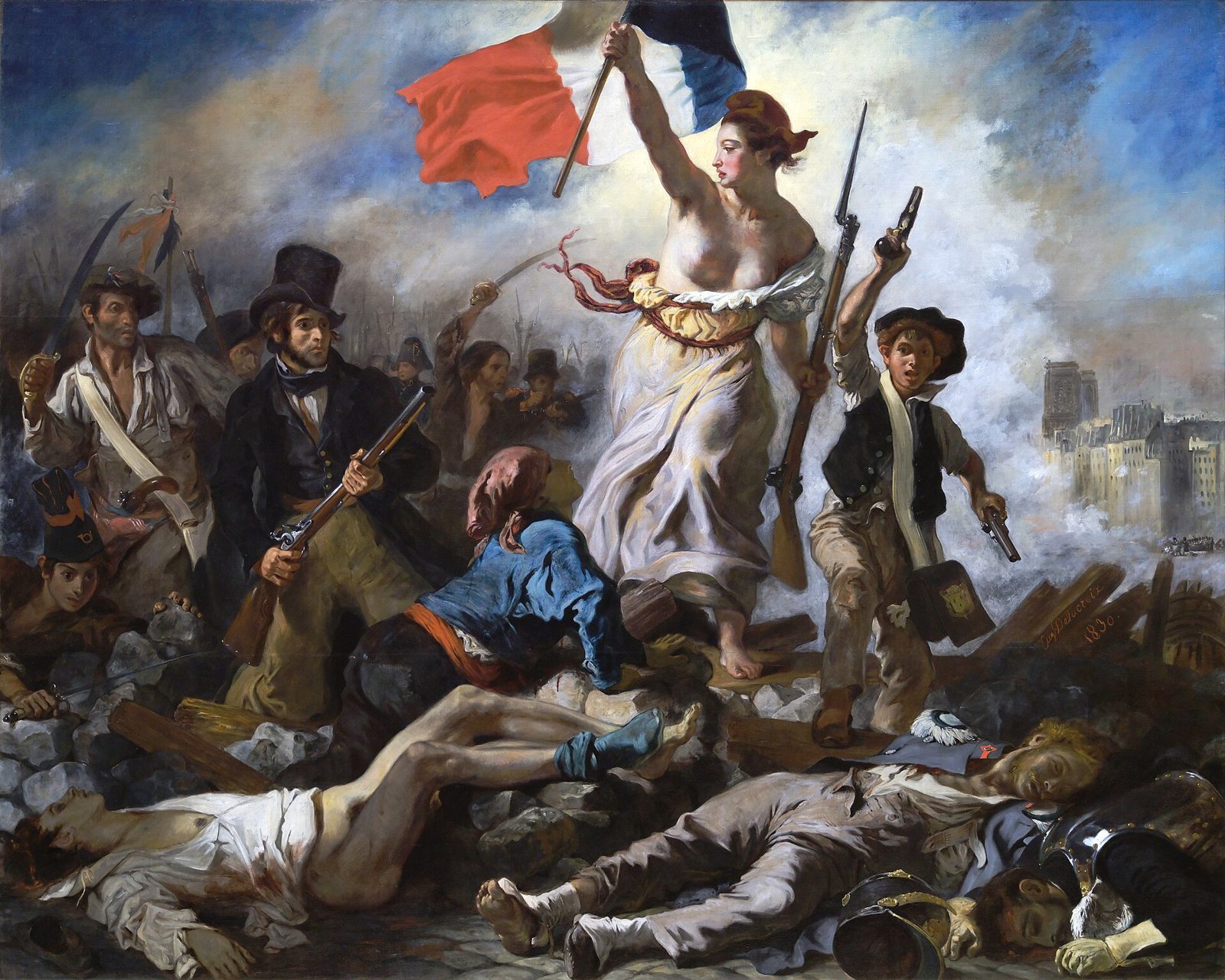
🎧 This work has audio narration — listen in the appAs you stand before Eugène Delacroix's "Liberty Leading the People," take a moment to let your eyes wander over the powerful figure of Liberty herself. Notice how she strides confidently over the rubble and bodies, her bare breast exposed and a tricolor flag held high. This isn’t just a painting; it’s a rallying cry, a vivid representation of the July Revolution of 1830 that shook France to its core.
Look closely at her Phrygian cap, a symbol of freedom that dates back to the first French Revolution. It’s not just a hat; it’s a beacon of hope and rebellion, connecting the past struggles for liberty with the fervor of the moment Delacroix captured. The contrast of her vibrant colors against the darker tones of the fallen soldiers emphasizes her role as a guiding light amidst chaos.
Delacroix painted this scene during a time when the Romantic movement was blossoming, breaking away from the rigid structures of Neoclassicism. He infused emotion and movement into his work, making it not just a depiction of an event, but a visceral experience that draws you in. The diverse group of revolutionaries around Liberty—from the bourgeois in top hats to the young boy with pistols—illustrates the unity of different social classes in the fight for freedom.
This painting was first exhibited in 1831, and its political message was so potent that it was often hidden away for fear of inciting unrest. Today, it stands as a symbol of the enduring spirit of revolution and the quest for liberty, not just in France, but around the world.
As you take in this masterpiece, think about what liberty means to you. What battles for freedom resonate in your own life?
Eugène Delacroix, born on April 26, 1798, in Charenton-Saint-Maurice, emerged as a pivotal figure in the French Romantic movement. He diverged from the Neoclassical ideals of his contemporaries, such as Ingres, drawing inspiration from the vibrant colors and dynamic forms of Rubens and the Venetian Renaissance. His works, characterized by dramatic themes and a passion for the exotic, often reflected his travels in North Africa and his fascination with the sublime forces of nature, influenced by literary figures like Lord Byron.
Delacroix's career was marked by both acclaim and controversy; his early painting, "The Barque of Dante," stirred public debate but was ultimately recognized by the state. His later masterpieces, including "Liberty Leading the People," showcased his ability to blend historical and contemporary narratives, solidifying his status as a master of expressive brushwork and color theory. His innovative techniques laid the groundwork for Impressionism and inspired the Symbolist movement.
Despite personal struggles, including early orphanhood and financial hardships, Delacroix's legacy endures. He is celebrated not only for his paintings but also for his lithographs and writings, which reveal his artistic philosophy. As one of the last old masters, his influence resonates through art history, marking him as a cornerstone of Romanticism and a precursor to modern artistic movements. Delacroix passed away on August 13, 1863, leaving a profound impact on the art world.
Eugène Delacroix's 'Liberty Leading the People' was painted in the autumn of 1830, a time when France was in the throes of political upheaval. Commissioned by the French government, it was first exhibited at the Paris Salon in 1831. The painting was intended to serve as a reminder of the July Revolution that had recently toppled King Charles X. However, its potent political message led to its removal from public display shortly after. Initially bought for 3,000 francs, it was meant to hang in the throne room of the Palais du Luxembourg, but after the June Rebellion of 1832, it was hidden away due to fears it might incite unrest. Delacroix himself described the work in a letter, expressing his desire to capture the spirit of the barricades, stating, 'if I haven't fought for my country, at least I'll paint for her.' Over the years, the painting was stored away, hidden in attics, and only saw the light of day again during the Second Republic in 1848. It wasn't until 1874 that it found a permanent home in the Louvre, where it has since become an iconic symbol of liberty and revolution, resonating with audiences worldwide.
As you gaze at 'Liberty Leading the People,' take a moment to appreciate Delacroix's masterful technique. The painting is a vibrant explosion of color and movement, showcasing his departure from the precise lines of Neoclassicism. Notice how the brushwork feels almost restless, with loose strokes that convey both chaos and energy. The composition is cleverly structured around a pyramid, drawing your eye to Liberty at the apex, her bright yellow dress contrasting sharply against the darker tones of the fallen soldiers below. This use of color not only highlights Liberty but also symbolizes hope amidst despair. The dynamic interplay of light and shadow enhances the drama, with sunlight filtering through the smoke, creating an ethereal glow around Liberty and the young boy beside her. Delacroix's choice to depict a diverse group of revolutionaries—each with distinct attire and expressions—further emphasizes the unity of the people in their fight for freedom. The painting's scale is monumental, allowing you to feel the weight of the historical moment it captures, making it not just a visual feast but an emotional experience.
Created in 1830, it became a symbol of the Romantic movement, emphasizing emotion over the rigid structures of Neoclassicism. Delacroix's bold use of color and dynamic composition influenced countless artists, paving the way for Impressionism and beyond. This work encapsulated the spirit of the July Revolution, making it a powerful emblem of freedom and social change. Its legacy continues to resonate, inspiring movements for liberty and democracy worldwide, and it remains a touchstone for artists grappling with themes of struggle and identity. Remember, this isn't just a depiction of a historical event; it's a call to action, a reminder of the power of art to ignite passion and provoke thought.
One surprising anecdote about 'Liberty Leading the People' is that it was initially hidden away due to its revolutionary themes. After the June Rebellion of 1832, the painting was deemed too politically charged for public display, leading to its storage in an attic for many years.
The French government bought 'Liberty Leading the People' in 1831 for 3,000 francs, intending to display it in the throne room of the Palais du Luxembourg as a reminder to the 'citizen-king' Louis-Philippe of the recent July Revolution.
Delacroix painted 'Liberty Leading the People' during a period of personal struggle; in a letter, he expressed that his bad mood was lifting thanks to hard work on this modern subject, indicating how his emotional state was intertwined with his artistic expression.
Following the June Rebellion of 1832, 'Liberty Leading the People' was deemed too politically charged for public display and was hidden away in an attic for many years, reflecting the fears of the government regarding its revolutionary themes.