 Image: Shonagon
Borghese Vase
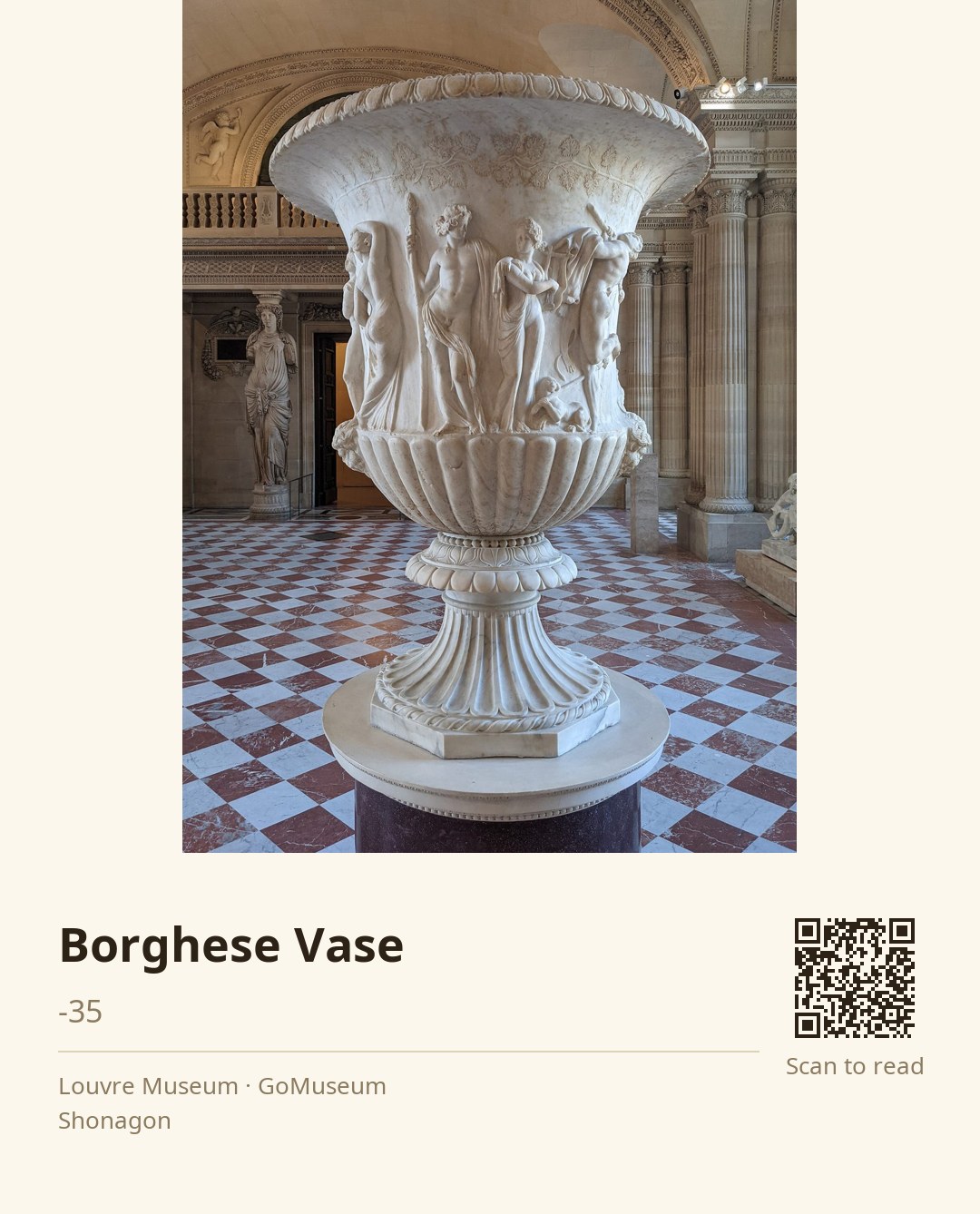
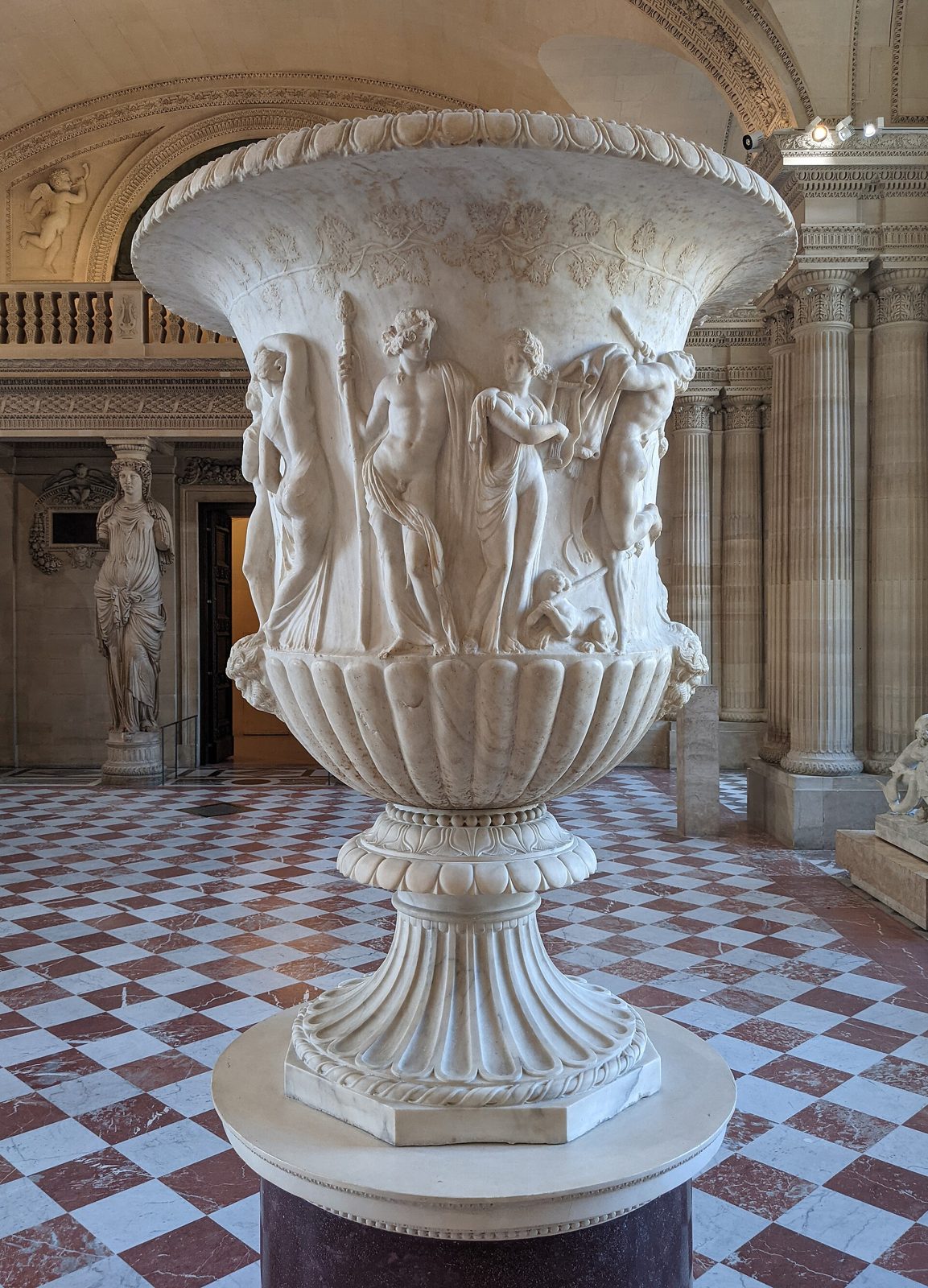
🎧 This work has audio narration — listen in the appTake a moment to really look at the Borghese Vase towering before you. Standing at 1.72 meters tall, it’s not just a vase; it’s a monumental piece of art that once graced the gardens of wealthy Romans. Notice the intricate frieze wrapping around its surface, depicting a lively Bacchanalian procession. Can you see the figures? Among them is a young Dionysus, half-naked and leaning against Ariadne, surrounded by revelers lost in ecstasy.
These details matter because they capture the essence of ancient celebrations dedicated to Dionysus, the god of wine and festivity. The figures aren’t just random; they symbolize the joy and chaos of life, reminding us that even in ancient times, people cherished moments of abandon and connection. The vase itself, crafted from Pentelic marble, was designed to be a stunning centerpiece in opulent gardens, reflecting the wealth and taste of its owner.
Rediscovered in the 16th century, this vase has a rich history, passing through the hands of the Borghese family and even Napoleon before finding its home here in the Louvre. It’s fascinating to think about how many eyes have gazed upon it, each person drawn into its story.
As you stand here, consider: what stories do you think this vase could tell if it could speak? What moments of joy and revelry might it have witnessed?
As you gaze at the Borghese Vase, take a moment to appreciate the Pentelic marble's smooth surface and the intricate details of the bas-reliefs. Notice how the figures come alive with movement, their expressions frozen in a moment of Bacchanalian revelry. The vase's gadrooned lip and fluted stem showcase the skill of the sculptor, who expertly balanced form and function. The craftsmanship speaks to a time when artisans poured their souls into their work, each chisel mark telling a story of dedication and artistry.
Rediscovered in the 16th century, it became a symbol of the Baroque and Neoclassical movements, influencing countless artists and collectors. Its grand scale and intricate bas-reliefs depicting Bacchanalian revelry captured the imagination of patrons, leading to numerous copies and adaptations. Think about it: this vase not only adorned gardens but also inspired the likes of Hubert Robert and John Flaxman, who drew from its imagery to create their own masterpieces. It’s a testament to how one object can ripple through time, shaping artistic trends and tastes for centuries. Remember, the Borghese Vase isn’t just a relic; it’s a bridge connecting the past to the present, echoing the timeless allure of classical themes.
Did you know that the Borghese Vase was rediscovered in a Roman garden in 1566? But here's the twist: it wasn't just any garden. It was part of the ancient site of the gardens of Sallust, a place steeped in history. This monumental piece, standing at 1.72 meters tall, was so impressive that it caught the eye of the Borghese family, who acquired it and gave it its name. Imagine the excitement of unearthing such a treasure, a relic of a bygone era, and the stories it could tell!
The vase originally had two loop handles supported by sileni heads, but these were removed after the handles broke, leaving the vase without its original functional elements.
The Borghese Vase inspired numerous copies and adaptations, including pairs made for the gardens of Versailles and reduced-scale versions used as wine coolers, showcasing its lasting impact on neoclassical design.
Hubert Robert created a capriccio that dramatically enlarged and embellished the Borghese Vase, placing it in fantastical settings such as overlooking the Colosseum, highlighting its cultural significance in art beyond its original context.