Bathsheba at Her Bath
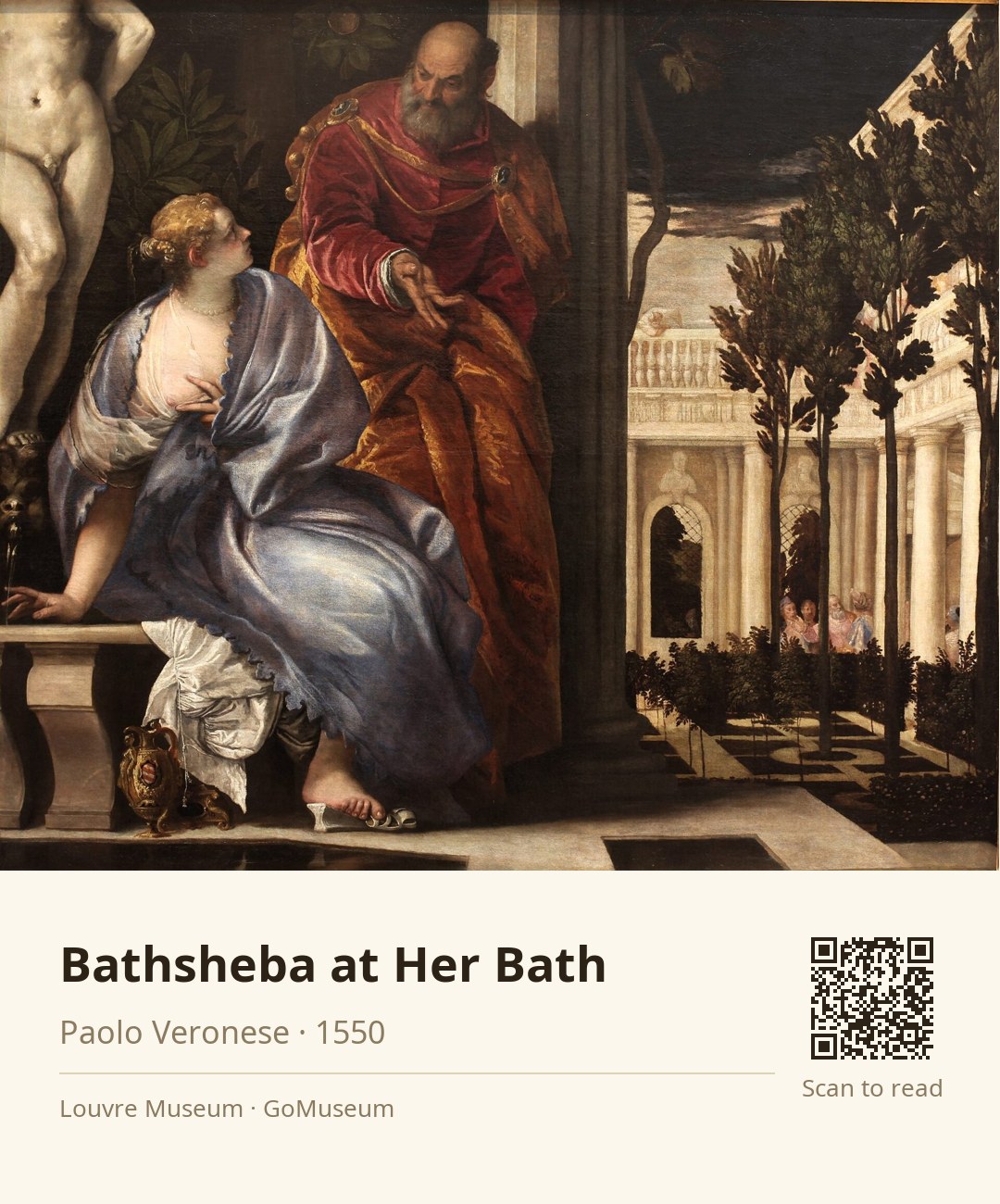
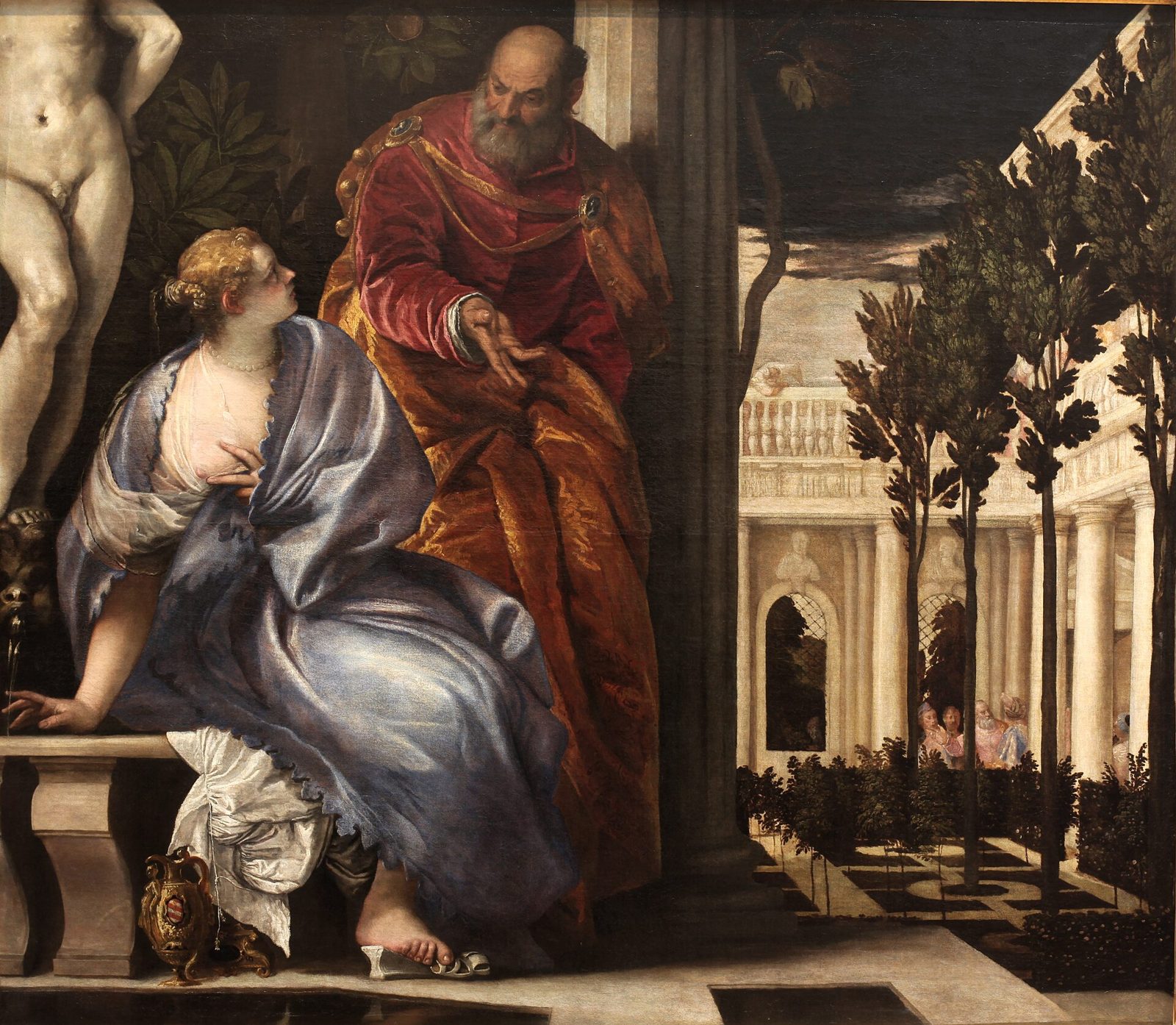
🎧 This work has audio narration — listen in the appTake a moment to really soak in the scene before you in "Bathsheba at Her Bath" by Paolo Veronese. Notice how the vibrant colors leap off the canvas, especially the rich reds and golds that drape across the figures. Look closely at Bathsheba herself; her pose is both inviting and elusive, with one hand resting on her chest, suggesting a mix of vulnerability and strength.
These details matter because they encapsulate the tension between desire and morality, a central theme in this biblical narrative. Bathsheba is not just a passive figure; she’s caught in a moment of decision, watched by King David, who is depicted as an older man, a departure from the typical youthful portrayals.
Veronese painted this piece around 1550, commissioned by a Venetian patron, and it reflects the opulence of the time, with elements like the gold-buttoned cloak of the old man in the background, reminiscent of the Doges of Venice.
As you stand here, consider: what emotions does Bathsheba evoke in you? Is she a victim of circumstance, or does she wield her own power in this moment? Let that question linger as you take in the beauty and complexity of Veronese's work.
Paolo Caliari, known as Paolo Veronese, was an influential Italian Renaissance painter born in Verona in 1528. He became a prominent figure in Venice, celebrated for his grand history paintings that depicted religious and mythological themes, such as The Wedding at Cana and The Feast in the House of Levi. Veronese was part of the esteemed trio of Venetian painters alongside Titian and Tintoretto, shaping the Late Renaissance with his vibrant color palette and dramatic compositions.
His early training under notable artists like Antonio Badile and Giovanni Francesco Caroto laid the foundation for his distinctive style, which evolved from Mannerism to a more naturalistic approach influenced by Titian. Veronese's works are characterized by elaborate narratives, majestic architectural settings, and a sense of opulence, often commissioned for the refectories of monasteries.
Despite his popularity during his lifetime, Veronese's contributions were somewhat overshadowed by his contemporaries in modern criticism. However, he garnered admiration from later artists, including Rubens and Renoir, who recognized his chromatic brilliance and elegant figures. His legacy endures, with many of his masterpieces remaining in Venice, showcasing his significant role in the history of art. Veronese passed away in 1588, leaving behind a rich artistic heritage that continues to inspire.
This painting, titled 'Bathsheba at Her Bath,' was commissioned by a Venetian patron as a marriage painting, intertwining themes of desire and justice. It made its way to France in the 17th century, becoming part of the royal collections before finding a home at the Palace of Versailles. Here, it underwent alterations to fit the grand decor, with enlargements at the top and left. In 1811, the painting was transferred to Lyon, where it remains today at the Musée des Beaux-Arts. A significant restoration in 1991 returned it to its original format, allowing viewers to appreciate Veronese's initial vision.
As you gaze at 'Bathsheba at Her Bath,' take note of Veronese's masterful use of color and light. The vibrant reds and golds create a sense of opulence, while the chiaroscuro technique adds depth and drama to the scene. The vertical division of the composition draws your eye, linking the two distinct spaces—the intimate foreground and the more reserved background—through color harmony. Veronese's brushwork feels both fluid and deliberate, capturing the tension in Bathsheba's pose. Her hand resting on her chest suggests a complex interplay of vulnerability and allure, while the old man in the background, adorned in a gold-buttoned cloak, embodies the weight of authority and desire. This careful orchestration of elements invites you to ponder the moral implications of the narrative.
This painting not only reflects the artist's mastery of color and composition but also marks a pivotal moment in the evolution of genre and religious art. Veronese's ability to depict complex themes of justice and desire through biblical stories influenced countless artists who followed, encouraging them to explore deeper emotional narratives within their works. The way he blends the two stories of Bathsheba and Susannah invites viewers to ponder the moral complexities of love and power, setting a precedent for future explorations of human emotion in art. Remember, this painting isn't just a feast for the eyes; it's a conversation starter about the human condition itself.
One intriguing aspect of 'Bathsheba at Her Bath' is its dual interpretation. While it is widely recognized as depicting the biblical story of Bathsheba and King David, some art historians suggest it also hints at the story of Susannah and the Elders. This ambiguity adds layers to the painting, inviting viewers to consider the complex themes of voyeurism and justice that resonate through both narratives.
Unlike most depictions of King David as a youthful figure, Veronese presents him as an older man, which is a departure from traditional representations and adds complexity to the narrative.
The arms depicted on the pitcher may symbolize a marriage or alliance between two powerful Venetian families, hinting at the painting's role as a marriage painting commissioned by a Venetian patron.
When 'Bathsheba at Her Bath' was housed at the Palace of Versailles, it underwent enlargements to fit the decor, which altered its original format; this was later restored in 1991 to reveal Veronese's initial vision.