 Image: Jebulon · Ibex73 · Ibex73 · GFreihalter · GFreihalter
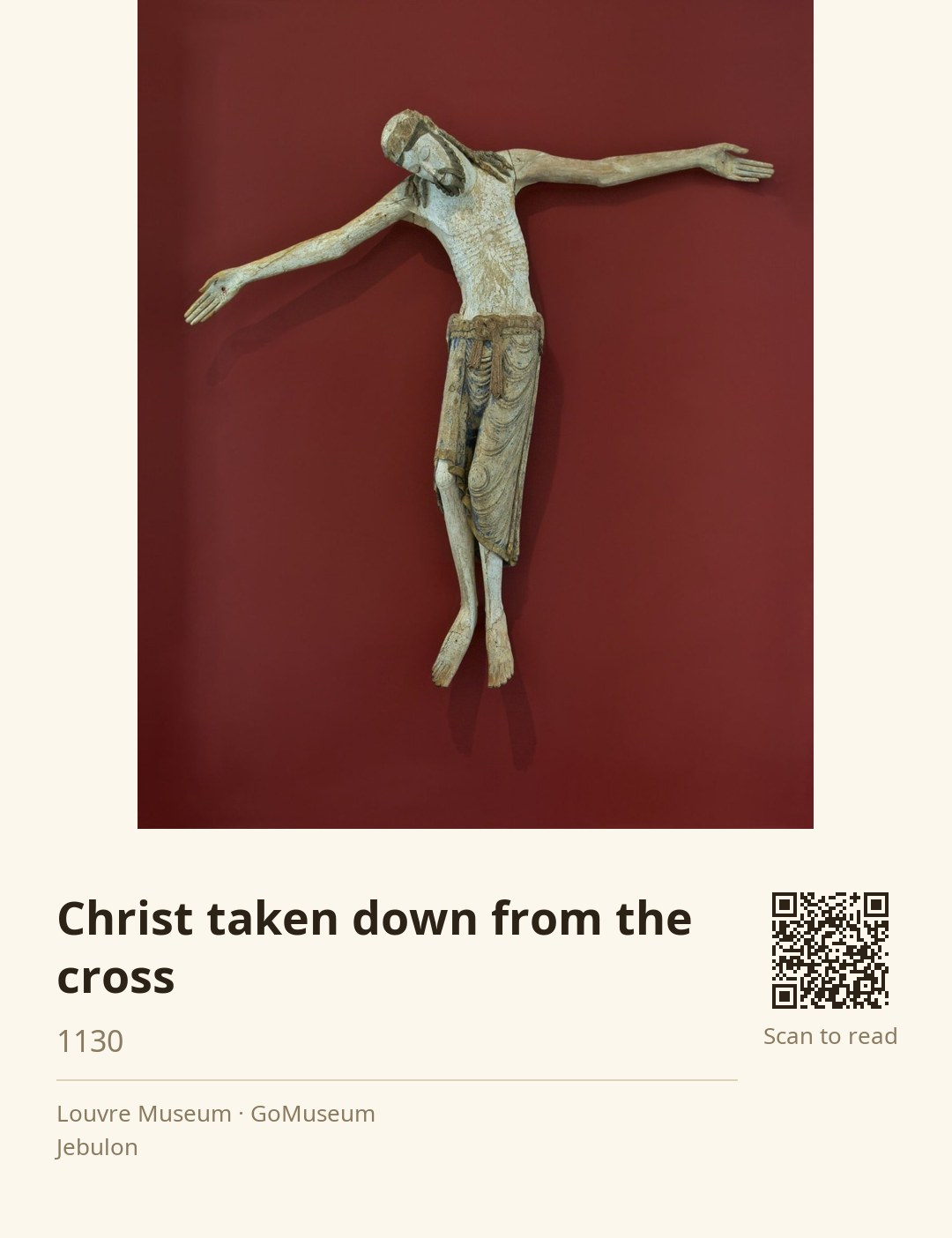
Christ taken down from the cross
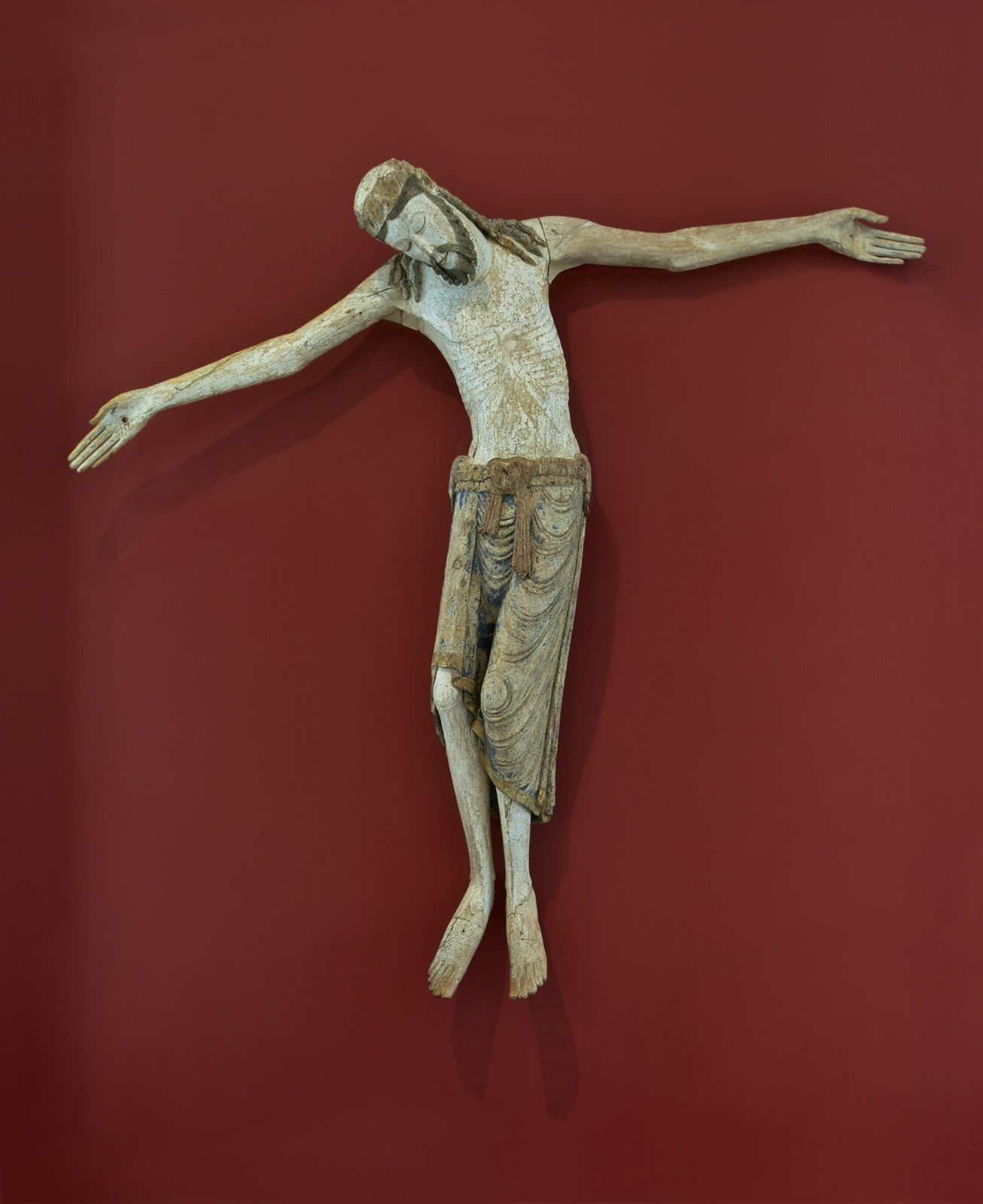
🎧 This work has audio narration — listen in the appTake a moment to really look at this sculpture, "Christ Taken Down from the Cross." Notice how elongated and serene Christ’s body appears, almost like a graceful figure in a dance rather than a victim of crucifixion. The way the drapery falls in double folds adds a sense of movement, doesn’t it?
Christ’s eyes are closed, his expression tranquil, which invites us to reflect on the peace that follows suffering.
This sculpture is a rare example of Romanesque art from Burgundy, a time when such works were beginning to emerge across Europe. It’s believed that the figures of Nicodemus and Joseph of Arimathea were involved in the descent, perhaps even depicted here in the original setting, though only one hand is shown detached.
As you stand here, think about the stories this sculpture tells and the emotions it evokes. What does this moment of descent mean to you?
Take a closer look at the craftsmanship of this sculpture. Carved from wood, it showcases the Romanesque style with its elongated forms and distinctive double folds in the drapery. Notice how the artist has skillfully created a sense of movement, almost as if Christ's body is gently swaying. The serene expression is achieved through careful detailing of the face, with closed eyes and calm features that convey tranquility rather than suffering.
This sculpture, known as 'Christ Taken Down from the Cross,' was created around 1130 and is a remarkable example of early Romanesque art from Burgundy. It was first exhibited in 1878 at the Trocadéro, a significant retrospective of sculpture. The piece caught the attention of Louis Courajod, who studied it extensively and became its owner in 1884. He later donated it to the Louvre in 1895, ensuring its preservation and public display.
This sculpture, 'Christ Taken Down from the Cross,' is a remarkable example of early 12th-century Burgundian Romanesque art. Its elongated forms and serene expression mark a significant departure from the more graphic depictions of suffering common in earlier works. By portraying Christ in a moment of calm, rather than agony, it invites viewers to reflect on themes of redemption and grace. This shift influenced subsequent representations of religious figures, steering the narrative towards a more humanized and approachable Christ. The rarity of such sculptures at the time underscores its importance, as it bridges the stylistic gap between earlier Spanish and Italian works and the evolving French tradition.
One intriguing detail about this sculpture is that it only depicts Christ with one hand detached from the cross, suggesting a moment of transition. This choice may have been intentional, as it invites viewers to ponder the act of descent itself, rather than the crucifixion. It's also worth noting that similar themes were emerging in other regions, with early examples found in northern Spain and northern Italy, indicating a broader artistic dialogue across Europe during this period.
The sculpture features only Christ's right hand detached from the cross, which suggests a moment of transition and invites viewers to contemplate the act of descent rather than the crucifixion itself.
Similar themes of Christ's descent can be found in early sculptures from northern Spain and northern Italy, indicating a broader artistic dialogue across Europe during the Romanesque period.
Christ's calm and serene expression, with closed eyes, reflects a departure from the traditional portrayal of suffering, aligning with the representation described in the Letter of Lentulus, which emphasizes dignity over agony.