 Image: Shonagon · Louis-Aubin Milin · Calame
Baptistery of Saint Louis
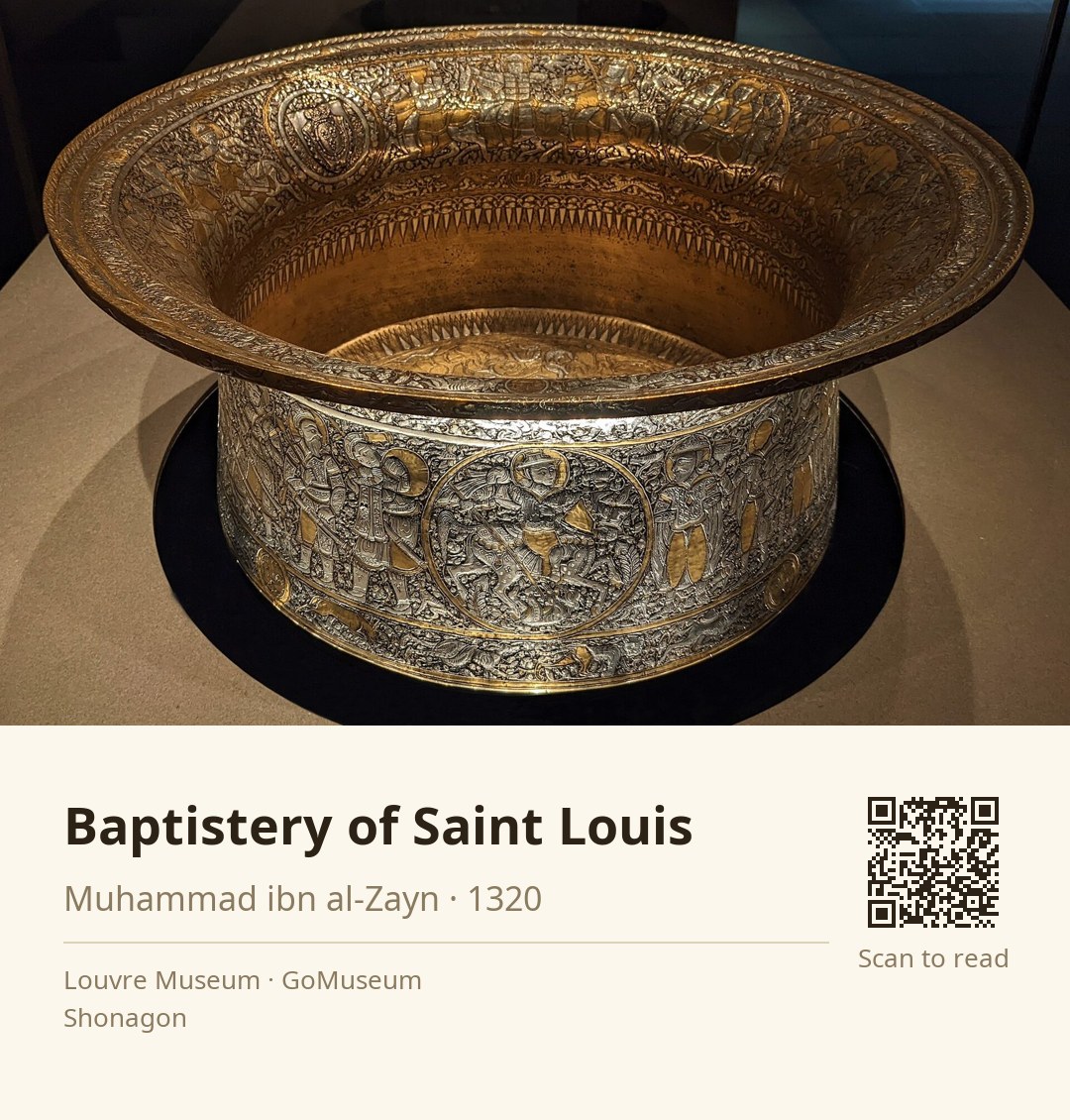
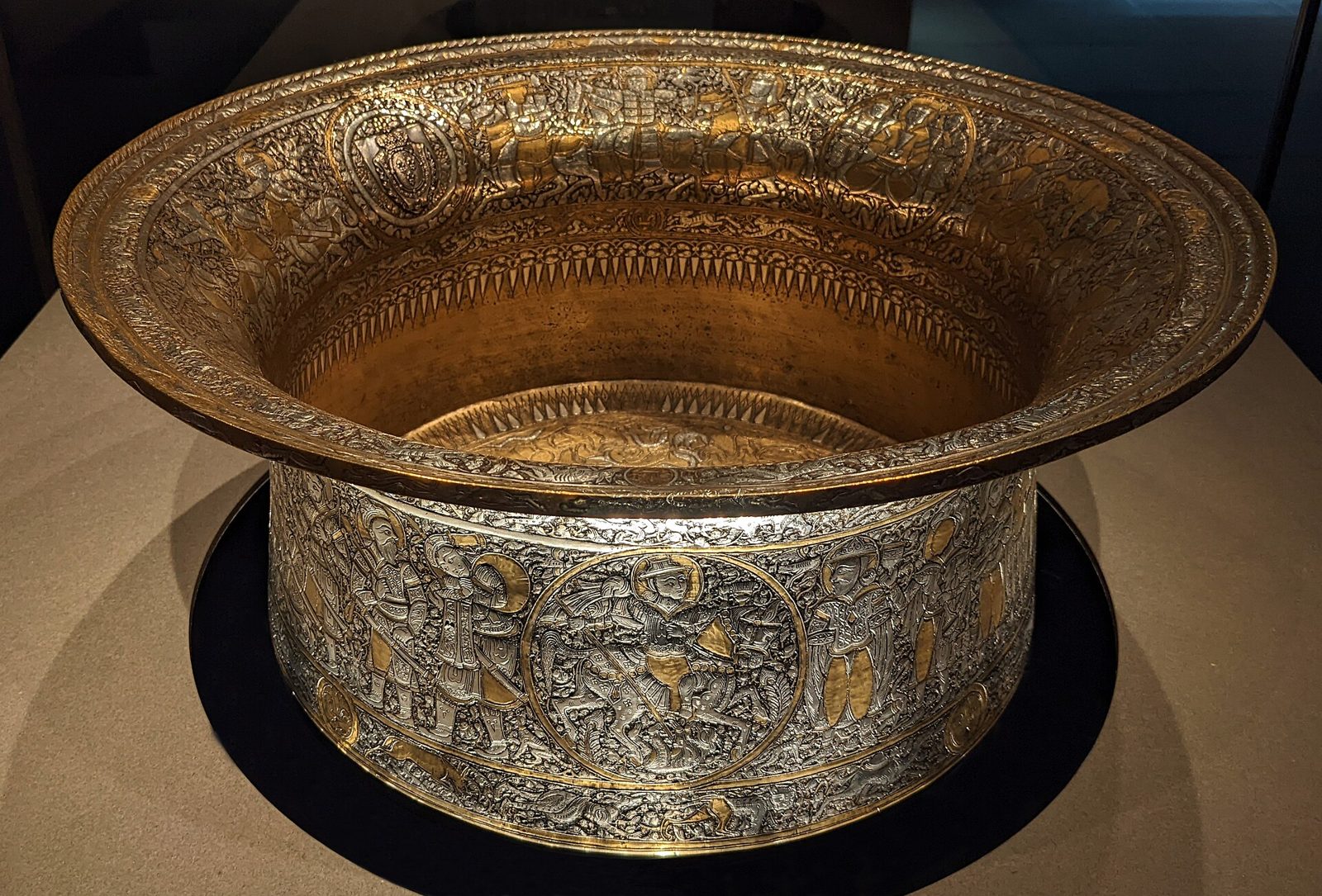
🎧 This work has audio narration — listen in the appTake a moment to really look at the Baptistery of Saint Louis. Notice the intricate designs that swirl around its surface, especially the delicate inlays of silver and gold against the hammered brass. Each detail tells a story, from the animals that seem to leap off the basin to the Arabic inscriptions that weave through the imagery.
These details matter because they reflect the craftsmanship of Muhammad ibn al-Zayn, a coppersmith working in the Mamluk dynasty, who blended Islamic artistry with the cultural influences of the time. This basin was not just a beautiful object; it was a baptismal font used for French royalty, bridging two worlds—Islamic art and European tradition.
Imagine the generations of French kings who have been baptized in this very basin, each one a part of its rich history.
As you stand here, think about the journey this artwork has taken—from the courts of the Mamluks to the heart of France. What stories do you think it could tell if it could speak?
Muhammad ibn al-Zayn was a prominent metalworker during the Mamluk period, likely active between the 13th and 14th centuries in Syria or Egypt. Renowned for his intricate craftsmanship, he is best known for two signed pieces housed in the Louvre: the Baptistery of Saint Louis and a similarly styled bowl, known as the Vasselot bowl. His work is characterized by expansive compositions featuring monumental figures, rendered with a diverse and relatively realistic approach. While additional works have been attributed to him based on stylistic analysis, such attributions have sparked debate among art historians. Notable pieces include an unfinished basin in Jerusalem, a mirror in the Topkapı Museum, and a perfume burner in Cairo. A forged iron grille at the Is῾ardiyya madrasa in Jerusalem bears his name, though its connection to his other works remains uncertain. His style reflects traditional decorative themes from the Mosul school, marking him as a significant figure in Islamic art history.
As you gaze upon the Baptistery of Saint Louis, let your eyes wander over the hammered brass surface, a testament to the skill of Muhammad ibn al-Zayn. Notice how the intricate inlays of silver and gold catch the light, creating a shimmering effect that draws you in. The craftsmanship is remarkable; each animal and figure is not just carved but brought to life through a meticulous engraving and hammering process. The niello, a black substance used to fill in the designs, adds depth and contrast, making the imagery pop. This combination of materials and techniques showcases a blend of Islamic artistry that was both innovative and reflective of the cultural exchanges of the time.
The Baptistery of Saint Louis has a fascinating and complex history. Though created around 1320 in the Syro-Egyptian region, its journey to France is shrouded in mystery. It first appears in a church inventory in France around 1440, but its exact origins remain elusive. It was used for the baptism of Louis XIII in 1606, marking its significance in French royal history. Over the centuries, it has been referenced in various inventories and writings, with scholars debating its purpose and the circumstances of its arrival in France. Its path through history includes a temporary removal during World War II for safekeeping, showcasing its enduring importance.
Its significance lies not just in its stunning craftsmanship but in its complex history as a baptismal font for French royalty. This unique blend of Islamic artistry and French heritage has sparked discussions among scholars about cultural exchange and the fluidity of artistic influence. By being used in royal ceremonies, it transformed from a purely Islamic object into a symbol of power and legitimacy in France, influencing how art can transcend its original context and serve new purposes. Remember, this is more than just a basin; it's a testament to the interconnectedness of cultures across time.
One intriguing detail about the Baptistery is its misattributed connection to Saint Louis, the King of France. However, scholars have since clarified that it has no direct ties to him, adding a layer of complexity to its narrative. This misconception highlights how historical artifacts can acquire legends that intertwine with national identity, often overshadowing their true origins.
Its journey to France is unclear, but it first appears in a church inventory around 1440, leading to speculation about its arrival possibly being linked to the Crusades or earlier diplomatic exchanges.