Self-portrait
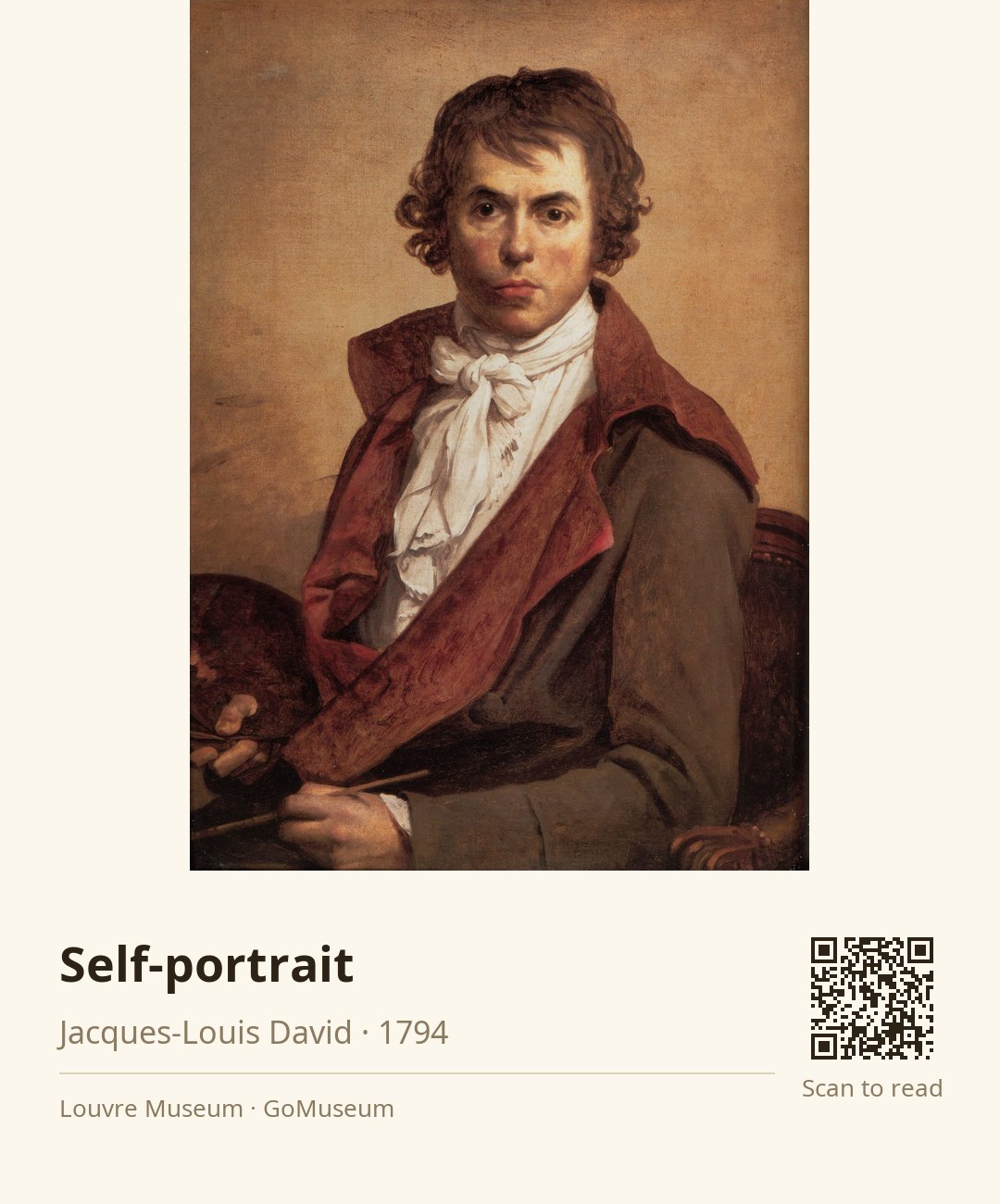
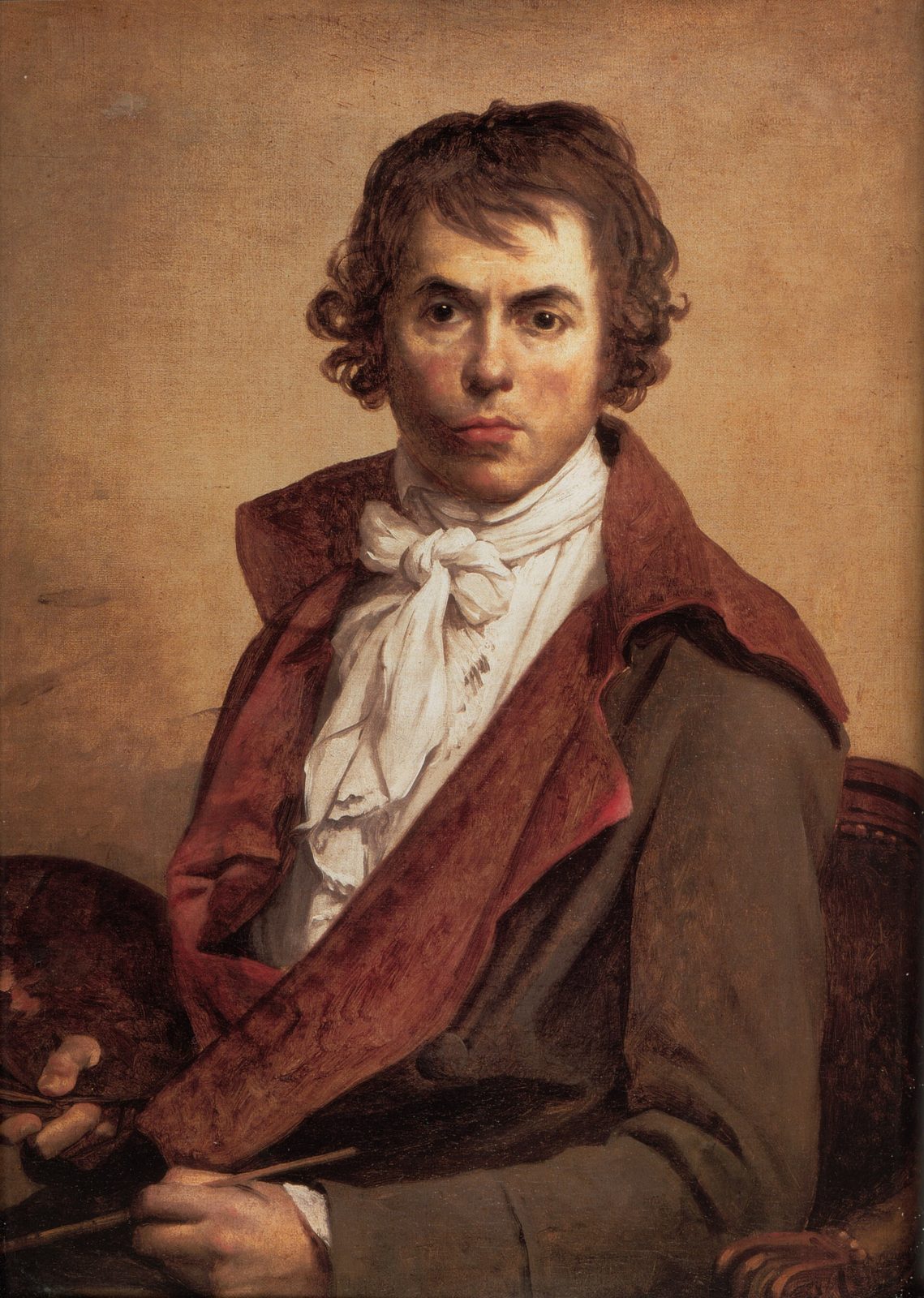
🎧 This work has audio narration — listen in the appTake a moment to really look at Jacques-Louis David’s self-portrait. Notice how he’s staring right at you, his expression a mix of determination and vulnerability. The way the light falls on his face from the right creates a striking contrast, illuminating his features while casting shadows that hint at his inner turmoil.
Now, focus on his hands—his left hand gripping the brush, his right holding the palette. This inversion is no accident; it reveals that he painted this from a mirror while imprisoned, a clever way to assert his identity as an artist rather than a political figure in a time of chaos.
David painted this in 1794, during a turbulent period in his life, shortly after the fall of his ally, Robespierre. This self-portrait is not just a reflection of his physical self but a deeper exploration of his identity amidst political upheaval. It’s his last self-portrait, a poignant reminder of a man grappling with the consequences of his choices.
As you stand here, consider what it means to capture oneself in such a moment of crisis. What do you think David was trying to convey about his own identity and legacy in this painting?
Jacques-Louis David was a pivotal French painter born on August 30, 1748, in Paris. He emerged as the leading figure of the Neoclassical movement, marking a significant shift in artistic taste from the frivolity of Rococo to a more austere and emotionally charged classical style. His early life was marked by personal tragedy, losing his father at a young age, which shaped his character and determination to pursue art against familial expectations.
David's career flourished during the tumultuous political landscape of France, where he became an ardent supporter of the French Revolution, aligning himself with figures like Robespierre. His political engagement influenced his art, producing iconic works such as "The Death of Marat" and "The Coronation of Napoleon," which reflect both historical narratives and his personal convictions. After the fall of Napoleon, David faced exile but continued to influence generations of artists, establishing a legacy that shaped academic painting in the early 19th century. His works remain celebrated in major museums, particularly the Louvre, solidifying his status as a cornerstone of Western art history. David's life and art were inextricably linked to the evolving identity of France, embodying the spirit of revolution and the quest for artistic integrity.
Jacques-Louis David's self-portrait, painted in 1794, was created during a tumultuous time in his life. After the fall of his ally Robespierre, David found himself imprisoned at the Hôtel des Fermes, where he painted this piece using a mirror. This was his last self-portrait, a gift to his former student Jean-Baptiste Isabey. The painting eventually made its way to the Louvre in 1852.
In this self-portrait, David employs a striking use of light and shadow, illuminating his face from the right while casting shadows that enhance the emotional depth of his expression. The choice of a neutral yellow-gray background serves to emphasize his figure, creating a sense of isolation that mirrors his confinement. Notice how the inversion of his hands—his left holding the brush and his right the palette—reveals the cleverness of his mirror technique. This choice not only reflects his identity as an artist but also adds a layer of complexity to the composition. The asymmetry of his face, accentuated by the shadow obscuring his tumor, suggests a duality within him: the serious political activist and the innocent painter.
Painted during his imprisonment, it marks the end of David's political career and his transition back to the canvas. This work influenced generations of artists by showcasing self-portraiture as a means of personal and political reflection. David's choice to depict a younger version of himself, despite being 46, suggests a longing for innocence amidst chaos.
Interestingly, this self-portrait was never publicly displayed during David's lifetime. Instead, he chose to give it to his pupil, Jean-Baptiste Isabey. This act suggests that David viewed the work as a deeply personal exploration rather than a public statement, highlighting the intimate nature of self-portraiture.
The mirror was provided to David by his pupil Pierre-Maximilien Delafontaine, highlighting the supportive relationships he maintained even during his imprisonment.
A major restoration is scheduled for the painting as part of a retrospective exhibition at the Louvre, aimed at revealing David's original techniques and the unfinished aspects of the work.