 Image: VladoubidoOo
Charles de Secondat, Baron de Montesquieu
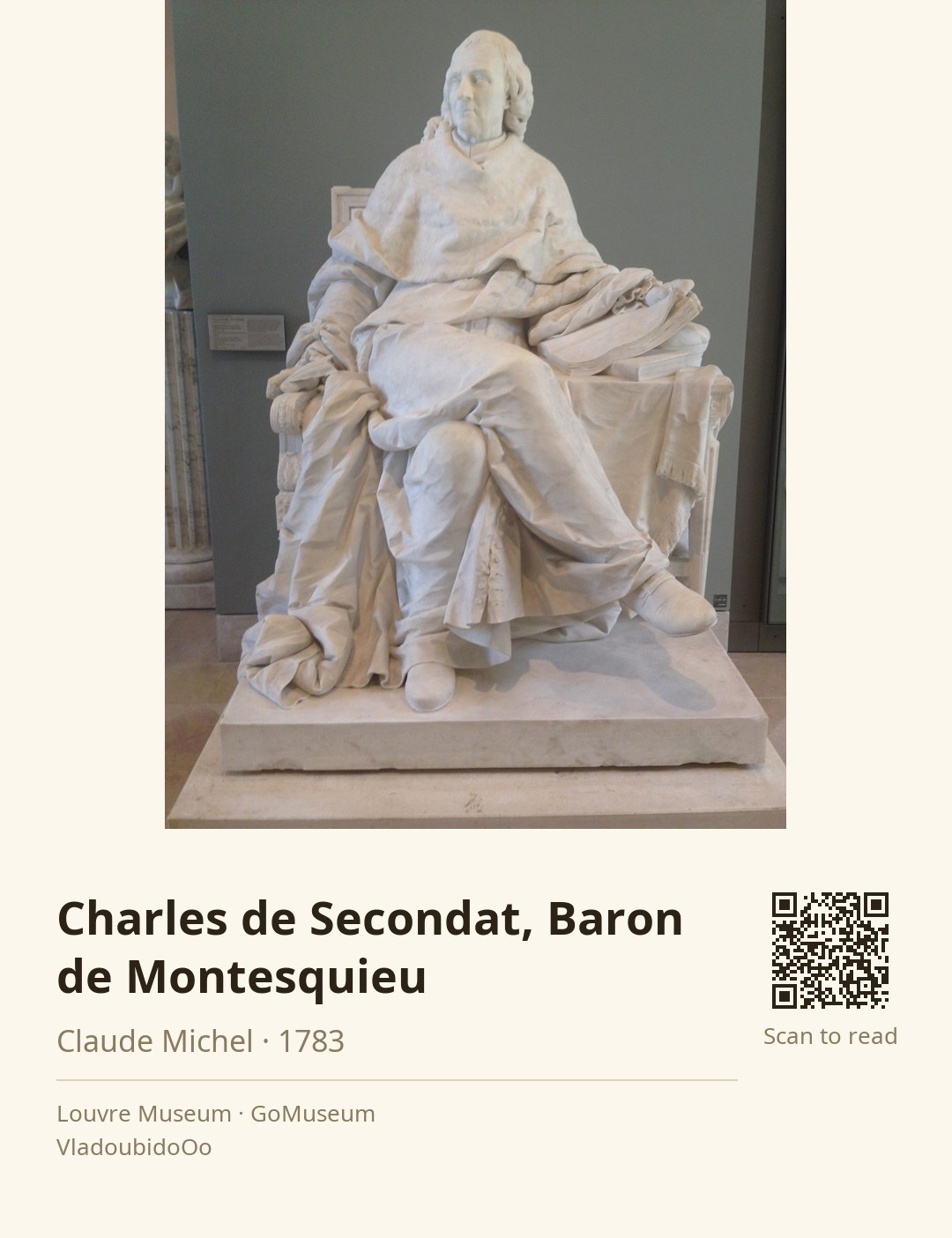
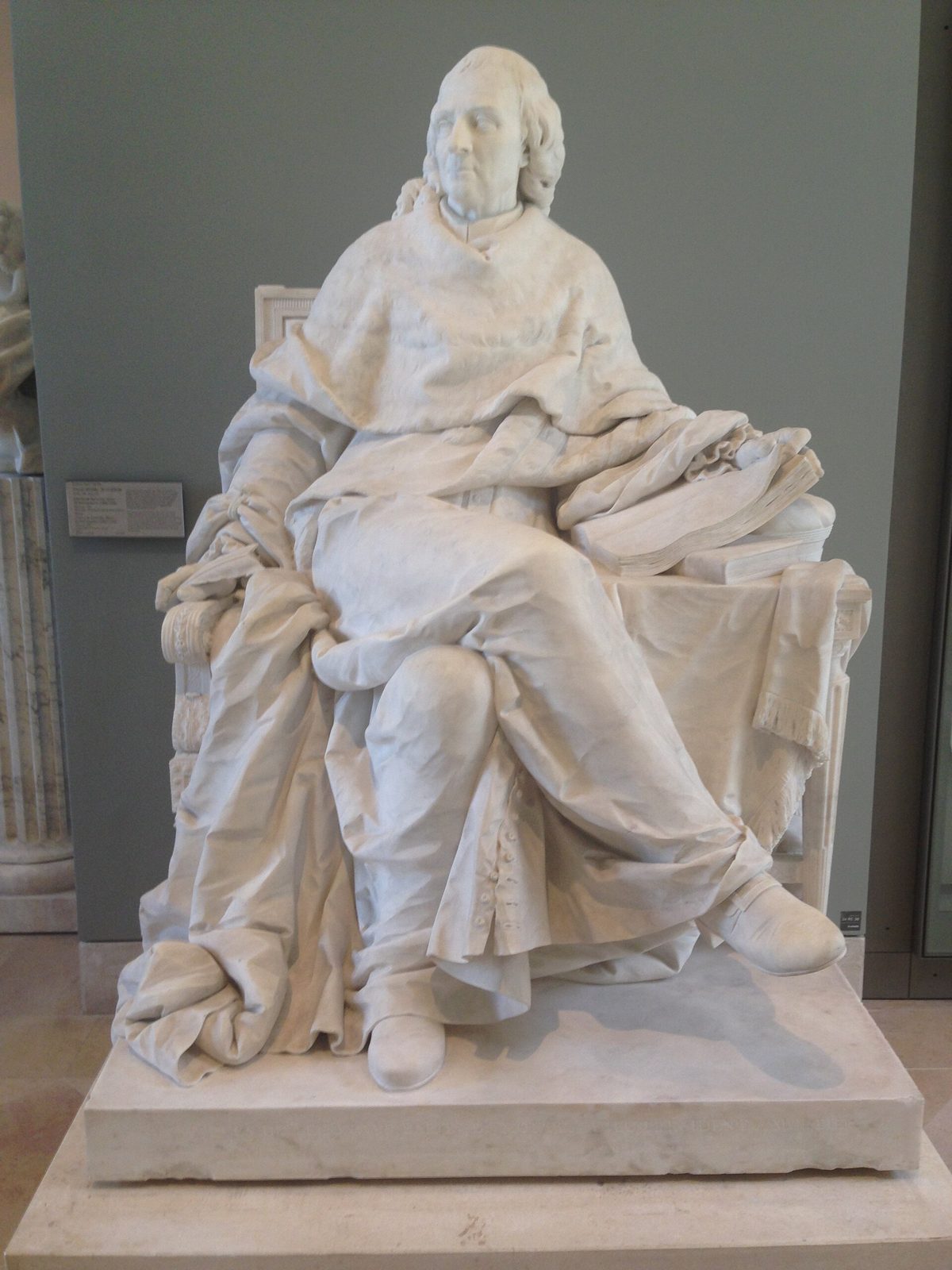
🎧 This work has audio narration — listen in the appThe seated figure of Montesquieu, draped in flowing robes, captures a moment of intellectual serenity. The intricate folds of the marble fabric cascade gracefully around him, while his calm expression and slightly turned head convey a sense of contemplation. One hand rests on his lap, holding an open book, symbolizing his role as a prominent thinker and writer of the Enlightenment.
This portrayal not only highlights Montesquieu's scholarly pursuits but also reflects the artist Clodion's exceptional skill in marble, showcasing the texture and movement of the drapery. The ornate chair beneath him adds to the sculpture’s grandeur, reinforcing the dignity of the figure.
Created in 1783, this sculpture was part of a larger project intended to honor the great men of France, although the series was never fully realized. Clodion's work remains a testament to the artistic achievements of the late 18th century, embodying the Rococo style that characterized his oeuvre.
Claude Michel, known as Clodion, was a prominent French sculptor born on December 20, 1738, in Nancy. He emerged from a family of sculptors, being the nephew of Lambert-Sigisbert Adam, under whom he trained. Clodion's artistic journey began in Paris, where he quickly gained recognition, winning the grand prize for sculpture at the Académie Royale in 1759. His talent flourished in Rome, where he created exquisite terracotta works that showcased his charm and elegance.
Clodion's style epitomized the Rococo movement, characterized by playful themes and intricate details. His notable works include the "Dying Cleopatra," a statue of Montesquieu, and the "Dance of Time," which reflect his mastery in marble, bronze, and terracotta. Despite the upheaval of the French Revolution, he continued to produce art, focusing on decorative works and maintaining a robust patronage.
Clodion's legacy endures in major art collections worldwide, including the Louvre and the Metropolitan Museum of Art. He passed away on March 29, 1814, in Paris, leaving behind a rich body of work that secured his place in art history as a key figure of the Rococo style.
Crafted from marble, this sculpture showcases Clodion's masterful technique in rendering texture and movement. The flowing robes are not just draped; they seem to dance around Montesquieu, each fold meticulously carved to suggest weight and grace. The smoothness of the marble contrasts with the intricate details of the fabric, revealing the artist's deep understanding of both material and form. The chair beneath him, ornately designed, adds to the overall sense of grandeur, inviting you to appreciate the skill involved in every chiseled line and curve.
Commissioned in 1778, this statue of Montesquieu was intended to be part of a grand series celebrating the great men of France, destined for the Grande Galerie of the Louvre. However, the project was never fully realized, leaving this piece as a standalone tribute. Clodion's initial plaster model faced harsh criticism, prompting him to refine his approach. By 1783, he unveiled the marble version, which was better received.
Although Catherine II of Russia wanted Clodion to work in St Petersburg, he ultimately chose to return to Paris instead.
The first plaster model of Montesquieu received significant criticism, which led Clodion to make refinements before creating the marble version.
Clodion's career gained prominence as he frequently exhibited his works at the Salon, which helped establish his reputation as a notable sculptor.