 Image: Siren-Com · Shonagon · Sailko
Suger's Eagle
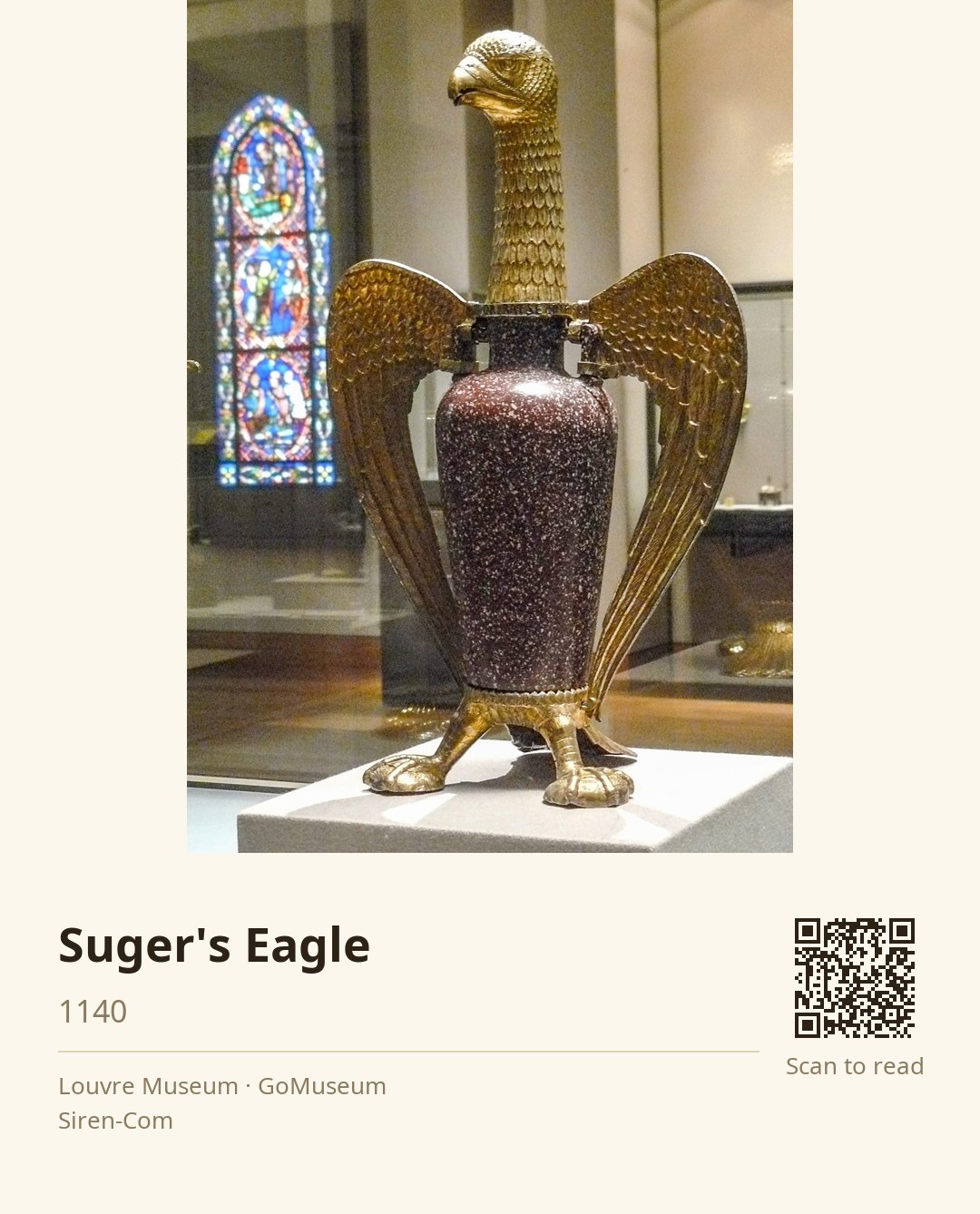
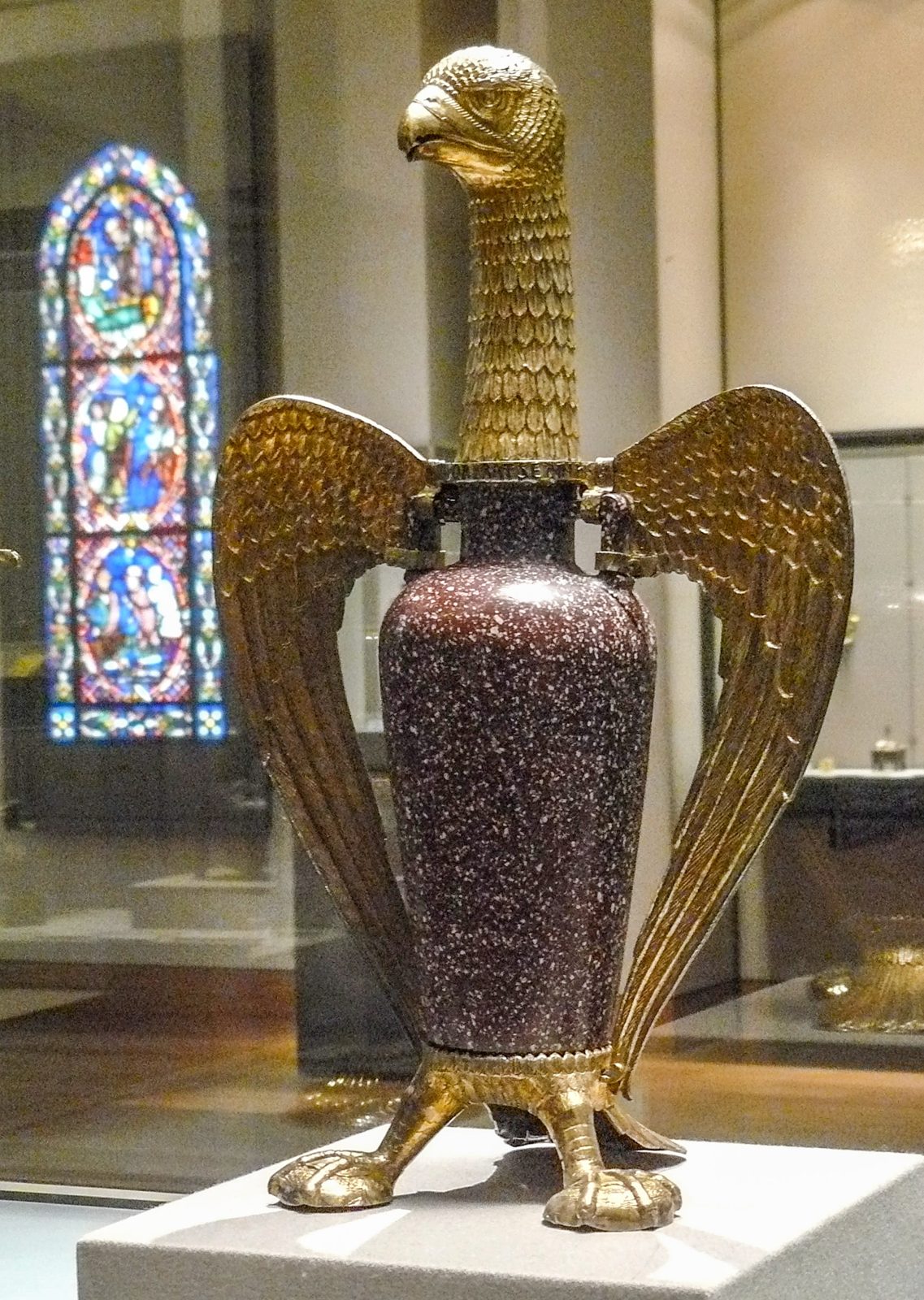
🎧 This work has audio narration — listen in the appTake a moment to gaze at Suger's Eagle, a stunning blend of ancient and medieval artistry. Notice how the eagle's wings are spread wide, almost as if it's ready to take flight. Look closely at the intricate detailing on the feathers—each line seems to pulse with life.
These details matter because they reflect the deep symbolism behind the piece. The eagle, often associated with Christ, represents divine ascension and spiritual vision, linking the earthly to the heavenly. Abbot Suger, who commissioned this work in 1140, believed that by transforming an ancient Egyptian vase into this majestic eagle, he was infusing it with a new spirit, one that honored God and the beauty of creation.
Suger was not just a collector; he was a visionary who sought to elevate the experience of worship through art. He found the original vase lying forgotten and saw in it the potential for something extraordinary. This piece is a testament to his belief that art could breathe new life into the sacred.
As you stand here, think about the journey of this vase—from ancient Egypt to the hands of a medieval abbot. What stories do you think it could tell if it could speak?
Take a closer look at Suger's Eagle, and you’ll notice the exquisite craftsmanship that went into its creation. The base is crafted from a rich red porphyry, a material prized since antiquity for its beauty and durability. The intricate silver-gilt mount transforms the vase into an eagle, with detailed wings and a fierce beak. The use of niello—a black metallic alloy—adds depth to the design, creating a striking contrast against the gleaming gold. Each detail, from the feathers to the beak, showcases the skill of the artisans who brought Suger's vision to life.
Suger's Eagle is more than just a decorative piece; it's a testament to the medieval practice of spolia, where ancient artifacts were repurposed to create something new and meaningful. Abbot Suger, who commissioned this work, was driven by a desire to honor God and elevate the aesthetic of the Saint-Denis Cathedral. By transforming a Roman-era porphyry vase into a liturgical vessel shaped like an eagle, he not only preserved a relic of the past but also infused it with new spiritual significance.
Did you know that Suger's Eagle was not the only vase in Suger's collection? He owned two other remarkable pieces, including the Eleanor Vase, which also showcases his passion for blending ancient artistry with medieval craftsmanship.
Suger's Eagle was preserved during the French Revolution due to its popularity as a tourist attraction, which helped prevent the total destruction of the treasure of Saint-Denis.
Abbot Suger's desire to create a place of beauty and worship led him to commission the transformation of the ancient vase into Suger's Eagle, reflecting his belief that art could elevate the spiritual experience.
The bird in Suger's Eagle is more accurately described as resembling a hawk or falcon due to its curved beak and nostrils, which are not characteristic of true eagles.