Portrait of Sigismondo Pandolfo Malatesta
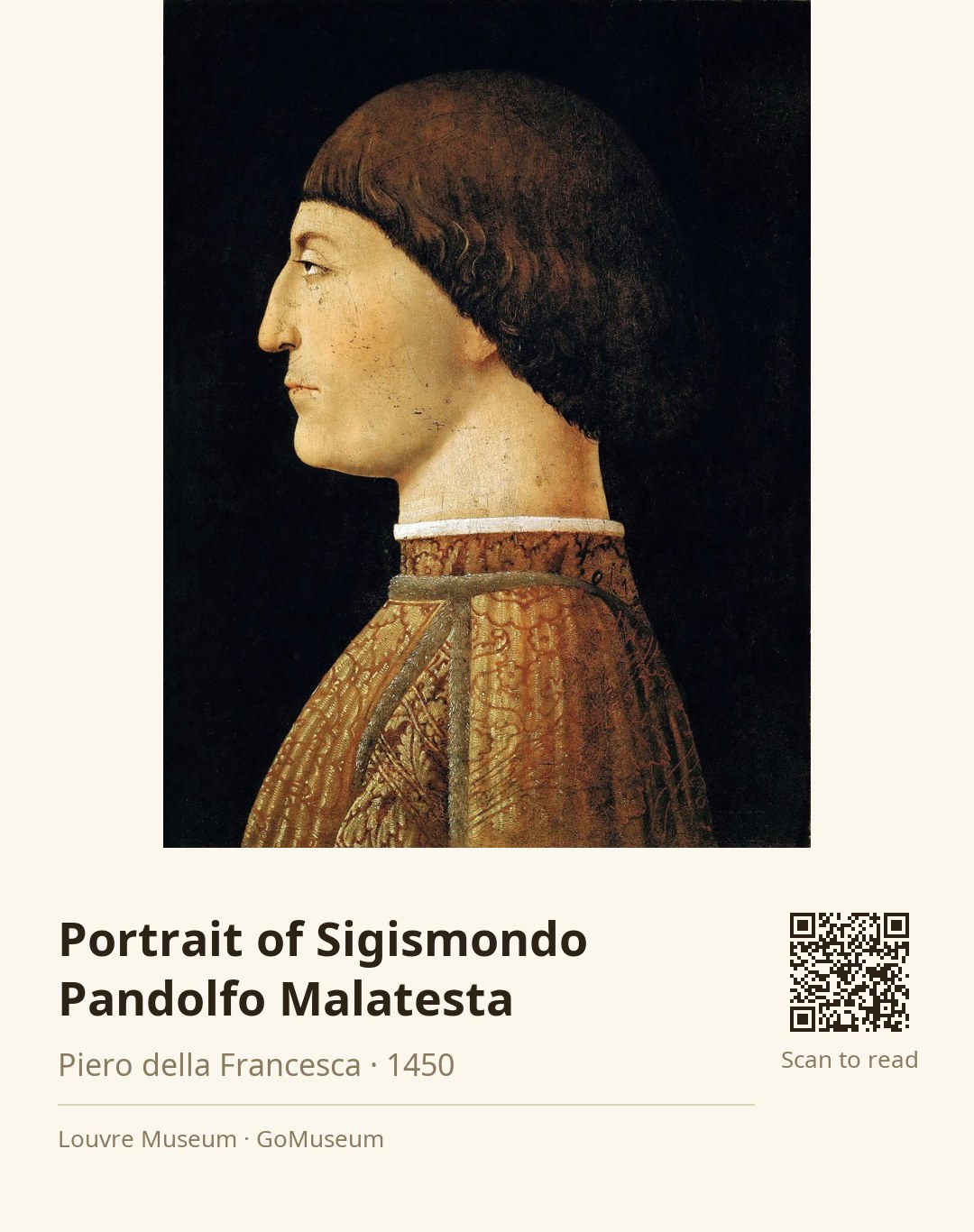
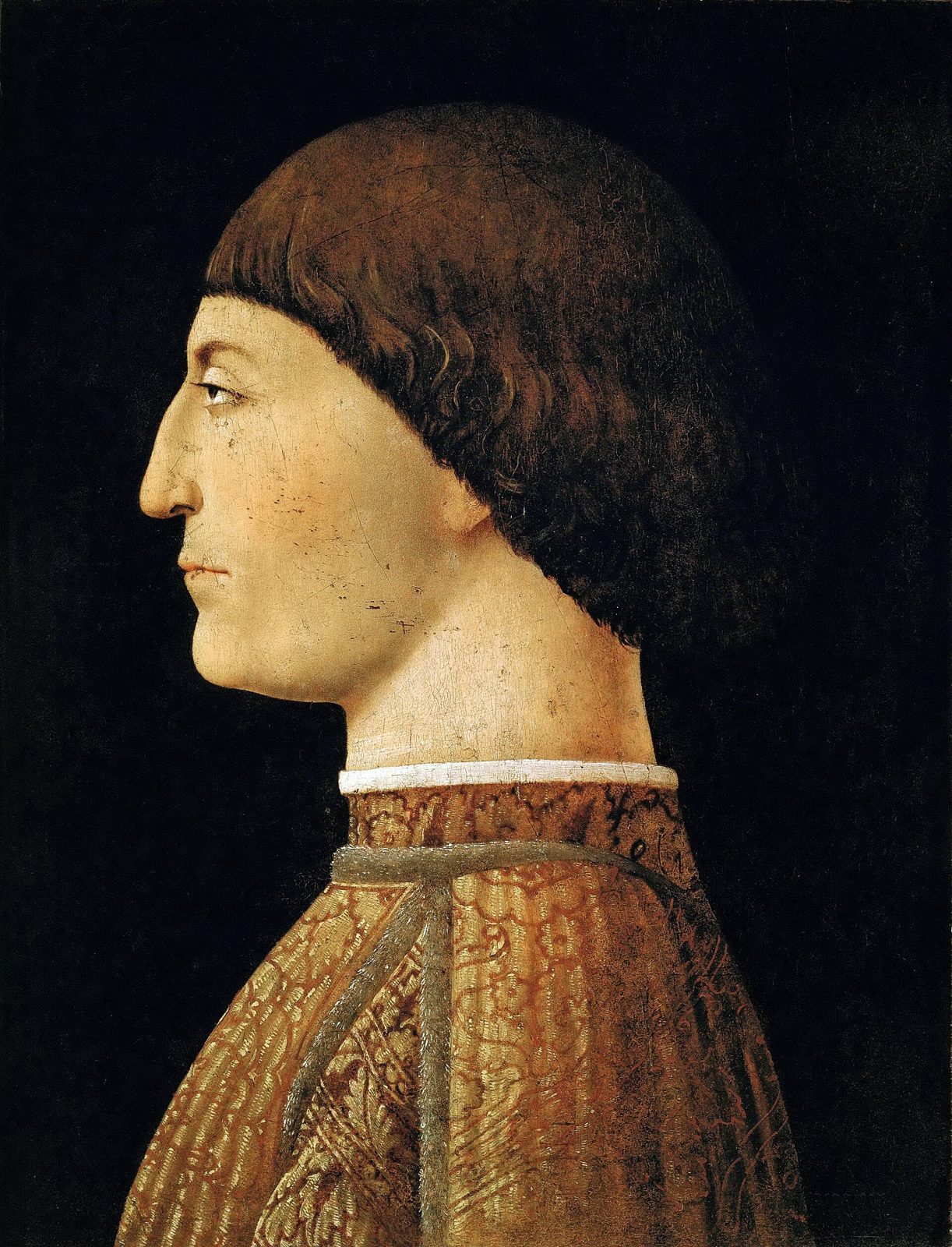
🎧 This work has audio narration — listen in the appTake a moment to really look at this striking profile of Sigismondo Pandolfo Malatesta, painted by Piero della Francesca around 1450. Notice how the light catches the intricate details of his hair and the sharp lines of his face.
Why does this matter? Well, it’s not just a portrait; it’s a window into the Renaissance’s fascination with realism and individuality. Sigismondo was a powerful condottiero, a military leader, and this painting captures not just his likeness but his authority and presence. Piero’s choice to depict him in profile, a nod to classical traditions, also elevates Sigismondo to a status akin to ancient heroes.
Piero was in Rimini at the time, working on several projects for Sigismondo, including the Tempio Malatestiano, which adds layers to our understanding of this artwork. It’s a blend of personal and political, a moment frozen in time that speaks to the ambitions of the era.
As you stand here, consider what this portrait reveals about power and identity in the Renaissance. What do you think Sigismondo would say if he could step out of this frame?
Piero della Francesca, born around 1415 in Sansepolcro, Italy, was a pivotal figure of the Early Renaissance, celebrated for his serene and mathematically precise paintings. Orphaned early, he was nurtured by his mother, who encouraged his artistic and mathematical education. Apprenticed to local painter Antonio di Giovanni, Piero absorbed influences from prominent Florentine masters, including Masaccio and Fra Angelico.
His mature works, characterized by a profound understanding of geometry and perspective, include the renowned fresco cycle "The History of the True Cross" in Arezzo, which showcases his ability to blend theological themes with humanist ideals. Piero's artistic journey took him across Italy, where he executed commissions for various patrons, including Duke Federico da Montefeltro in Urbino.
Despite his contributions to painting, Piero was also a respected mathematician, exploring the principles of perspective that would later influence generations of artists. His legacy as a master of geometric composition and emotional depth solidified his place in art history, earning him recognition as one of the foremost painters of the Renaissance. Piero's work continues to inspire and captivate, embodying the harmonious union of art and mathematics.
The Portrait of Sigismondo Pandolfo Malatesta was painted by Piero della Francesca around 1450, during a significant period in Renaissance Italy. Commissioned by Sigismondo himself, a powerful condottiero and lord of Rimini, this portrait reflects not just personal ambition but also the political landscape of the time. Piero was in Rimini working on multiple projects for Sigismondo, including the Tempio Malatestiano, which adds depth to our understanding of this artwork. The painting has a complex provenance; it was part of the Russian Imperial Art Collection until 1889, before being attributed to Piero by art dealer Giovanni Morelli in Milan. Critics have debated its authenticity, with some suggesting it could be a neoclassical fake due to its striking resemblance to the frescoes in the Tempio Malatestiano. Despite these controversies, it has found a permanent home in the Musée du Louvre in Paris, where it continues to intrigue viewers with its blend of personal and political significance.
As you gaze at this portrait, pay attention to Piero's masterful use of light and shadow. The way the light catches Sigismondo's hair and the sharp contours of his face creates a striking three-dimensional effect, drawing you into the character's presence. Piero's brushwork is meticulous; each stroke seems to breathe life into the textures, particularly in the hair, which feels almost tangible. The composition, framed in profile, is a deliberate nod to classical traditions, elevating Sigismondo to an almost heroic status. The color palette is rich yet restrained, allowing the viewer to focus on the details that convey authority and individuality. This careful handling of paint and form not only showcases Piero's technical skill but also reflects his deep understanding of human anatomy, influenced by the naturalism of the Flemish masters. It's a dance of geometry and realism that invites you to explore the very essence of the subject.
Imagine that! It wasn't until the late 19th century that it was confidently attributed to Piero della Francesca by an art dealer named Giovanni Morelli. Before that, it had a rather tumultuous journey through collections, including the Russian Imperial Art Collection. Can you believe how much doubt surrounded this masterpiece before it found its rightful place in the Louvre?
Originally part of the Russian Imperial Art Collection, the painting was attributed to Piero della Francesca only in 1889 by art dealer Giovanni Morelli, highlighting the complexities of art attribution and the evolving understanding of an artwork's history.
Italian art critics raised doubts about the painting's authenticity, suggesting it might be a neoclassical fake due to its resemblance to frescoes in the Tempio Malatestiano, contrasting with the unanimous support for its attribution by French art historians.