Vase of flowers in a niche
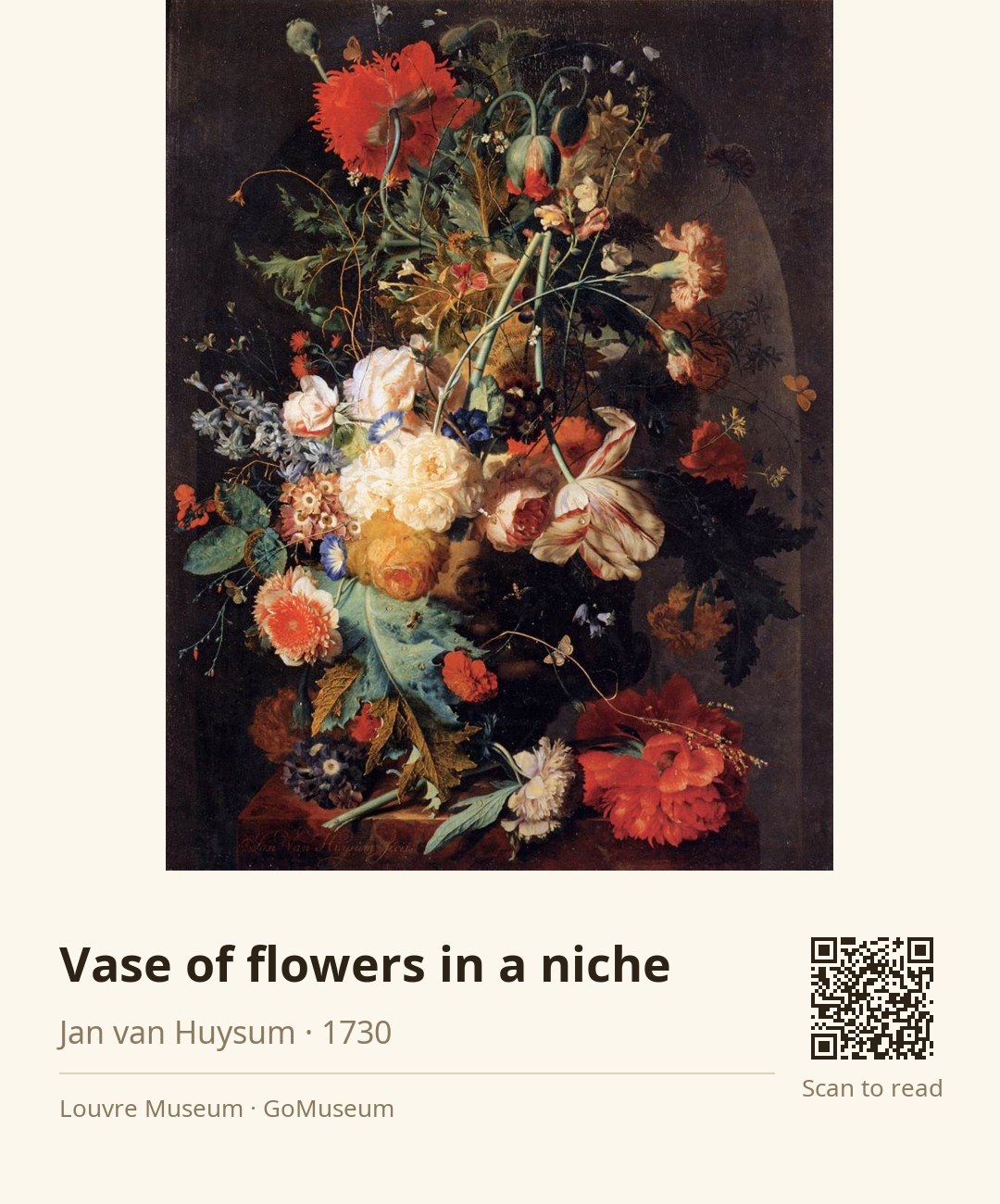
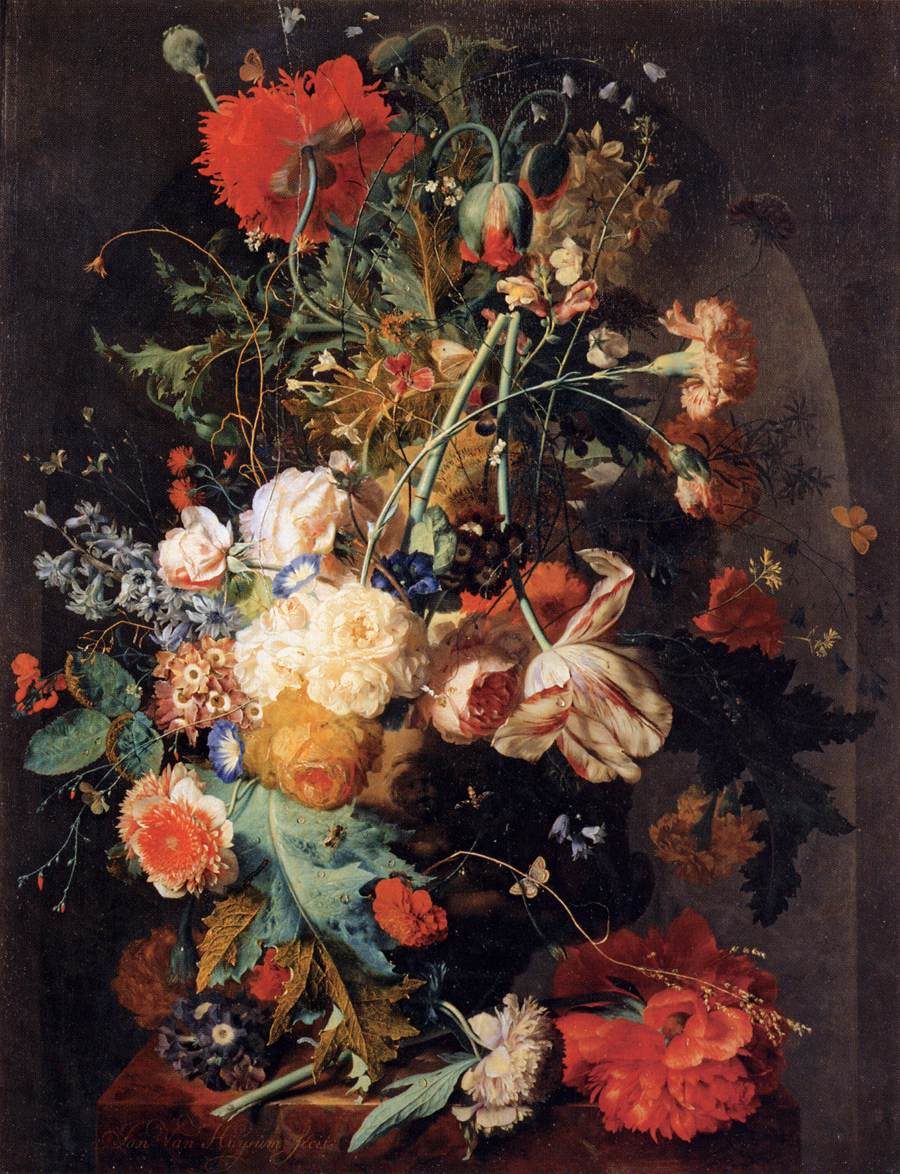
🎧 This work has audio narration — listen in the appThe vibrant bouquet of flowers in Jan van Huysum's "Vase of Flowers in a Niche" bursts with life, showcasing large red poppies, delicate white roses, and striking striped tulips. Each flower is meticulously arranged, with stems and leaves cascading outward, creating a sense of movement against the dark backdrop that enhances their vivid colors. A butterfly and small insects add a touch of realism, inviting you to appreciate the intricate details of nature captured in this moment.
This composition reflects van Huysum's mastery of floral still lifes, a genre in which he excelled during the Dutch Golden Age. His technique involved painting from life, often assembling flowers over time to create these lush arrangements, which could take a year or more to complete as he awaited specific blooms to come into season. The rich palette and detailed brushwork not only highlight the beauty of the flowers but also demonstrate his ability to balance colors harmoniously, avoiding the pitfalls of over-composition that plagued some of his contemporaries.
Van Huysum's work was highly sought after in his time, with collectors including princes and prominent figures, and his paintings often fetched prices several times higher than those of even Rembrandt. "Vase of Flowers in a Niche," created in 1730, stands as a testament to his enduring legacy in the world of floral painting.
Jan van Huysum, born on April 15, 1682, in Amsterdam, is celebrated as one of the foremost flower painters of the Dutch Golden Age. The son of painter Justus van Huysum, Jan honed his craft under the influence of his family's artistic legacy. He specialized in still lifes, particularly floral arrangements, where his meticulous attention to detail and vibrant compositions set him apart. His works often featured intricate elements like water droplets and ants, showcasing his ability to capture nature's beauty with remarkable precision.
Van Huysum's secretive nature regarding his painting techniques contributed to his mystique, as he preferred to work in solitude. His paintings were highly sought after during his lifetime, fetching prices that sometimes exceeded those of Rembrandt. He maintained a successful career, with notable patrons including princes and prominent figures of his time. His influence on flower painting persisted long after his death in 1749, shaping the genre for decades.
While he occasionally ventured into landscapes, these works were less celebrated compared to his floral masterpieces. Van Huysum's legacy endures, with his paintings held in prestigious collections worldwide, affirming his status as a pivotal figure in art history.
In "Vase of Flowers in a Niche," van Huysum employs meticulous brushwork that showcases his exceptional skill in capturing the delicate textures of petals and leaves. The vibrant palette, rich with reds, whites, and greens, creates a striking contrast against the dark background, which serves to amplify the flowers' vividness. His technique involved layering colors, often starting with a base of blue for leaves before applying a green or brown wash, a method that adds depth and realism. The composition is dense yet balanced, with flowers cascading outward, drawing the viewer's eye through the arrangement. This careful orchestration of color and form not only highlights the beauty of each bloom but also creates a sense of movement, as if the flowers are alive and reaching out into the space around them.
Jan van Huysum's influence on the genre of floral painting is profound and lasting. His innovative techniques and elegant compositions set a standard that would shape the work of flower painters for decades, if not centuries, after his death. Artists like Jacob van Huysum, his brother, and others such as Gerard van Spaendonck drew inspiration from his mastery, ensuring that his legacy continued to flourish. Van Huysum's ability to blend realism with a decorative style not only elevated the genre but also solidified the status of floral still lifes in the broader context of art history, marking a pivotal moment in the appreciation of nature's beauty through art.
A curious aspect of van Huysum's working style was his extreme secrecy regarding his painting techniques. He preferred to work alone, often shunning the company of others while he painted. The only person allowed to observe him was his student, Margareta Haverman, who eventually became a talented flower painter in her own right. This intense focus and desire for privacy stemmed from his fear that others might replicate his unique methods, highlighting the competitive nature of the art world during the Dutch Golden Age.
Van Huysum was very secretive about his methods, preferring to work alone and allowing only his student, Margareta Haverman, to observe him while he painted.
Yes, his daughter Francina Margaretha van Huysum was a flower painter and likely assisted him in his artistic endeavors.
Rachel Ruysch was a significant contemporary rival of Jan van Huysum, also known for her floral paintings.