Allegory of Victory
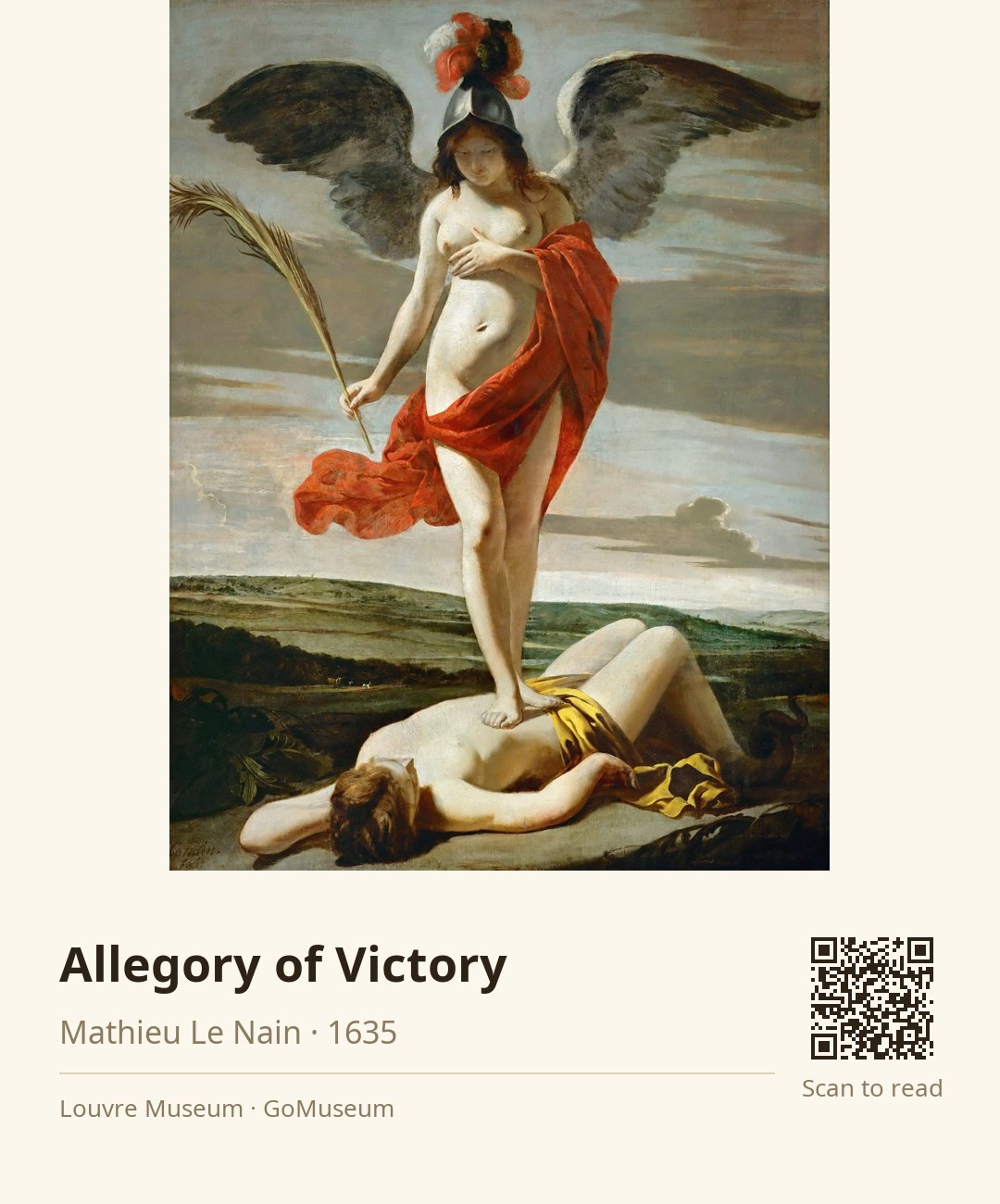
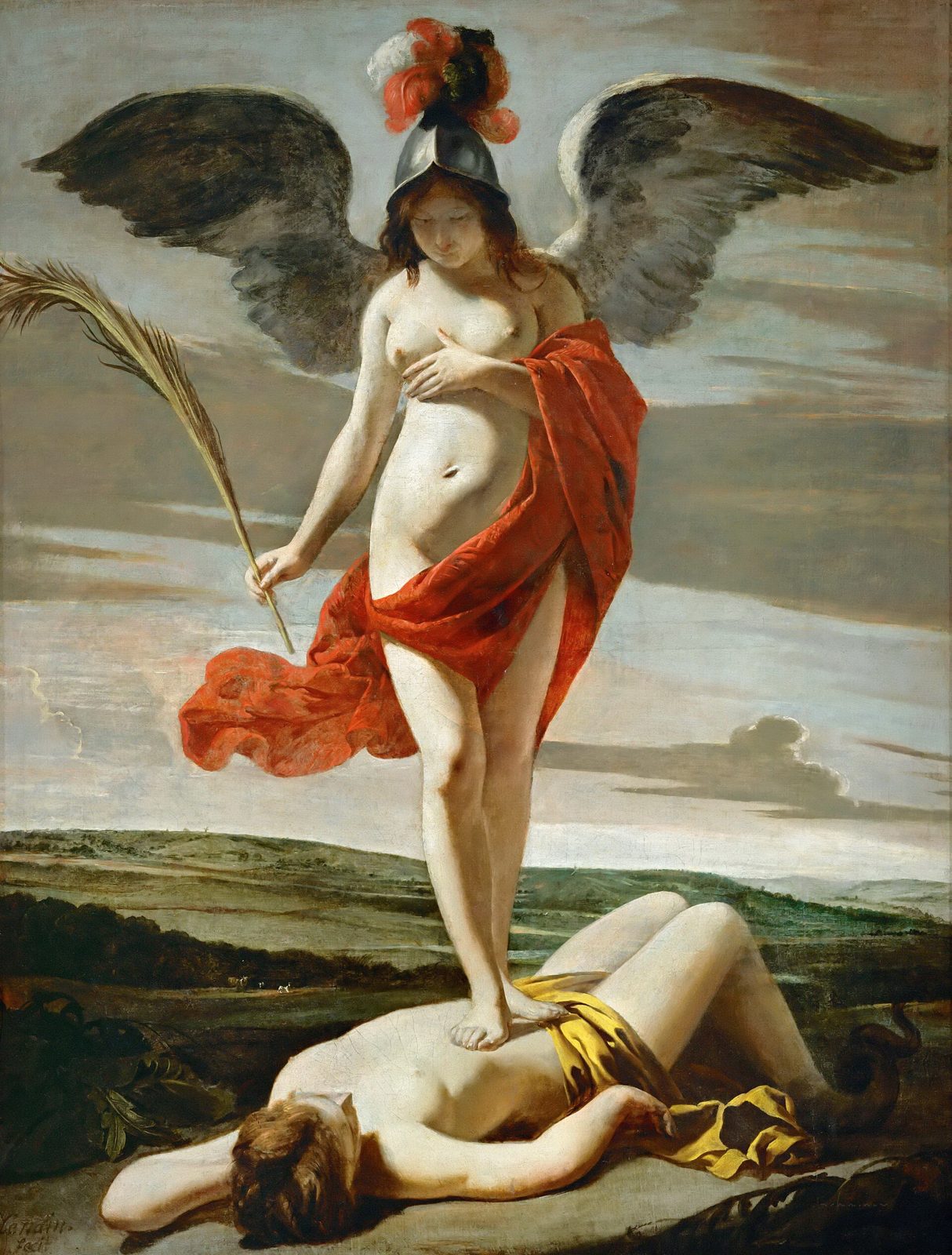
🎧 This work has audio narration — listen in the appThe winged figure in red drapery dominates the scene, standing triumphantly over a reclining person who lies beneath, partially covered in yellow cloth. With a palm branch in one hand and a helmet adorned with feathers, this allegorical representation of Victory exudes both power and grace, while the subdued earthy tones of the landscape enhance the dramatic contrast between the figures.
Victory's nudity symbolizes purity and strength, while her foot on the chest of the fallen figure suggests dominance over defeat. The reclining figure, with an arm resting on their forehead, embodies the weight of loss, creating a poignant juxtaposition between triumph and despair. The smooth brushwork captures the texture of the drapery and the figures' forms, inviting a closer look at the details that convey the emotional weight of the scene.
Created in 1635 by Mathieu Le Nain, this oil painting on canvas reflects the early 17th-century fascination with allegory, where complex themes are expressed through personified figures. The work stands as a testament to the era's artistic exploration of victory and defeat, encapsulating the human experience in a single, powerful moment.
The technique employed in 'Allegory of Victory' showcases Le Nain's mastery of oil paint on canvas. The smooth brushwork allows for a remarkable texture, particularly in the drapery of the winged figure, which seems to flow and ripple with movement. The choice of earthy tones, combined with the striking reds of the figure's cloth, creates a vivid contrast that draws your eye immediately to the central figures. The composition is dynamic; Victory stands tall and assertive, while the reclining figure's pose evokes a sense of vulnerability and defeat. This juxtaposition is not just visual but emotional, inviting you to feel the weight of the narrative. The scale of the painting, at 151 by 115 centimeters, enhances its presence, making it a commanding piece that resonates with viewers.
The use of earthy tones alongside the vibrant reds of the figure's cloth creates a strong contrast that immediately captures the viewer's attention, highlighting the central figures.
The smooth brushwork enhances the texture of the drapery, giving it a flowing quality that adds a sense of movement and dynamism to the winged figure.
The pose of the reclining figure, with an arm resting on their forehead, suggests a deep sense of loss and vulnerability, contrasting sharply with the triumphant stance of Victory.