Boy with a Basket of Fruit
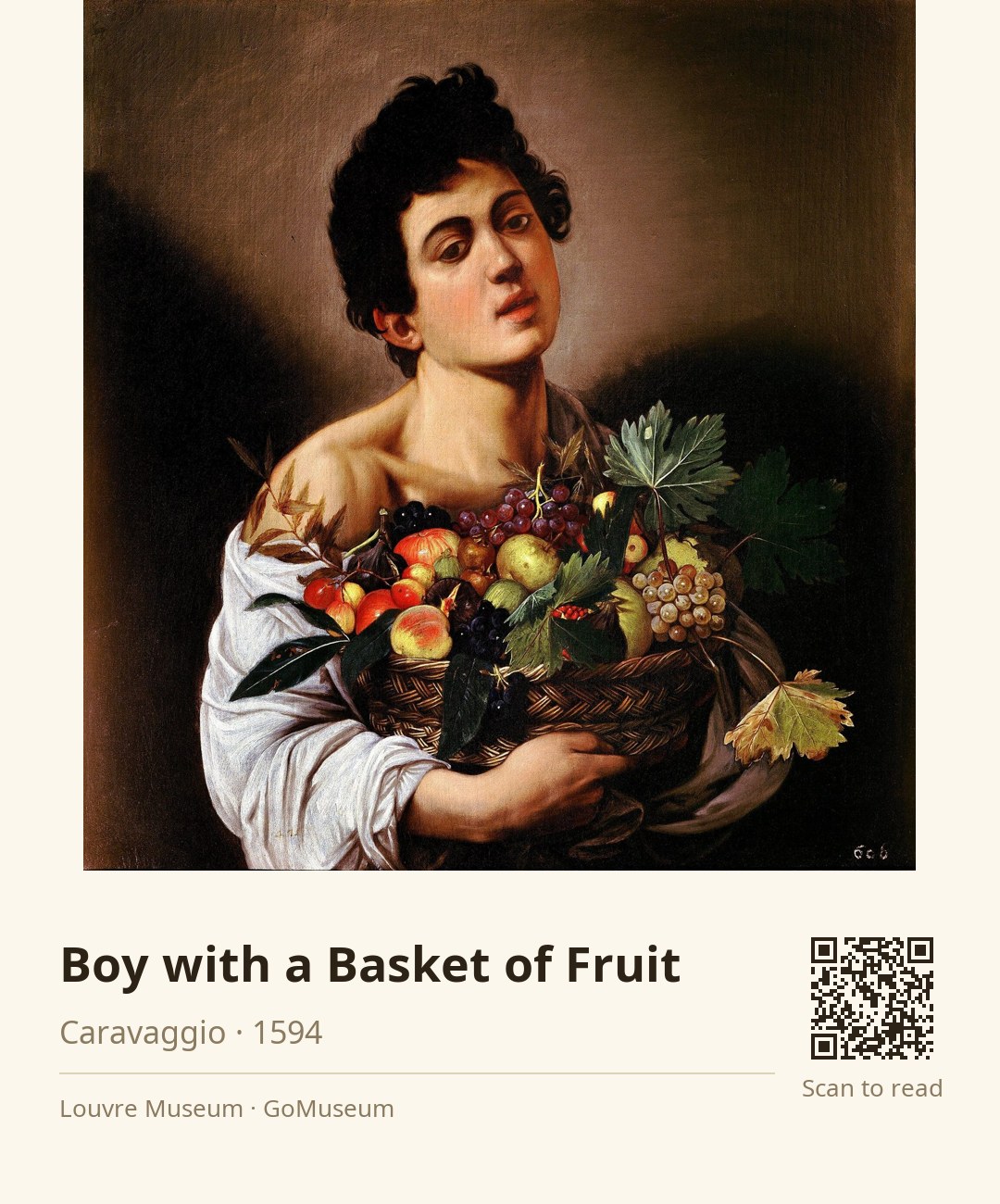
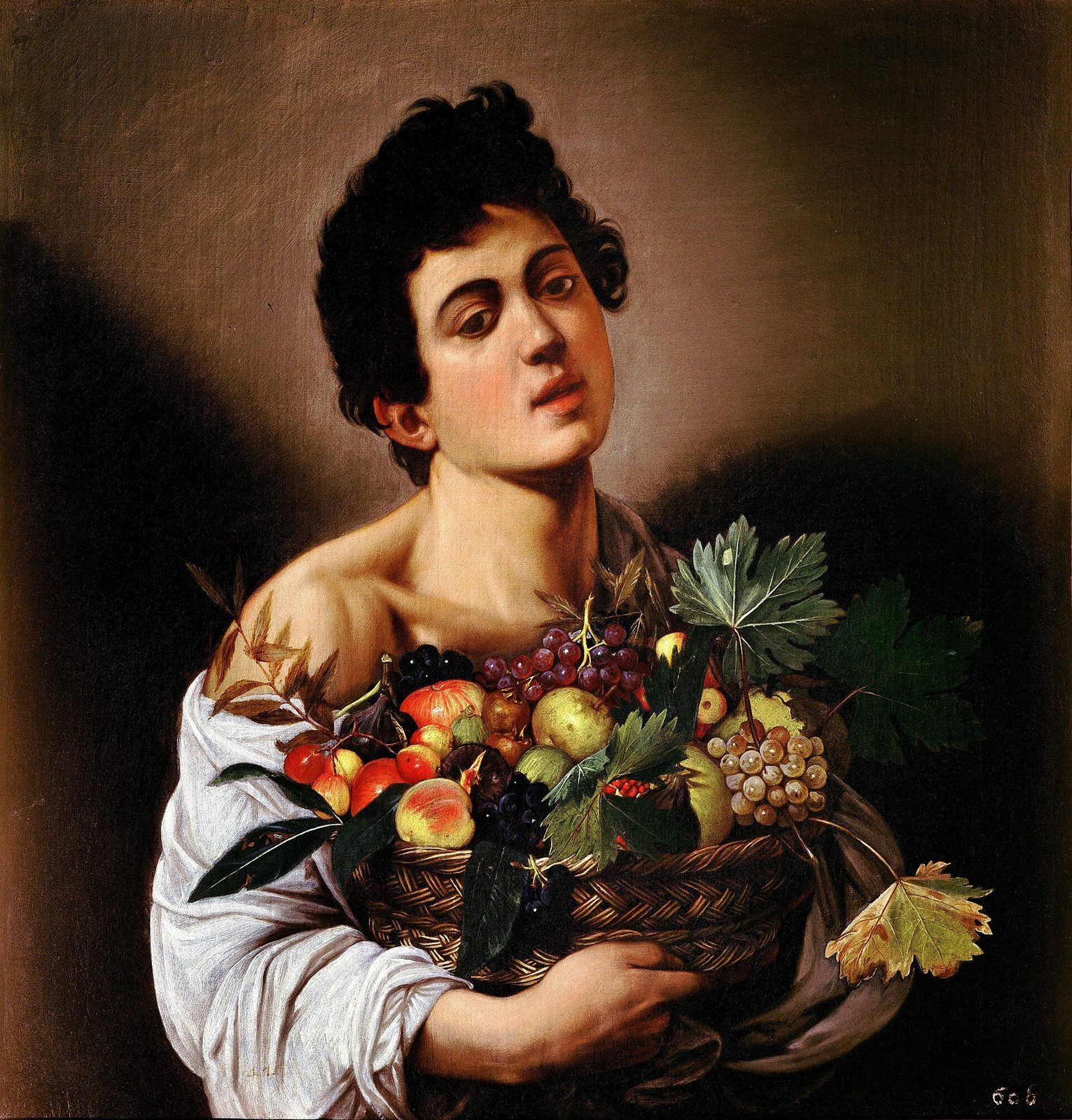
🎧 This work has audio narration — listen in the appTake a moment to really look at the "Boy with a Basket of Fruit." Notice how the boy's bare shoulder catches the light, almost glowing against the dark background. And check out that basket—it's overflowing with vibrant, luscious fruits, each one rendered with such detail that you can almost feel their weight.
These details matter because they showcase Caravaggio's revolutionary approach to realism. He wasn't just painting a pretty picture; he was capturing the tactile experience of nature, making the viewer feel as if they could reach out and touch those grapes or figs. This was a bold move in the late 16th century, as artists were often more focused on idealized forms than on the raw beauty of the natural world.
Caravaggio created this piece around 1594, shortly after arriving in Rome, and it reflects his early style, which was heavily influenced by the Lombard tradition of naturalism. The boy in the painting is thought to be Mario Minniti, a friend and fellow artist, which adds a layer of intimacy to the work.
As you stand here, think about what this painting reveals about the artist's world—how he blended the everyday with the extraordinary. What do you think Caravaggio was trying to say about youth and the fleeting nature of beauty?
Michelangelo Merisi da Caravaggio, born in Milan in 1571, became one of the most influential figures in Baroque art. His early life was marked by tragedy and hardship, losing family members to the plague and growing up in poverty after his mother’s death. Caravaggio trained as a painter in Milan, where he developed a keen eye for realism, influenced by the naturalism of Lombard art and the dramatic compositions of the Counter-Reformation.
Moving to Rome in the early 1590s, Caravaggio's career flourished as he gained recognition for his innovative use of chiaroscuro, known as tenebrism, which brought a striking emotional depth to his subjects. His paintings often depicted intense moments of struggle and suffering, reflecting both physical and psychological states. However, his tumultuous personal life, marked by violence and legal troubles, led to his exile from Rome after killing a man in a brawl.
Despite his troubled existence, Caravaggio continued to produce powerful works in Naples, Malta, and Sicily until his untimely death in 1610. His legacy, initially overshadowed by his notorious reputation, was rediscovered in the 20th century, cementing his status as a precursor to modern painting. His influence is evident in the works of many artists, and he remains a pivotal figure in the history of Western art.
Caravaggio's 'Boy with a Basket of Fruit' was painted around 1593, during a pivotal moment in his early career after he arrived in Rome from Milan. This was a time when he was striving to establish himself in the bustling art scene of the city. The model for this work is believed to be Mario Minniti, a close friend and fellow artist, who was just 16 at the time. The painting was initially part of the collection of Giuseppe Cesari, known as the Cavalier d'Arpino, who was a significant figure in Caravaggio's early career. In 1607, Cardinal Scipione Borghese seized the painting, and it has remained in the Galleria Borghese ever since.
In 'Boy with a Basket of Fruit,' Caravaggio employs a masterful technique that combines light and shadow to create a striking sense of realism. Notice how the light streams in from a high window, casting a warm glow on the boy's shoulder and the vibrant fruits. This chiaroscuro technique, a hallmark of Caravaggio's style, enhances the three-dimensionality of the figures and objects, making them almost leap off the canvas. The boy's bare shoulder contrasts with the dark background, drawing your eye immediately to him. The fruits are rendered with such meticulous detail that you can almost feel their texture and weight; the moist grapes glisten, while the figs and apples reveal their imperfections, celebrating the beauty of the natural world. The composition is tightly structured, with the boy's figure and the overflowing basket creating a dynamic balance that invites you to explore the richness of the scene.
This work showcases his revolutionary approach to realism, where he blends the human figure with nature in a way that emphasizes tactile experience. Unlike his contemporaries, Caravaggio's focus on the boy's expression and the lushness of the fruit invites viewers to engage with the painting on a sensory level. This technique of chiaroscuro—using stark contrasts of light and shadow—would go on to influence countless artists, from Rembrandt to Velázquez, shaping the very fabric of Western art. Remember, this painting isn't just a still life; it's a bold declaration of a new artistic vision that changed how we perceive the relationship between humanity and nature.
One intriguing aspect of 'Boy with a Basket of Fruit' is its connection to the tradition of 'xenia,' or the practice of offering fruits as gifts in Roman aristocratic households. This cultural reference adds depth to the painting, suggesting that the boy could symbolize a contemporary personification of the god Vertumnus, who was associated with the changing seasons and the bounty of nature. This layer of meaning enriches our understanding of the work, highlighting Caravaggio's engagement with both everyday life and classical themes.
Initially part of Giuseppe Cesari's collection, 'Boy with a Basket of Fruit' was seized by Cardinal Scipione Borghese in 1607, reflecting the tumultuous art market of the time. This transition marked the painting's entry into one of the most prestigious collections, where it has remained ever since, highlighting its enduring value.