 Image: Shonagon · Vovazl · Albert Kok at Dutch Wikipedia · Amaury Laporte
Diana of Versailles
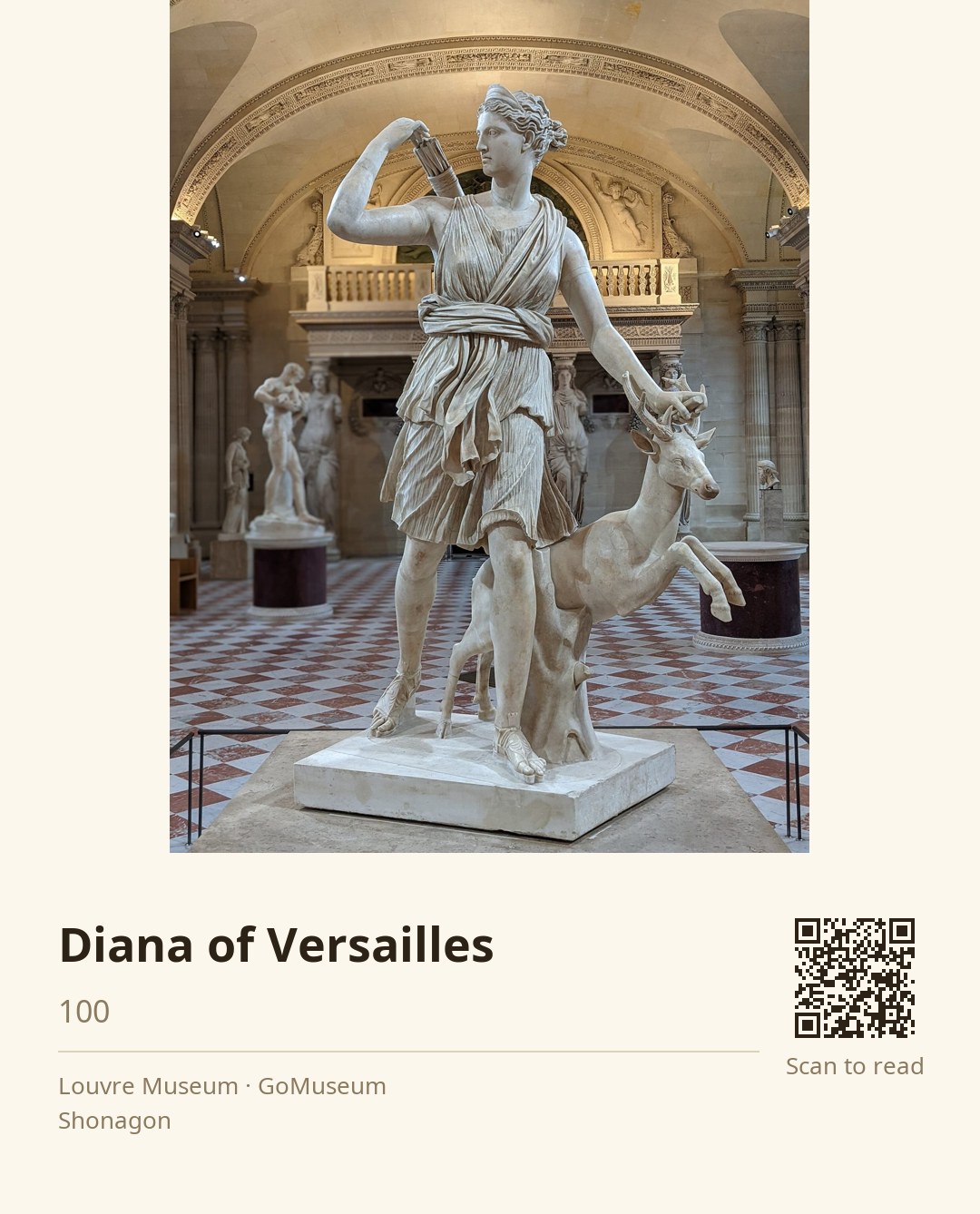
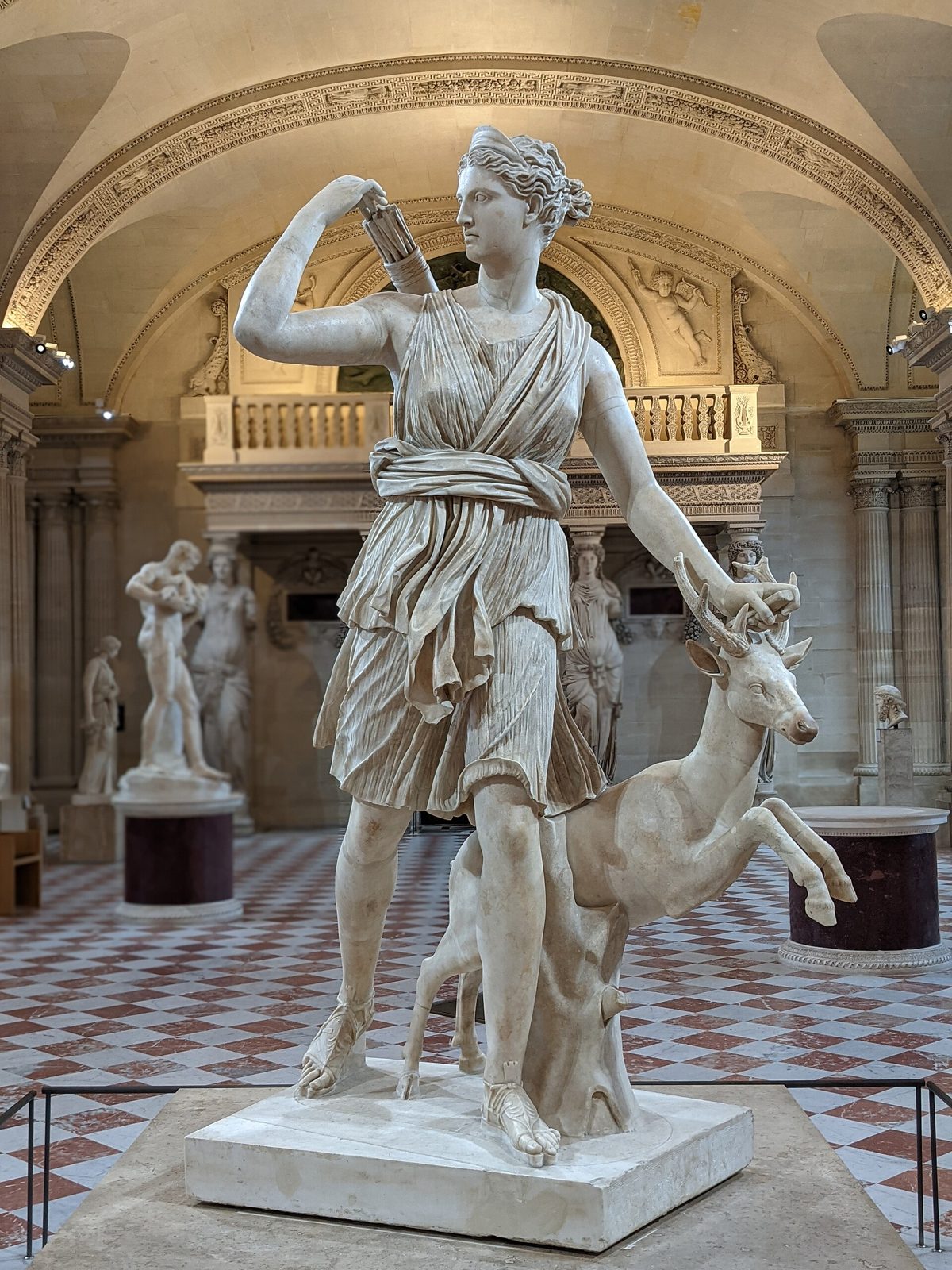
🎧 This work has audio narration — listen in the appAs you stand before the stunning "Diana of Versailles," take a moment to really absorb her poised elegance. Notice how her right arm is raised, ready to draw an arrow from her quiver, while her left hand rests on the antlers of a deer at her feet. This isn’t just a casual pose; it captures the very essence of the hunt, a moment frozen in time where power and grace intertwine.
These details matter because they reveal Diana, or Artemis as she’s known in Greek mythology, as a symbol of both strength and femininity. The deer at her feet, a companion in her pursuits, emphasizes her role as a protector of nature and wildlife, showcasing the delicate balance between hunter and hunted.
Originally sculpted in the 4th century BCE, this marble statue is a Roman copy of a lost Greek original, which adds layers to its history. It was gifted to Henry II of France by Pope Paul IV, and over the centuries, it has traveled through royal gardens and grand galleries, becoming a celebrated masterpiece.
So, as you gaze upon Diana, think about the stories she carries with her—stories of ancient rituals, royal admiration, and the timeless allure of the hunt. What do you think she would say if she could speak, standing here in the heart of the Louvre?
As you look closely at the 'Diana of Versailles,' take note of the marble's smooth surface and the intricate details of her attire. The artist has skillfully carved the flowing drapery of her chiton and himation, creating a sense of movement as if the fabric is gently blowing in the wind. Notice the way her toes are sculpted—particularly the longer second toe, a condition known as Morton's toe, which adds a touch of realism to her form.
Commissioned in the 4th century BCE, this piece is a Roman replica of a Greek original attributed to the sculptor Leochares. It was discovered in Italy, possibly near the ancient Temple of Diana at Nemi, and was gifted to Henry II of France by Pope Paul IV in 1556. Initially displayed in the Jardin de la Reine at Fontainebleau, it quickly gained popularity. Over the years, it moved to the Louvre, where it was restored multiple times, including significant revisions by Barthélemy Prieur. By 1696, it found a home in the grandeur of the Hall of Mirrors at Versailles, solidifying its status as a national treasure before returning to the Louvre in 1798.
One intriguing tidbit about the 'Diana of Versailles' is its connection to the ill-fated RMS Titanic. A miniature replica of this statue was featured atop a fireplace in the first-class reception room on the ship.