 Image: Matt Biddulph
Marie de' Medici cycle
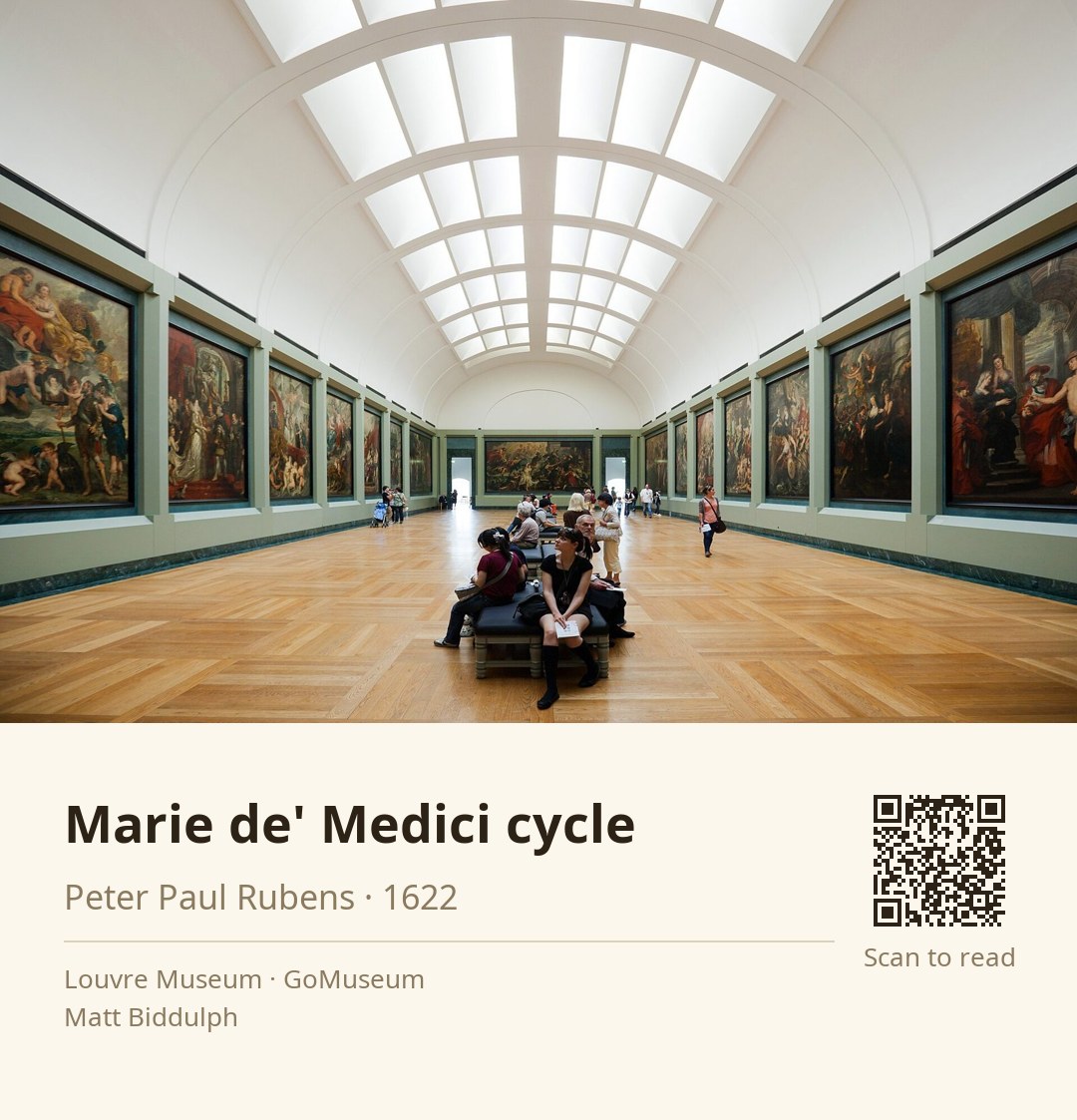
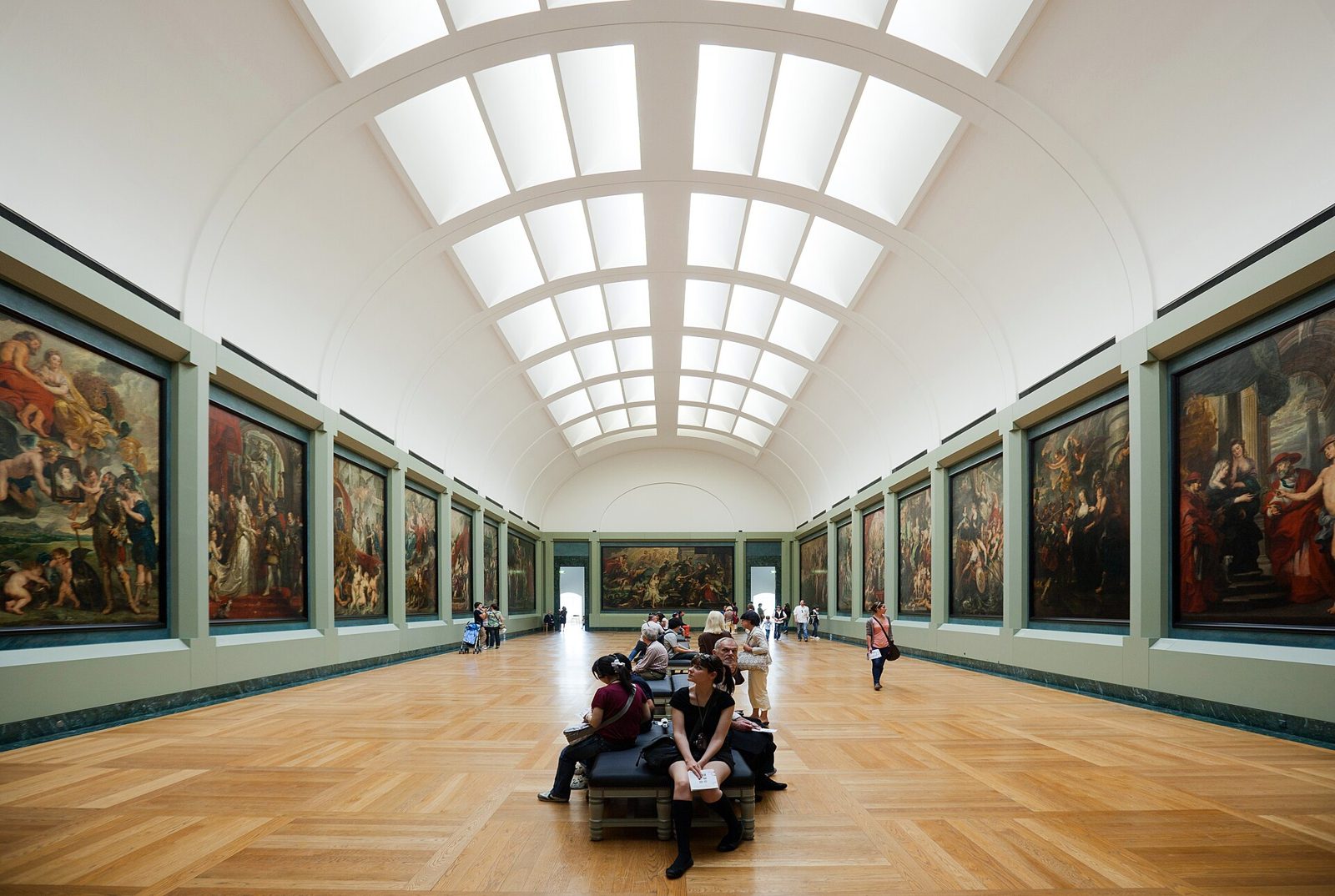
🎧 This work has audio narration — listen in the appAs you stand before the Marie de' Medici Cycle by Peter Paul Rubens, take a moment to really absorb the vibrant colors and dynamic figures that leap from the canvas. Notice how Marie herself is often depicted in grand, flowing robes, her expression a mix of strength and vulnerability. Look closely at the intricate details in the background, where allegorical figures swirl around her, each telling a part of her story.
These details matter because they transform Marie from a mere historical figure into a symbol of resilience and power. Rubens was tasked with portraying a woman whose life was filled with political turmoil and personal loss, yet he chose to celebrate her triumphs through these dramatic scenes. This was a bold move at a time when women rarely received such grand tributes.
Commissioned in 1621, this series was meant to immortalize Marie’s life and legacy, particularly after her tumultuous years as regent for her son, Louis XIII. Rubens, already a renowned artist, was uniquely positioned to capture her essence, blending historical narrative with allegorical richness.
So, as you take in this masterpiece, consider: what does it mean to you to see a woman’s life celebrated in such a monumental way? How might this influence your understanding of history and the stories we choose to tell?
Sir Peter Paul Rubens was a Flemish artist and diplomat born on June 28, 1577, in Siegen, Germany. He is celebrated as a leading figure of the Flemish Baroque tradition, renowned for his dynamic compositions that intertwine classical and Christian themes. Rubens's work is characterized by vibrant color, movement, and sensuality, aligning with the dramatic style of the Counter-Reformation. His prolific output includes altarpieces, portraits, landscapes, and history paintings, with a catalog of over 1,400 works.
Raised in Antwerp after fleeing religious persecution, Rubens was a well-educated humanist and skilled diplomat, knighted by both Philip IV of Spain and Charles I of England. He managed a large workshop that produced art for European nobility and collectors, and he was also an influential art dealer. Rubens's designs extended beyond painting; he created tapestries, prints, and even contributed to architectural projects.
His legacy endures in the art world, where he is recognized for his mastery of color and form, and his ability to convey emotion and drama. Rubens's impact on Baroque art is profound, making him a pivotal figure in the evolution of Western art history. He passed away on May 30, 1640, leaving behind a rich artistic heritage that continues to inspire.
The Marie de' Medici Cycle was commissioned by Marie de' Medici herself in the autumn of 1621, shortly after her return to Paris. She sought to immortalize her life and legacy through a series of twenty-four paintings, which Rubens was to complete within two years, coinciding with her daughter Henrietta Maria's marriage. Rubens, already an esteemed artist, was chosen for his ability to blend historical narrative with allegorical richness. The contract he signed was vague, focusing on the number of paintings rather than specific content, allowing him creative freedom. Interestingly, while twenty-one paintings depict Marie's life, the cycle dedicated to her husband Henry IV was never completed, partly due to Marie's eventual exile from France in 1631, leading to her death in Brussels in 1642.
At a time when female figures were often sidelined, Rubens took on the challenge of depicting Marie's complex life with dignity and depth. This series, with its allegorical representations, paved the way for future artists to explore women's narratives in a more nuanced way. It also reflects the shifting power dynamics of the time, as Marie, a queen regent, sought to immortalize her legacy amidst political turmoil.
One intriguing aspect of the commission is that it was rumored Marie de' Medici sought to rival another of Rubens' grand projects, The Constantine Tapestries. Additionally, the contract allowed Rubens to employ assistants for the backgrounds, showcasing his ability to manage a large-scale project while maintaining his artistic vision.