The Lictors Bring to Brutus the Bodies of His Sons
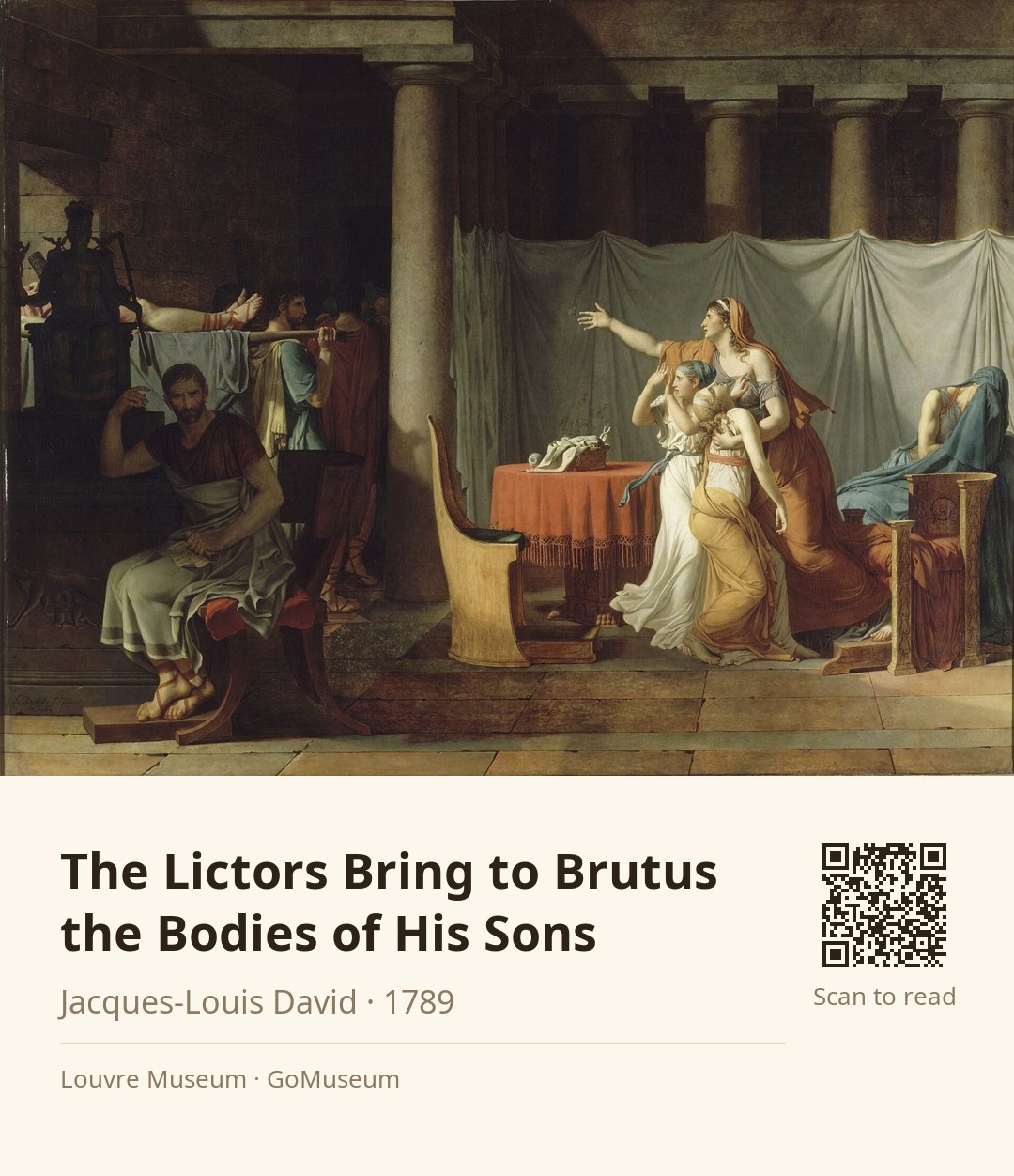
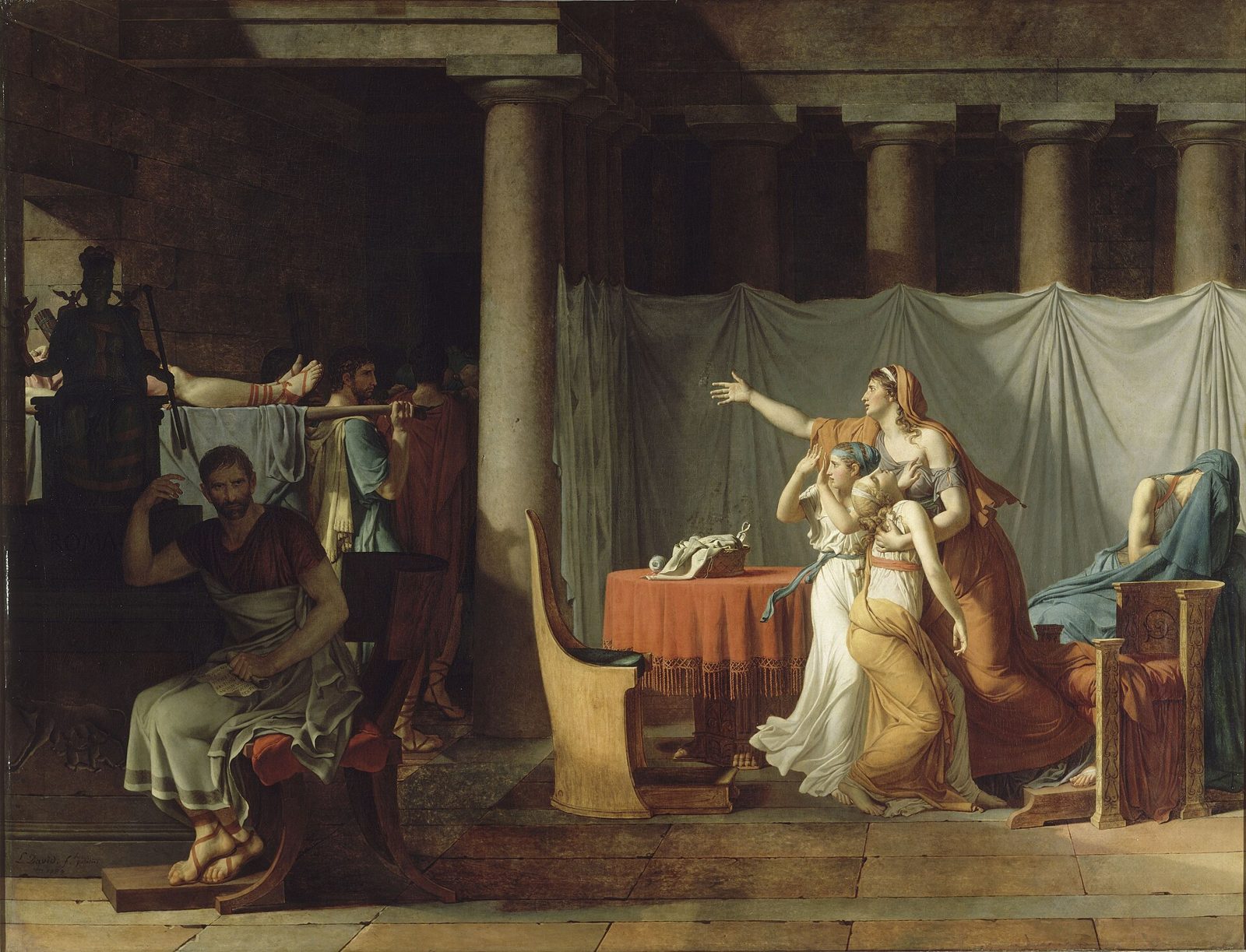
🎧 This work has audio narration — listen in the appTake a moment to really absorb the dramatic tension in Jacques-Louis David's "The Lictors Bring to Brutus the Bodies of His Sons." Look closely at Brutus, seated in shadow, his expression a mix of sorrow and stoic resolve. Notice how his feet are crossed tightly, almost as if he’s bracing himself against the weight of his actions.
Now, shift your gaze to the right side of the canvas, where his wife and daughters are engulfed in grief, their faces twisted in horror. This stark contrast between Brutus's cold demeanor and the emotional turmoil of his family is crucial. It encapsulates the heart-wrenching sacrifice he made for the Republic—his own sons, executed for treason.
Painted in 1789, during a time of political upheaval in France, this work serves as a powerful allegory for the values of republicanism. Brutus's choice reflects a commitment to civic duty over familial loyalty, a theme that resonated deeply with the revolutionary spirit of the era.
David spent over two years perfecting this piece, and it was almost not displayed due to its politically charged content. Yet, the public's demand was so strong that it had to be shown, marking a pivotal moment in the art of the Revolution.
As you stand here, consider: what sacrifices are we willing to make for our beliefs? How does this painting challenge your understanding of duty and family?
Jacques-Louis David was a pivotal French painter born on August 30, 1748, in Paris. He emerged as the leading figure of the Neoclassical movement, marking a significant shift in artistic taste from the frivolity of Rococo to a more austere and emotionally charged classical style. His early life was marked by personal tragedy, losing his father at a young age, which shaped his character and determination to pursue art against familial expectations.
David's career flourished during the tumultuous political landscape of France, where he became an ardent supporter of the French Revolution, aligning himself with figures like Robespierre. His political engagement influenced his art, producing iconic works such as "The Death of Marat" and "The Coronation of Napoleon," which reflect both historical narratives and his personal convictions. After the fall of Napoleon, David faced exile but continued to influence generations of artists, establishing a legacy that shaped academic painting in the early 19th century. His works remain celebrated in major museums, particularly the Louvre, solidifying his status as a cornerstone of Western art history. David's life and art were inextricably linked to the evolving identity of France, embodying the spirit of revolution and the quest for artistic integrity.
This was a pivotal moment, as the painting coincided with the early days of the French Revolution, a time of intense political upheaval. The work was initially met with skepticism due to its politically charged content, raising concerns about inflaming revolutionary sentiments. However, the public's demand for its exhibition was overwhelming, leading to its display at the Salon, where it sparked considerable debate. The painting was purchased for 6,000 livres by King Louis XVI, and it has been part of the Louvre's collection since 1793.
As you take in this monumental piece, notice the dramatic use of light and shadow. David employs chiaroscuro to create a stark contrast between Brutus, who is shrouded in darkness, and the anguished figures of his family, illuminated in a brighter light. This not only emphasizes Brutus's isolation but also heightens the emotional impact of the scene. The composition is carefully structured, with Brutus seated on a klismos, his tense, crossed feet symbolizing his internal struggle. The arrangement of figures—Brutus on the left, his wife and daughters on the right—creates a dynamic tension that draws your eye across the canvas. The sharp scissors lying in the center serve as a poignant reminder of the severed familial ties, while the drapery and columns frame the scene, giving it a sense of classical grandeur. David's meticulous brushwork and the rich, earthy color palette evoke a sense of gravitas, making the viewer feel the weight of Brutus's tragic decision.
This painting, unveiled in 1789, served as a bold allegory for civic virtue during a time of revolutionary fervor in France. Brutus, the stoic father, sacrifices his own sons for the greater good of the Republic, a narrative that resonated deeply with the ideals of liberty and sacrifice that were emerging in the wake of the French Revolution. David's work influenced not just his contemporaries but also future generations of artists who sought to convey moral and political messages through their art. The painting's dramatic composition and emotional depth set a new standard for history painting, shifting the focus from mere decoration to profound storytelling. Remember this: David didn't just paint a scene; he ignited a conversation about duty, sacrifice, and the cost of freedom that still echoes in art today.
An interesting tidbit about this painting is that it was almost not displayed at the Salon due to fears that it might incite pro-revolutionary sentiments. However, the public's insistence was so strong that the authorities had no choice but to relent. This reflects not only the painting's immediate impact but also the volatile atmosphere of the time, where art and politics were inextricably linked.
David's earlier painting, 'The Oath of the Horatii,' created in 1784, explores similar themes of duty and sacrifice, reflecting the tension between personal loyalty and civic responsibility, which also resonates in 'The Lictors Bring to Brutus the Bodies of His Sons.'