Venus and Cupid
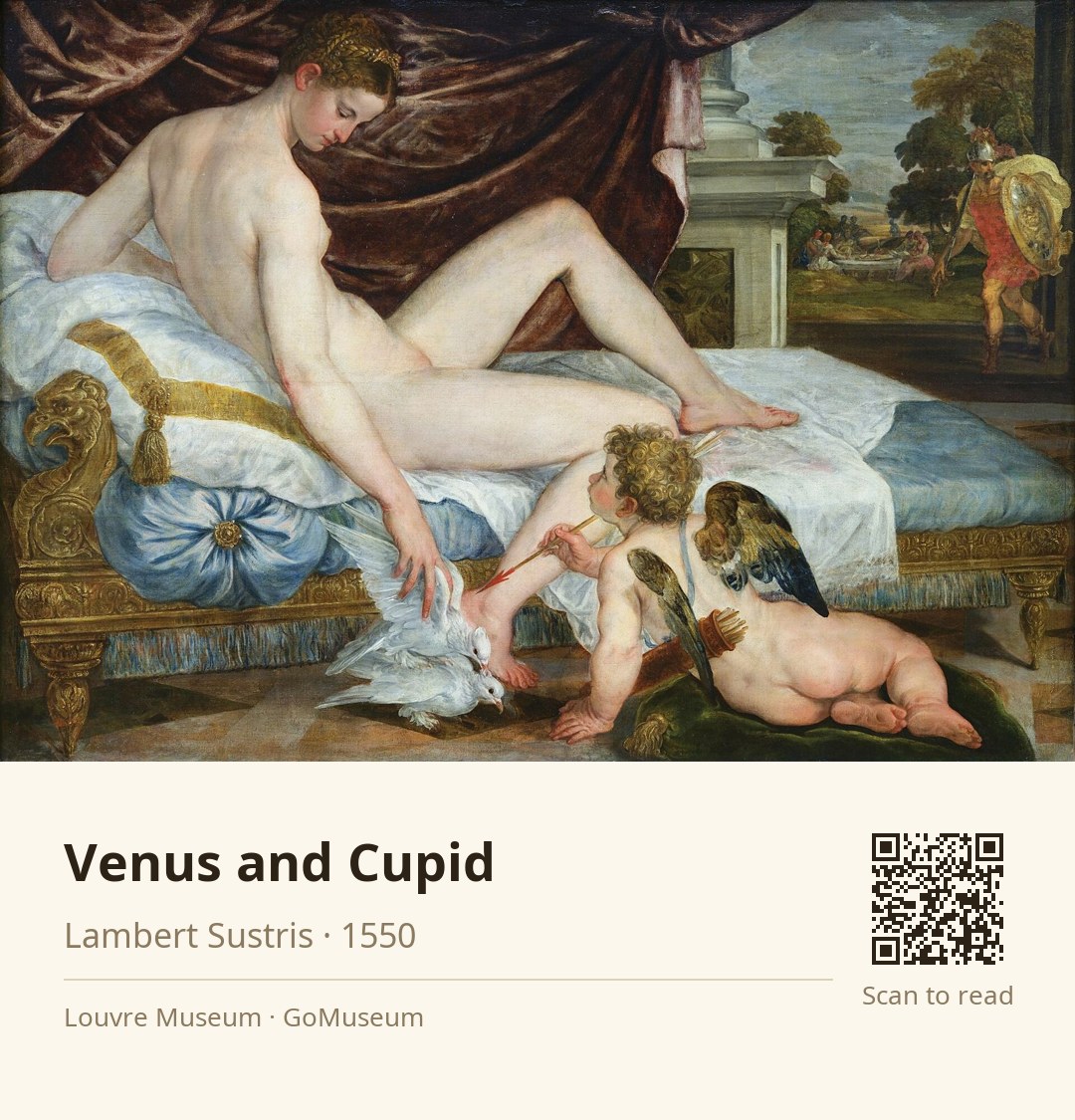
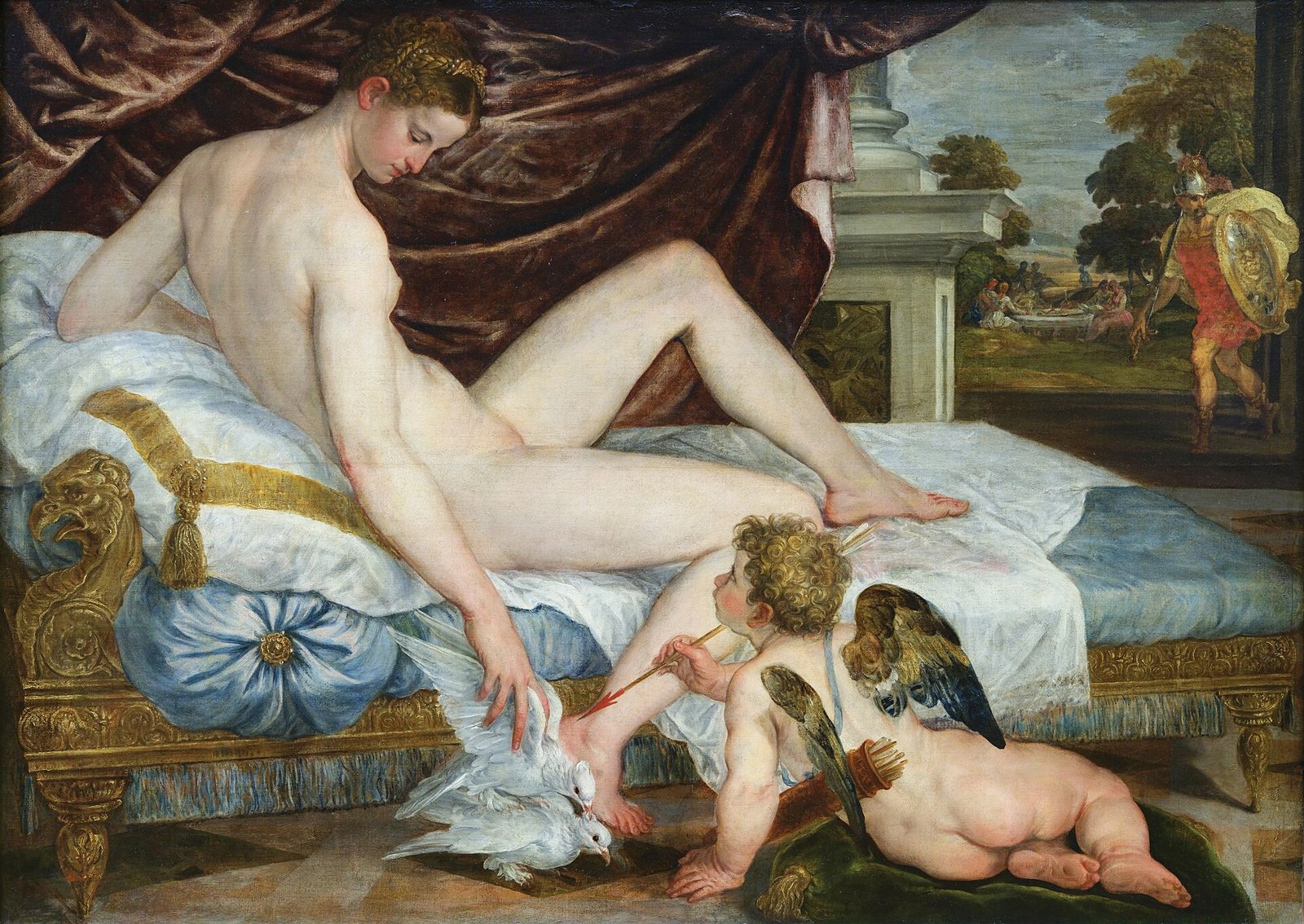
🎧 This work has audio narration — listen in the appAs you stand before "Venus and Cupid," take a moment to really absorb the scene. Notice how Venus, draped in a soft, ethereal light, is half-reclining on a bed, her gaze tenderly directed towards the doves she caresses. Look closely at the delicate way her fingers interact with these birds; they symbolize love and fidelity, key themes in this artwork.
This moment is a beautiful interplay of tenderness and mischief, illustrating the complexities of love itself.
Created around 1550, this painting reflects the Renaissance fascination with mythology and the human experience, a hallmark of Sustris's work. It’s a glimpse into a world where divine love and earthly desires intertwine seamlessly.
As you step back, think about what love means to you. How do the symbols in this painting resonate with your own experiences?
Lambert Sustris, born around 1515-1520 in Amsterdam, emerged as a significant figure in the Venetian art scene during the late Renaissance. Active primarily in Venice, he is recognized for his Mannerist style and contributions that hint at the proto-Baroque movement. His artistic journey began later in life, as he only moved to Venice after the age of 40, having trained under unknown circumstances. Sustris worked closely with the renowned Titian, assisting in landscape depictions and accompanying him on trips to Augsburg, where he created portraits.
His works, such as "Noli me tangere" and "Perseus and Andromeda," reflect a delicate handling of color and form, influenced by contemporaries like Parmigianino. Sustris played a pivotal role in bridging Northern and Southern European artistic traditions, particularly through his pupils, including his son Friedrich Sustris and Girolamo Muziano. His legacy is marked by the dissemination of Venetian landscape interests to Rome, impacting the artistic dialogue of the mid-sixteenth century. Despite the obscurity of his life, Sustris's contributions to the evolution of landscape painting and his connections to prominent artists solidify his place in art history.
It later entered the French royal collection under Louis XIV in 1671. The painting's journey didn't end there; it was previously owned by Everhard Jabach, a notable collector who likely acquired it during an auction of the Fuggers' possessions. After passing through several hands, including that of Nicolas Fouquet, the painting was eventually seized by Louis XIV, showcasing the artwork's tumultuous history and the high regard in which it was held.
As you gaze at 'Venus and Cupid,' pay attention to the vibrant colors and the way Sustris handles light. The soft, ethereal glow surrounding Venus creates a dreamlike quality, drawing you into the intimate scene. Notice how the brushwork feels both delicate and dynamic, particularly in the way Venus's fingers caress the doves—there's a sense of movement that brings the painting to life. The composition is carefully structured, with Venus reclining in a relaxed pose, while Cupid's playful antics add a layer of mischief. The background, featuring Mars approaching, adds depth and context, inviting you to consider the interplay between love and war. This balance of elements is what makes the painting so captivating.
Interestingly, Sustris's influence extended beyond his own works; he trained notable pupils, including Girolamo Muziano, who carried forward the Venetian interest in landscape painting as a backdrop for historical subjects. This connection helped bridge the artistic styles between Venice and Rome during the mid-sixteenth century, showcasing Sustris's impact on the broader art world.
Sustris was a studio assistant to the renowned artist Titian, which greatly influenced his use of color and composition in 'Venus and Cupid.' This connection to Titian's techniques is evident in the vibrant hues and the ethereal quality of light in the painting.