Sea Port at Sunset
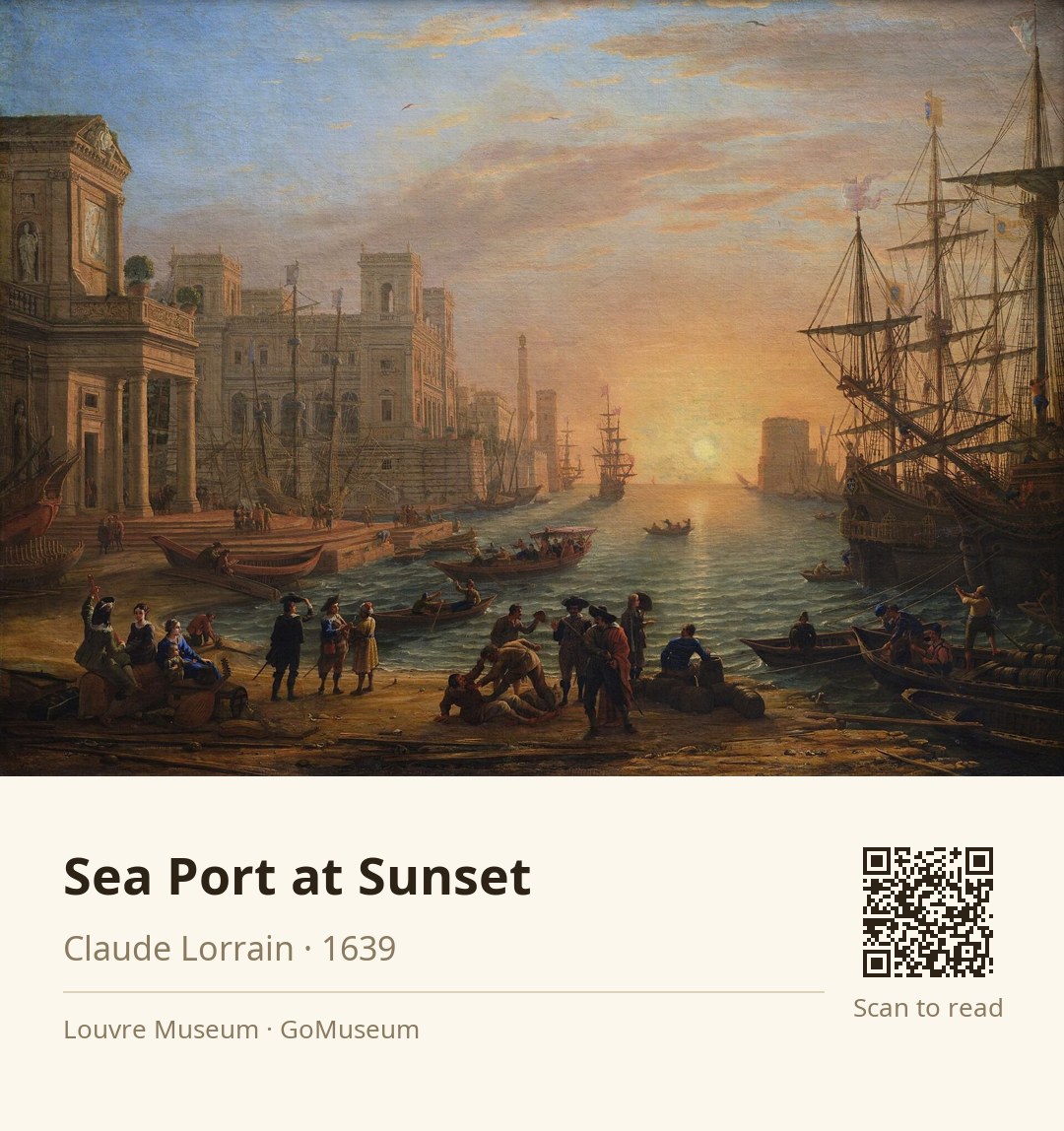
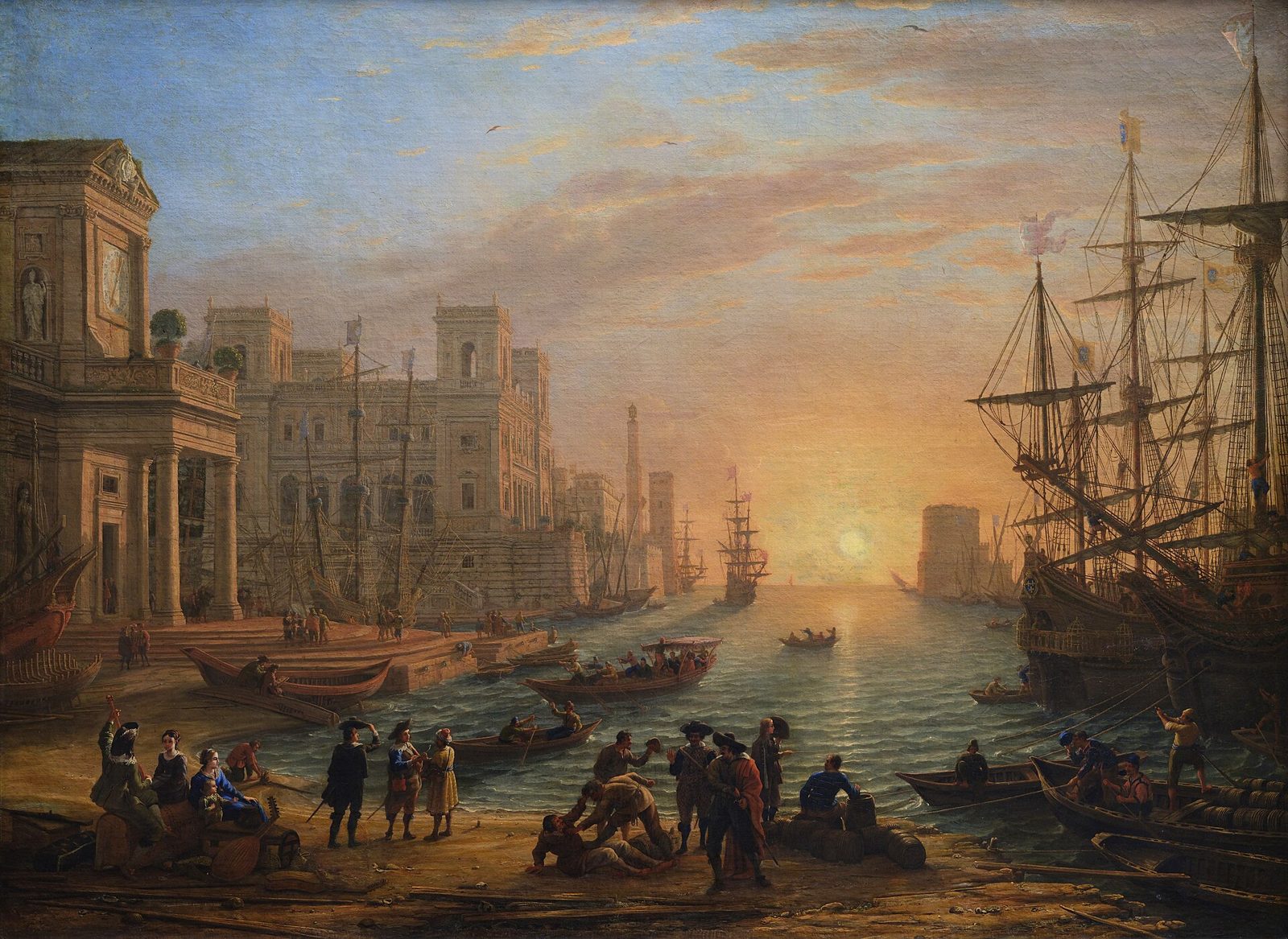
🎧 This work has audio narration — listen in the appTake a moment to really soak in the warmth of the colors in Claude Lorrain's "Sea Port at Sunset." Notice how the sun, a soft yellow orb, casts a golden glow over the scene, illuminating the ships and the bustling figures below. The way the light dances on the water creates a shimmering effect that draws you in, almost inviting you to step into this tranquil moment.
These details matter because they showcase Lorrain's mastery of light and atmosphere, elements that were revolutionary for his time. He wasn't just painting a port; he was capturing a fleeting moment of beauty, a serene transition from day to night. This painting is a perfect example of how he blended imagination with reality, using elements he observed in various locations to create a harmonious scene that feels both real and dreamlike.
Created in 1639, this piece was painted for a French patron, which is reflected in the use of the French fleur-de-lis on the ships instead of the papal bees found in his earlier works. Lorrain was a pioneer of landscape painting, and his ability to depict sunlight was groundbreaking, influencing countless artists who followed.
As you stand here, think about the stories that this port could tell. What journeys have begun or ended in this vibrant setting? What echoes of laughter and toil linger in the air? Let your imagination wander as you take in this beautiful sunset.
Claude Lorrain, born Claude Gellée around 1600 in the Duchy of Lorraine, was a pivotal figure in Baroque landscape painting. Orphaned at a young age, he was guided by an elder brother who introduced him to art. His journey to Italy marked the beginning of a transformative career, where he apprenticed under notable artists like Goffredo Wals and Agostino Tassi. Lorrain's landscapes, often infused with sunlight, elevated the genre by incorporating small figures that hinted at historical or mythological narratives.
By the late 1630s, he had established himself as Italy's foremost landscapist, commanding significant fees for his meticulously crafted works. He produced an extensive body of drawings and etchings, which influenced future generations of artists. Although not an innovator in the traditional sense, his unique approach to light and composition set him apart. Lorrain's legacy endures, as he became a favorite among English collectors posthumously, solidifying his place in art history as a master of the Roman School and an enduring symbol of French classicism. He passed away in Rome in 1682, leaving behind a rich legacy of over 300 paintings, 1,200 drawings, and 51 etchings.
Claude Lorrain's 'Sea Port at Sunset' was painted in 1639, a pivotal moment in his career as he transitioned from papal commissions to works for private patrons. This particular piece was likely commissioned by a French collector, evident from the use of the French fleur-de-lis on the ships, replacing the papal bees seen in his earlier works. The painting entered the royal collections in 1693, thanks to the generosity of André Le Nôtre, the famed landscape architect, and later found its home in the Louvre. By 2016, it was proudly displayed in the Richelieu Pavilion, Room 15, where it continues to captivate audiences.
As you gaze at 'Sea Port at Sunset,' take a moment to appreciate the intricate brushwork that Claude Lorrain employed. The painting's composition is masterfully structured, with a clear foreground, middle ground, and background that draw your eye through the scene. Notice how the warm, golden hues of the sunset blend seamlessly into cooler tones as they recede into the horizon, creating a sense of depth and atmosphere. The light is not merely a backdrop; it dances across the water and illuminates the figures, enhancing the vibrancy of the moment. Lorrain's technique of layering colors, particularly the use of ochres and blues, adds a rich texture that feels almost tangible. The shadows cast by the ships and figures create a dynamic interplay of light and dark, emphasizing the fleeting nature of the sunset. This careful handling of light and color not only captures the beauty of the scene but also evokes a sense of tranquility and nostalgia.
However, the version you see here was likely created for a French patron, as evidenced by the fleurs-de-lis on the ships instead of the Barberini bees that adorned the original. This subtle shift in detail reflects the artist's adaptability and the changing tastes of his clientele. Imagine the conversations that must have taken place around this painting as it transitioned from papal favor to royal collection!
Lorrain's technique of layering colors is particularly notable in 'Sea Port at Sunset,' where he skillfully blends ochres and blues to create a rich texture that enhances the painting's depth and atmosphere.
After Lorrain, many artists began to incorporate the sun and its effects into their landscapes, a practice that was rare before his time, thus paving the way for a new appreciation of light in painting.