The Bridge at Narni
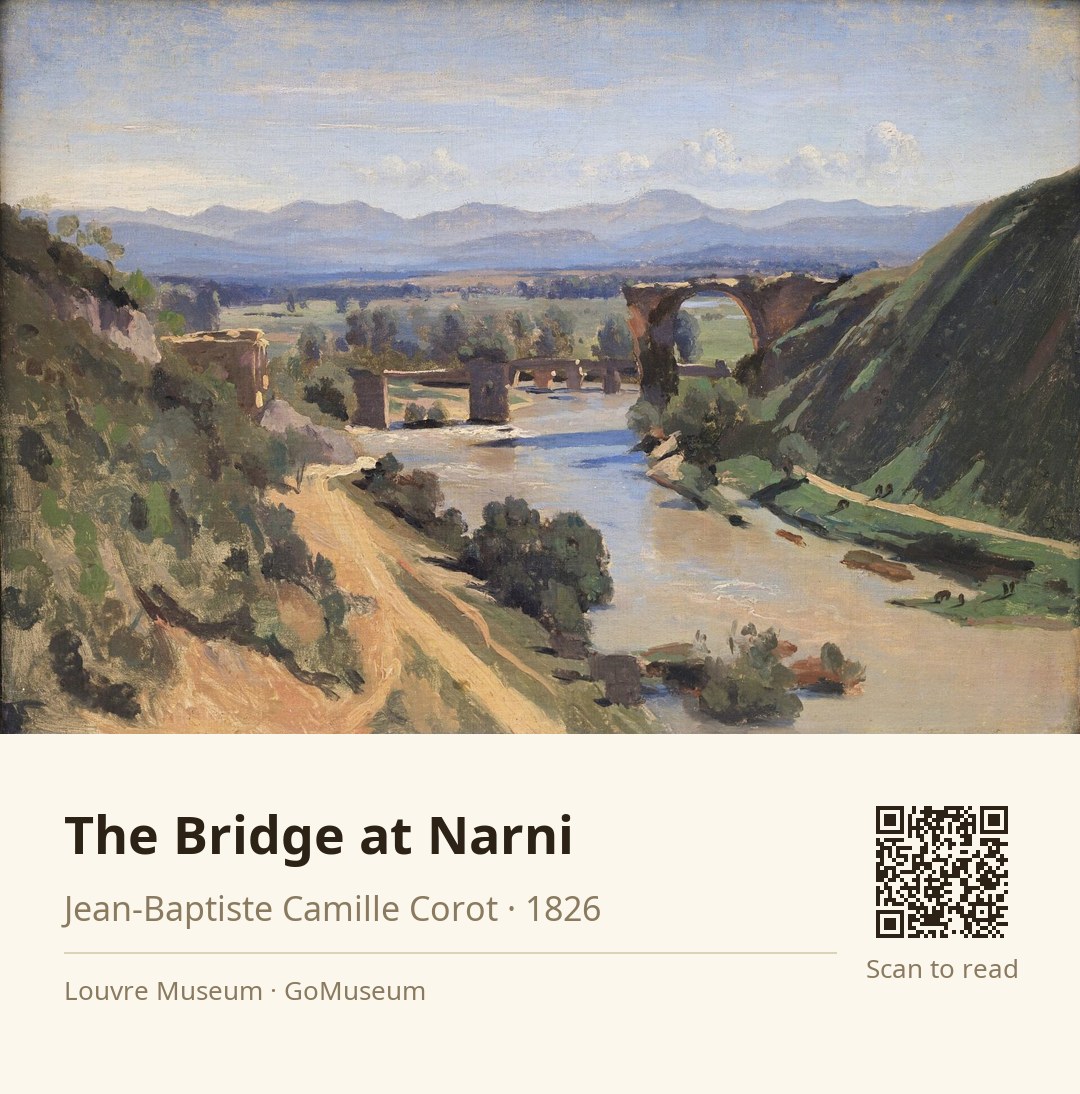
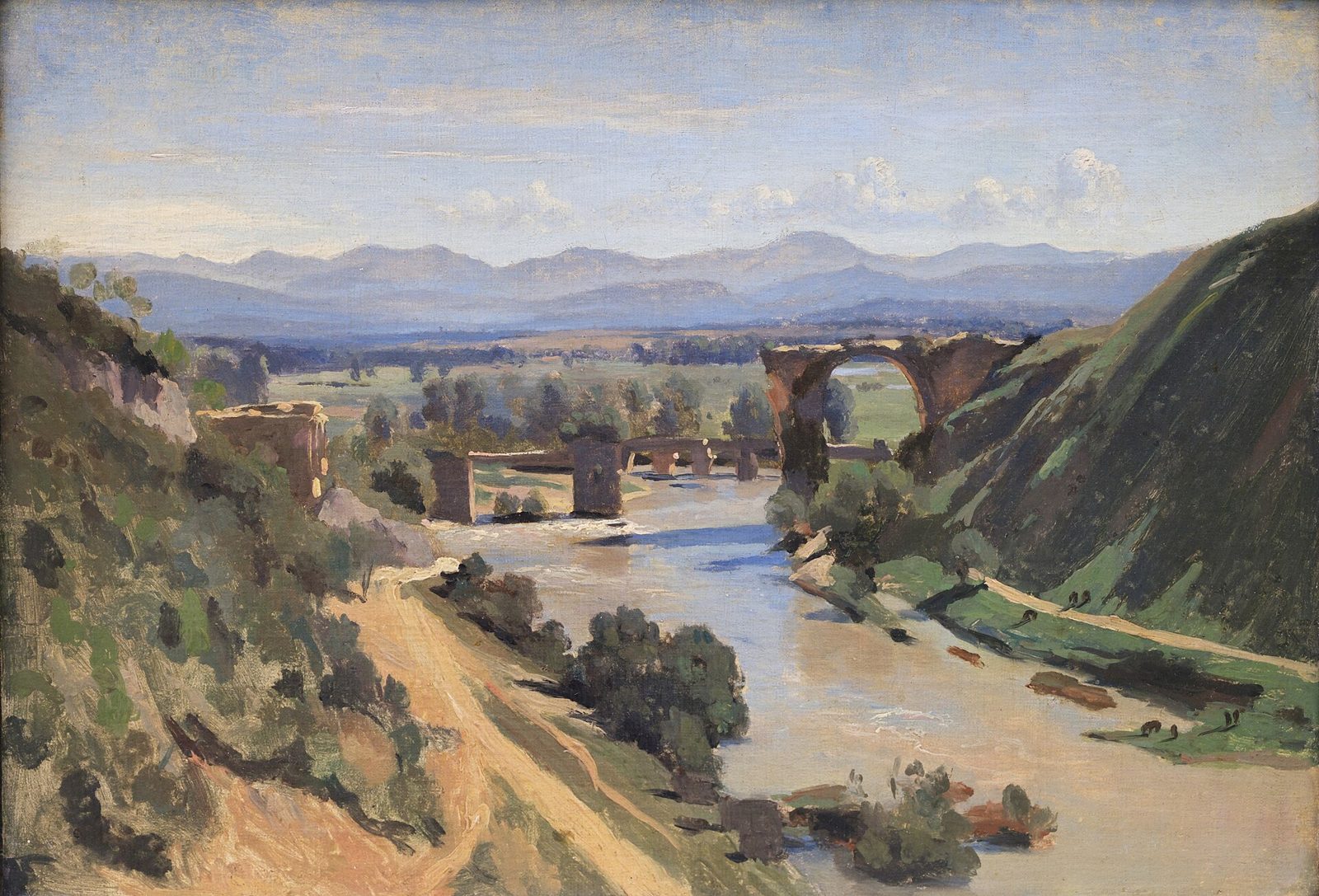
🎧 This work has audio narration — listen in the appTake a moment to really look at "The Bridge at Narni." Notice how the sunlight dances across the water, illuminating the ancient stones of the bridge. The way Corot captures that shimmering effect is like a whisper of the Italian landscape, inviting you to step into the scene.
This isn’t just a pretty view; it’s a masterclass in blending classical composition with the freshness of plein air painting. Corot was inspired by the greats like Claude Lorrain and Poussin, yet he breathed life into their ideals by painting outdoors, capturing the essence of nature as it truly is.
Created in 1826 during his time in Italy, this piece reflects Corot's journey to merge tradition with the spontaneity of the natural world. It’s a pivotal moment in art history, bridging the gap between the structured beauty of classical landscapes and the emerging Impressionist movement.
As you stand here, think about how this painting might have influenced the artists who followed. What feelings does this scene evoke in you? Imagine the stories that bridge could tell if it could speak.
Jean-Baptiste-Camille Corot, born on July 16, 1796, in Paris, was a pivotal French landscape and portrait painter whose work bridged the Neo-Classical tradition and the emerging Impressionist movement. Coming from a well-off bourgeois family, he was able to pursue art without financial constraints after receiving a yearly allowance following his sister's death in 1822. Initially uninterested in art, Corot's passion ignited during nature walks with a family friend, leading him to study under Achille Etna Michallon, who encouraged outdoor painting.
Corot's early career was marked by a struggle between commercial obligations and his artistic aspirations, but he eventually dedicated himself fully to painting. He became known for his serene landscapes, often capturing the essence of light and atmosphere, which would later influence Impressionists. Despite being regarded as an amateur for much of his life, he gained recognition around 1850 and became a founding figure of the Barbizon School, emphasizing realism in nature. Corot's legacy endures as a bridge between classical ideals and modern artistic expression, making him a significant figure in art history. He passed away on February 22, 1875, leaving behind a vast and influential body of work.
In 1826, Jean-Baptiste Camille Corot painted 'The Bridge at Narni' during a transformative period in his artistic journey. Commissioned as a study for a larger work, it was created in September of that year while he was in Italy, a country that deeply inspired him. This piece served as the foundation for 'View at Narni,' which debuted at the Salon of 1827 and is now housed in the National Gallery of Canada. Interestingly, Corot was not the first to capture this scene; his teacher, Achille-Etna Michallon, and friend Ernst Fries had also depicted the Ponte d'Augusto, showcasing a shared fascination with this historic bridge.
As you gaze at 'The Bridge at Narni,' notice the way Corot's brushwork creates a sense of movement and life. The strokes are both delicate and bold, capturing the shimmering effect of sunlight on the water's surface. His choice of a soft, natural palette enhances the tranquil atmosphere, inviting you to feel the warmth of the Italian sun. The composition is masterfully structured, with the bridge arching gracefully across the canvas, leading your eye toward the distant hills. Corot's technique of painting en plein air allowed him to capture the fleeting effects of light and shadow, giving the scene an almost ephemeral quality. This approach not only reflects the beauty of the landscape but also evokes a sense of spontaneity, as if the moment is alive and breathing.
This work, created during his formative years in Italy, showcases his deep admiration for classical artists like Claude Lorrain and Nicolas Poussin while simultaneously embracing the empirical observation of nature that would later influence the Impressionists. By reconciling these two approaches, Corot not only set a new standard for landscape painting but also inspired a generation of artists to explore the beauty of nature with a renewed sense of immediacy and authenticity. His legacy is felt in the way modern artists engage with the natural world, making this painting a cornerstone of art history that continues to resonate today.
This spontaneity reflects his deep understanding of the landscape, honed through years of practice and observation. It's a reminder of the artist's connection to nature and his commitment to portraying it as authentically as possible.
Corot's time in Italy was crucial as it allowed him to immerse himself in the classical landscape tradition, which he admired and sought to reconcile with the spontaneity of plein air painting. This experience not only shaped his style but also provided him with a rich visual vocabulary that he would draw upon throughout his career.
Coming from a financially stable bourgeois family, Corot had the luxury to pursue art without the pressures of economic hardship. His upbringing in a household that valued aesthetics, combined with his eventual allowance after his sister's death, enabled him to focus on his artistic development and travel extensively for inspiration.
Achille-Etna Michallon was instrumental in Corot's early artistic education, introducing him to outdoor painting and the principles of Neoclassicism. Michallon's influence helped Corot develop his unique style that blended traditional techniques with the fresh observations of nature he made while painting en plein air.