Madonna of the Rabbit
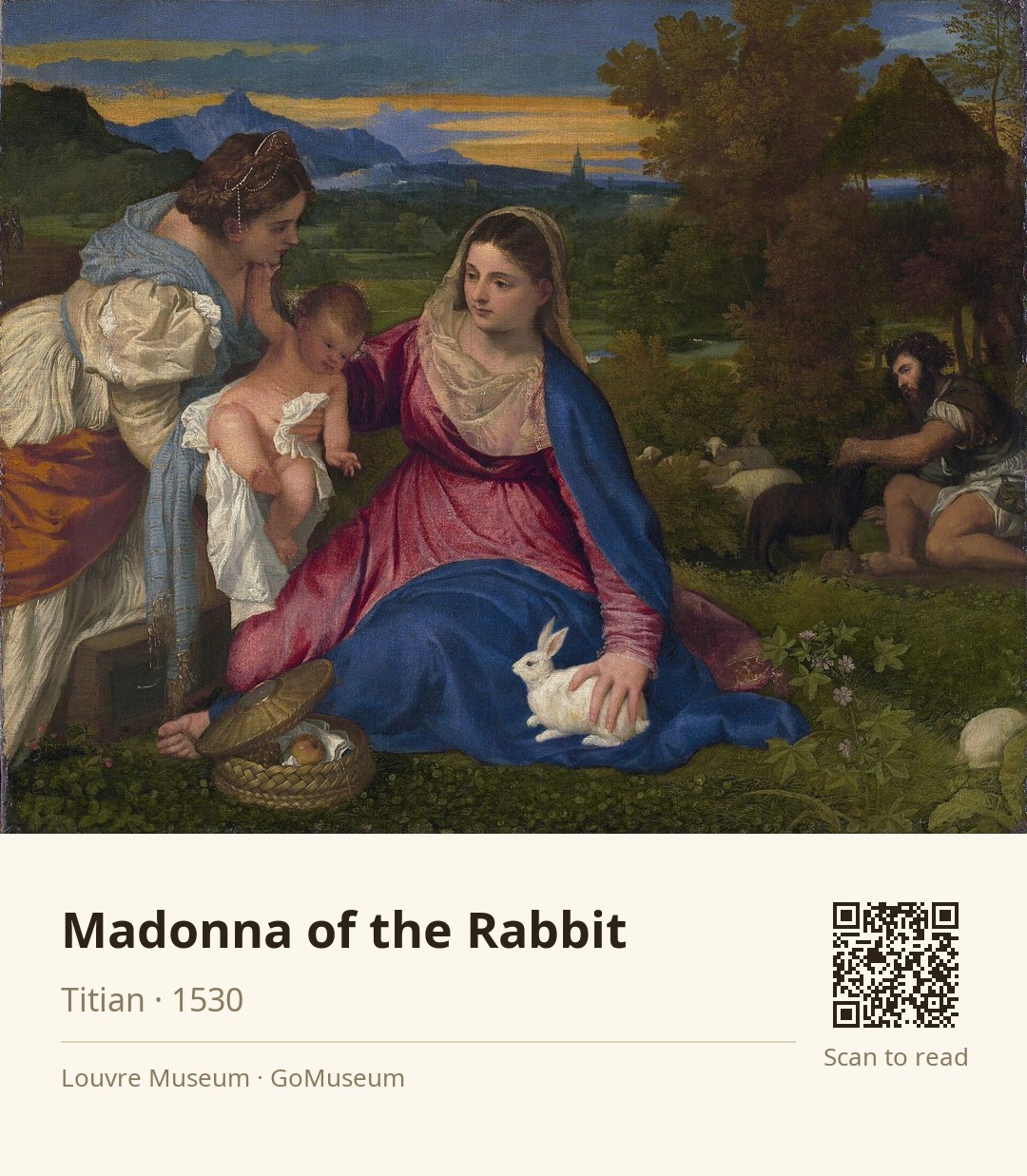
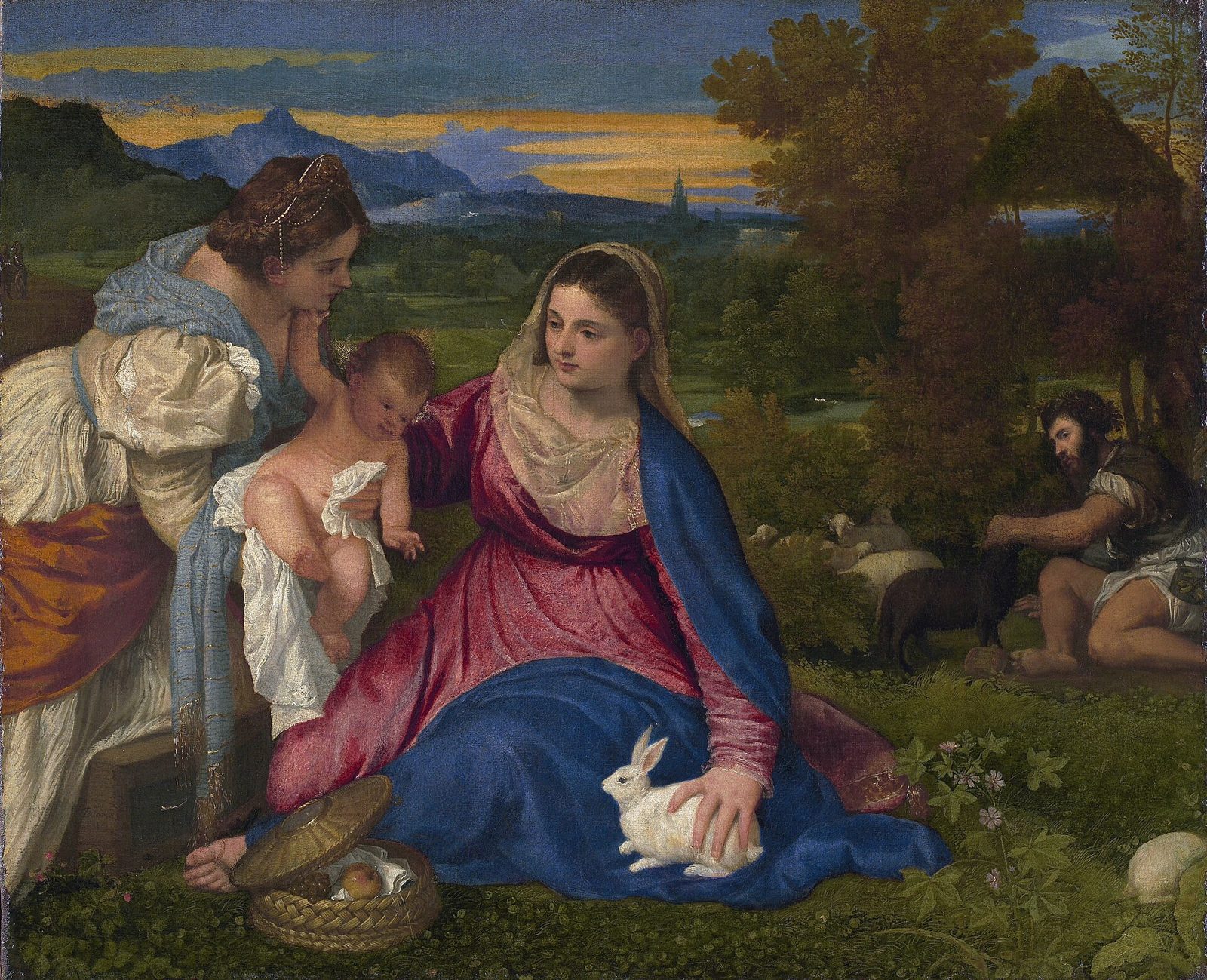
🎧 This work has audio narration — listen in the appTake a moment to really look at Titian’s "Madonna of the Rabbit." Notice how Mary cradles that delicate white rabbit in her left hand. It’s not just a cute detail; this little creature symbolizes purity and fertility, reflecting the mystery of the Incarnation. The rabbit’s presence here speaks volumes about Mary’s virginity and her role as the mother of Christ.
Now, shift your gaze to the serene expression on Mary’s face and the gentle way she holds the Christ Child. This intimate moment captures the essence of maternal love, inviting you into a private world of devotion. The wildflowers at their feet and the soft, twilit sky create an idyllic setting, reminiscent of classical poetry, further enhancing this sacred scene.
Painted in 1530, during a time of personal loss for Titian—his wife had just died—this artwork resonates with his grief. The shepherd in the background, possibly a reflection of Titian himself, adds a layer of melancholy to the composition.
As you stand here, think about the emotions that this painting evokes. What does the rabbit mean to you in the context of purity and motherhood? How does Titian’s personal story influence your view of this serene moment?
Titian, born Tiziano Vecellio around 1488 in Pieve di Cadore, was a pivotal figure in the Italian Renaissance, particularly in Venetian painting. Renowned for his versatility, he excelled in portraits, landscapes, and mythological themes, becoming a sought-after artist among patrons, including the Habsburgs and the papacy. His innovative use of color and brushwork transformed the art of painting, liberating it from the rigid constraints of line and form that characterized earlier periods.
Titian's career began in Venice, where he trained under notable masters such as Giovanni Bellini and Giorgione. His early works reflected the influence of these artists, but he quickly developed a distinctive style that emphasized color and emotional depth. His masterpiece, "Assumption of the Virgin," showcased his ability to blend religious themes with dynamic composition, setting a new standard in Christian art.
Throughout his life, Titian's artistic evolution mirrored his personal experiences, including the loss of his wife and the challenges of his time. He became a prominent portraitist, capturing the essence of his subjects with remarkable realism. His legacy endures, influencing countless artists and solidifying his place as one of the greatest painters in Western art history. Titian passed away in 1576, leaving behind a rich body of work that continues to inspire and captivate audiences today.
In 1529, the influential Federico Gonzaga commissioned three paintings from Titian, one of which is believed to be the 'Madonna of the Rabbit.' This piece was crafted during a tumultuous time for Titian, as he was grappling with the death of his wife, Cecilia, shortly after giving birth to their daughter, Lavinia. The painting's intimate portrayal of Mary and the Christ Child reflects Titian's personal grief, echoing the sorrow he felt during this period. The work was intended for private devotion, evident in its small format. After its completion, it became part of the Gonzaga collection, which was acquired by Charles I of England in 1627. Following the king's execution, the painting was sold at auction and eventually found its way to the 2nd Duke of Richelieu and then to Louis XIV, illustrating its journey through significant historical events and its changing ownership over the centuries.
As you examine the 'Madonna of the Rabbit,' pay attention to Titian's masterful use of color and light. The warm oranges and blues in the sky create a soft, twilit atmosphere that envelops the figures in a serene glow. Notice how the brushwork feels both fluid and dynamic, capturing the gentle movement of the figures and the surrounding landscape. The composition is carefully structured, with Mary and the Christ Child at the center, drawing your eye directly to their intimate connection. The wildflowers at their feet add a touch of natural beauty, enhancing the idyllic setting reminiscent of classical poetry. The shepherd in the background, possibly a reflection of Titian himself, introduces a layer of melancholy, while the positioning of Mary and Catherine creates a triangular structure that guides your gaze throughout the painting, emphasizing the emotional depth and narrative within this sacred scene.
The painting's small format indicates it was intended for private devotion, mirroring Titian's own need for solace and reflection during a period marked by personal loss and the responsibilities of fatherhood after his wife's death.
The wildflowers at Mary and the Christ Child's feet evoke the classical theme of 'locus amoenus,' or an idyllic, peaceful place, which not only enhances the serene atmosphere but also connects the work to the rich tradition of pastoral poetry.