Triumph of the Virtues
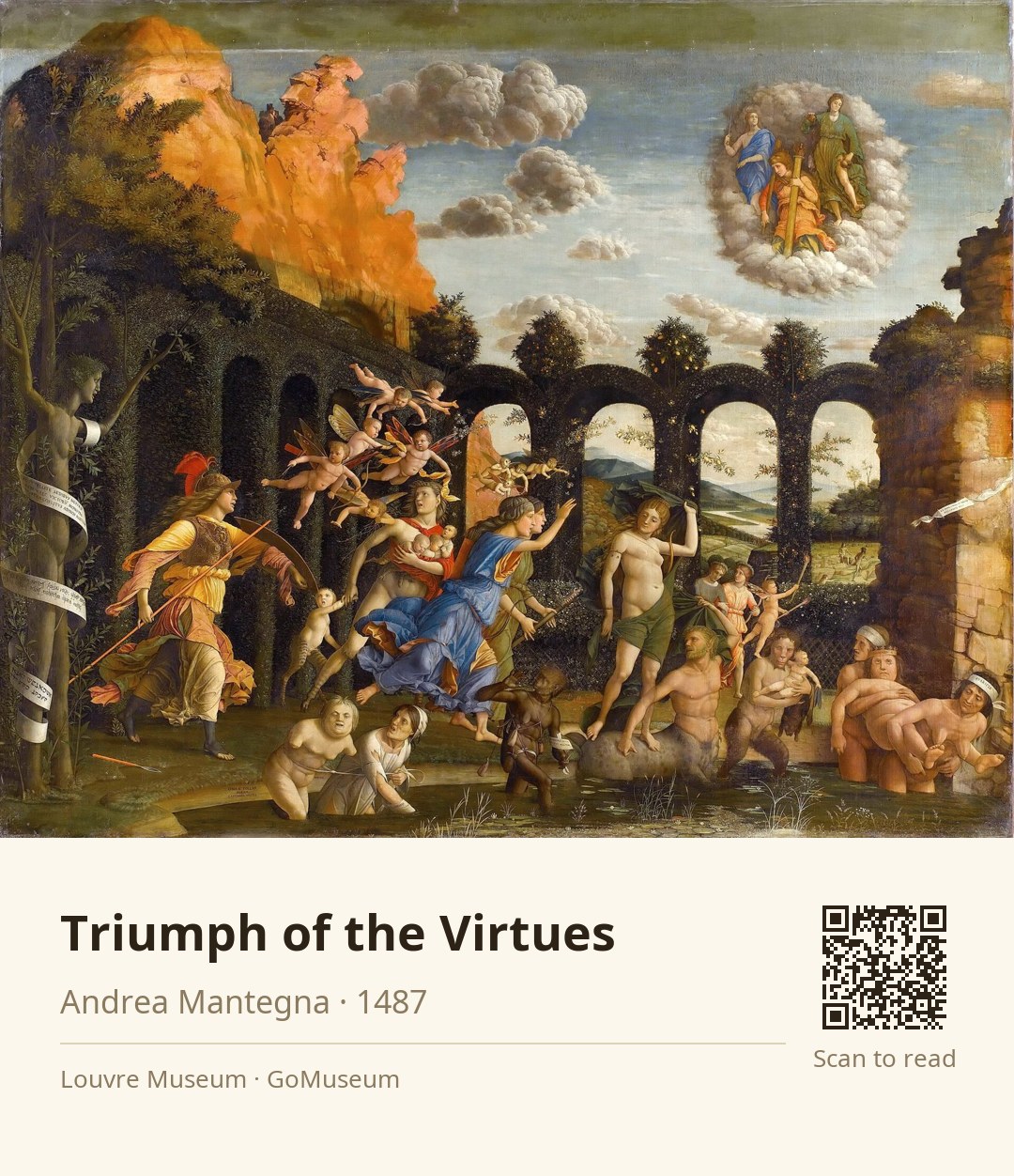
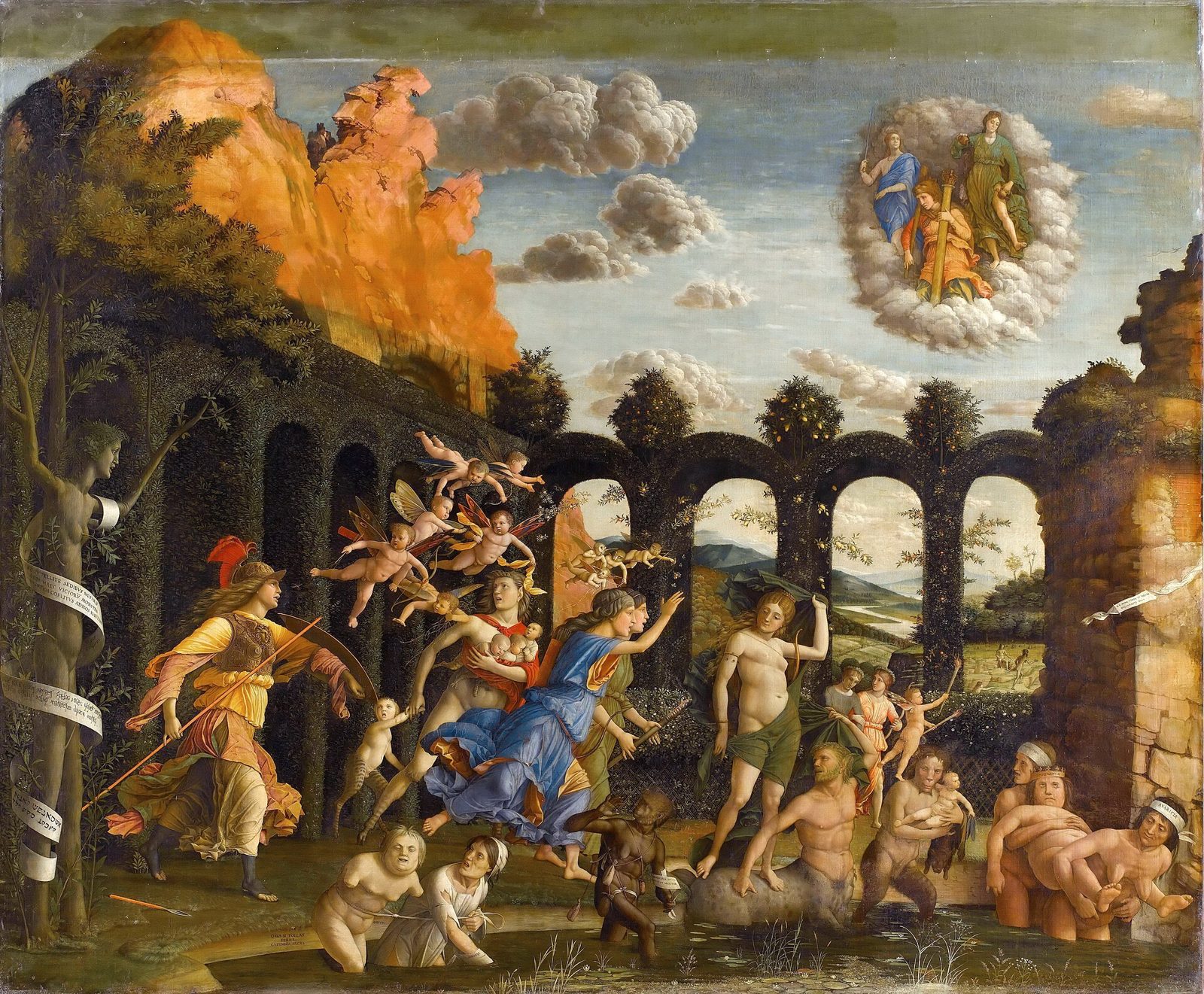
🎧 This work has audio narration — listen in the appTake a moment to really absorb the scene in front of you. “Triumph of the Virtues” by Andrea Mantegna is a vibrant clash of good and evil, where the air feels charged with the struggle for moral supremacy. Notice how Minerva, the goddess of wisdom, stands boldly on the left, armed with her spear and shield, as she drives away the grotesque figures of vice. Look closely at the expressions on their faces—fear and desperation as they flee the garden of virtue.
These details matter because they encapsulate the Renaissance belief in the power of reason and virtue to conquer ignorance and immorality. Mantegna’s depiction of Minerva rescuing Diana, the goddess of chastity, from the clutches of a centaur symbolizes the triumph of virtue over base desires. The tree with human features adds a layer of complexity, suggesting that virtue is not just an abstract concept but something deeply rooted in our humanity.
Commissioned by Isabella d'Este for her studiolo in Mantua, this painting reflects the era's fascination with classical themes and moral allegories. Mantegna, a master of perspective and detail, invites you to witness this epic struggle, a reflection of the human condition itself.
As you stand here, consider: what virtues do you hold dear in your own life, and how do they guide your actions in a world filled with distractions?
Andrea Mantegna, born around 1431 in Isola di Carturo, was a pivotal figure in the Italian Renaissance, renowned for his innovative approach to perspective and his sculptural style. Apprenticed to Francesco Squarcione, he absorbed a passion for classical antiquity, which profoundly influenced his artistic vision. Mantegna's early works, including the frescoes in the Ovetari Chapel, showcased his mastery of dramatic perspectives and detailed architectural elements, although many were tragically lost during World War II.
His marriage to Nicolosia, daughter of Jacopo Bellini, further anchored him in the vibrant artistic community of Venice. Mantegna's distinct style, characterized by flinty landscapes and statuesque figures, often drew criticism for its rigidity, yet it marked a significant departure from Gothic traditions. He was instrumental in elevating the status of the artist in society, embodying the Renaissance ideal of the creative genius. Mantegna's legacy endures, influencing generations of artists and cementing his place in art history as a master of both painting and printmaking. He passed away in 1506, leaving behind a rich body of work that continues to inspire.
Andrea Mantegna's "Triumph of the Virtues" was commissioned by Isabella d'Este for her studiolo in Mantua, a private space dedicated to art and philosophy. This painting, completed around 1502, was the second in a series she commissioned, following the earlier "Parnassus". Isabella, known for her intelligence and beauty, was a prominent patron of the arts during the Renaissance. The painting reflects her fascination with classical themes and moral allegories.
Mantegna's technique in "Triumph of the Virtues" is strikingly dynamic. The brushwork is meticulous, with a clear emphasis on detail that brings the figures to life. Notice how the light interacts with the forms, creating a sense of depth and movement. The composition is structured around a diagonal flow, guiding your eye from Minerva on the left to the fleeing vices on the right. This not only enhances the narrative of virtue triumphing over vice but also creates a tension that feels palpable. The use of color is equally deliberate; the vibrant hues of Minerva's armor contrast sharply with the muted, grotesque tones of the vices, emphasizing the moral dichotomy at play. The scale of the figures, particularly Minerva, is monumental, instilling a sense of awe and authority that commands the viewer's attention.
Commissioned by Isabella d'Este for her studiolo, this painting encapsulates the humanist ideals of the time, portraying virtues triumphing over vices in a dramatic allegory. Its intricate composition and the way Mantegna plays with perspective influenced countless artists who followed, pushing them to explore deeper moral narratives in their work. The vivid representation of mythological figures like Minerva and the personifications of vices invites viewers to reflect on their own moral choices, making it a timeless piece that resonates even today. Remember, this painting isn't just about beauty; it's a philosophical statement that shaped the course of Western art history.
Here's a fascinating tidbit: this painting, 'Triumph of the Virtues,' was actually commissioned by Isabella d'Este, a woman of remarkable intellect and beauty, who was only six years old when she was married off to Francesco Gonzaga. Imagine a child, already a pawn in the game of politics, later transforming her private studiolo into a sanctuary of art and philosophy.
The tree in 'Triumph of the Virtues' has human features, symbolizing that virtue is deeply rooted in humanity, blending nature with moral allegory.
After Isabella's death, the painting was acquired by Cardinal Richelieu and later transferred to the Louvre, where it remains today, highlighting its journey through significant historical collections.