The Clubfoot
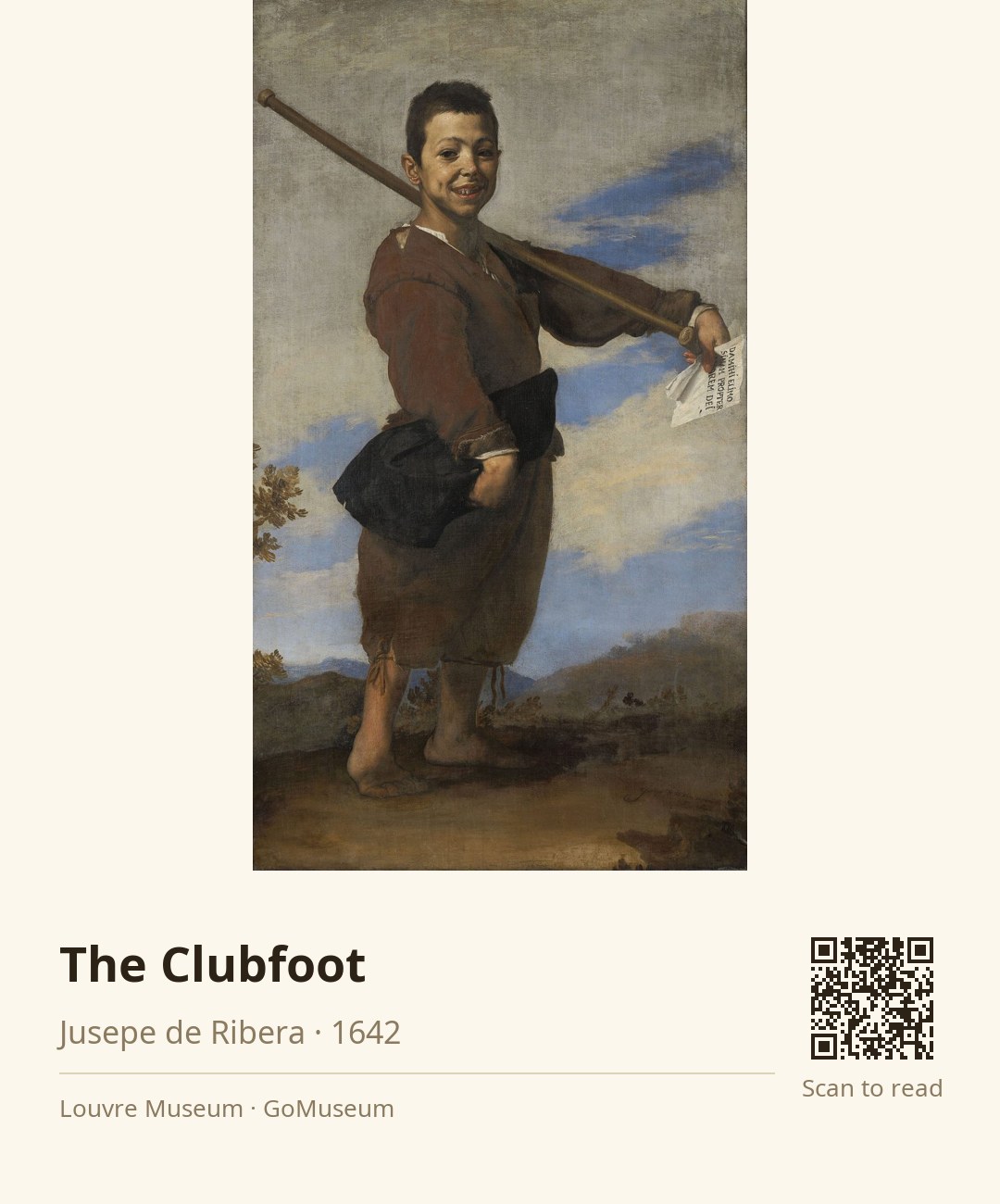
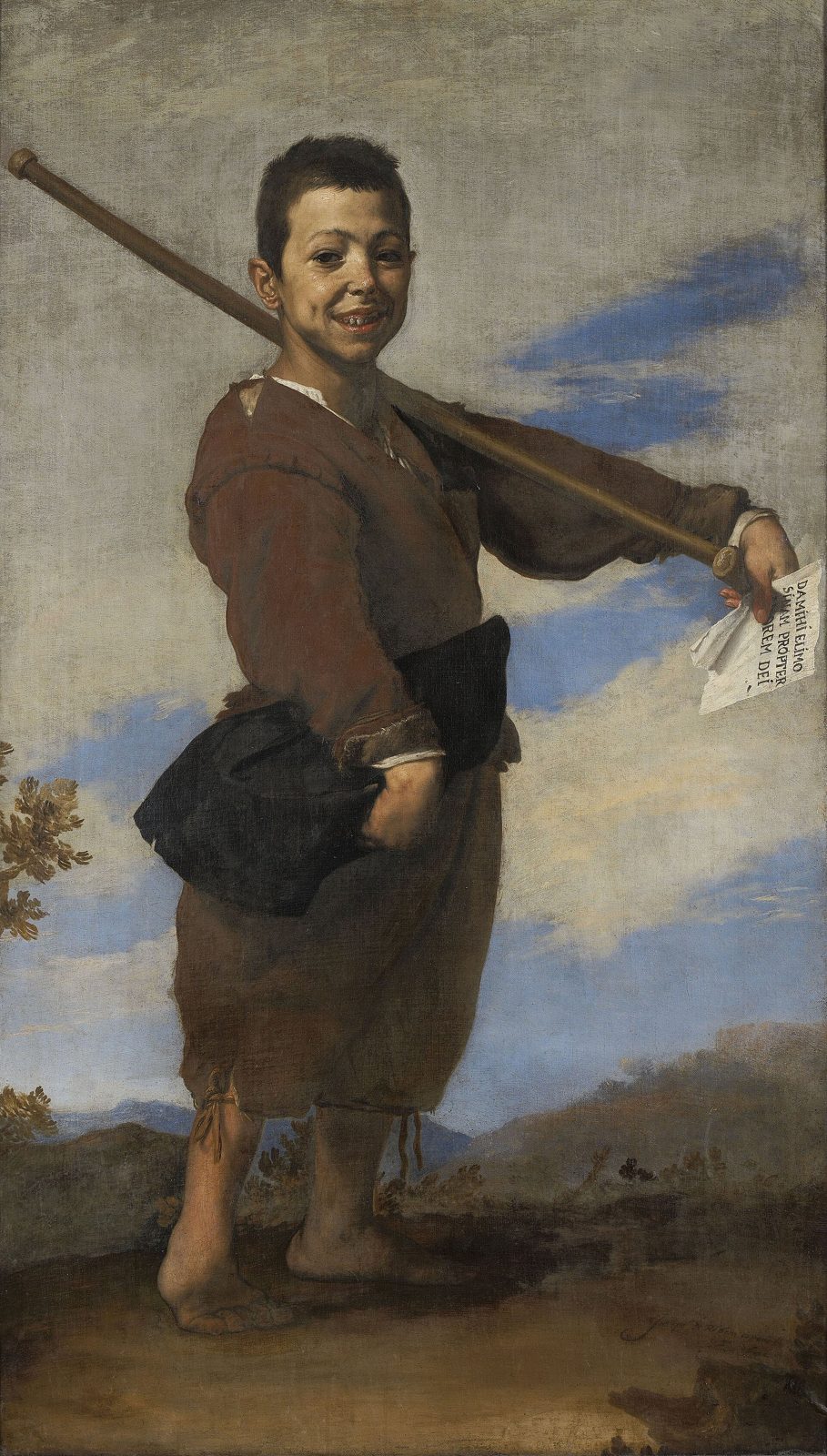
🎧 This work has audio narration — listen in the appTake a moment to really look at "The Clubfoot" by Jusepe de Ribera. Notice the boy’s gap-toothed grin and the way he holds his crutch over his shoulder, almost as if he’s showing off his unique charm. His earthy-toned clothes blend into the landscape behind him, but it’s that luminous backdrop that really sets the stage for his story.
This isn’t just a portrait of a beggar; it’s a powerful statement about resilience in the face of hardship. The boy, with his clubfoot, is not just a figure of pity. Instead, he seems to embrace his condition, inviting us to see the humanity and spirit behind his struggle. The Latin inscription in his hand, asking for alms "for the love of God," connects us to a deeper, universal plea for compassion.
Ribera painted this in 1642, during a time when artists were increasingly drawn to the lives of the marginalized. His work reflects a Spanish realist tradition that highlights the beauty and dignity of the downtrodden, influenced by the dramatic styles of Caravaggio.
As you stand here, think about the stories behind those who often go unseen. What do you think this boy might have experienced in his life?
Jusepe de Ribera, born in 1591 in Játiva, Spain, was a pivotal figure in Spanish Baroque painting, renowned for his dramatic and often brutal depictions of martyrdom and religious themes. After moving to Italy in the early 1600s, he became influenced by Caravaggio's tenebrist style, which emphasized stark contrasts of light and shadow. Ribera's work is characterized by its intense realism and emotional depth, often portraying the suffering of saints and the struggles of the marginalized, such as beggars and laborers, whom he depicted with dignity and complexity.
Settling in Naples in 1616, Ribera established a successful workshop and gained recognition as a leading artist of his time, earning the nickname "Lo Spagnoletto" due to his Spanish heritage and stature. His later works showcased a shift towards softer colors and more intricate compositions, yet he maintained his roots in chiaroscuro. Despite facing health and financial challenges in his later years, Ribera continued to create impactful art until his death in 1652. His legacy endures as a master of the Neapolitan school, influencing generations of artists and leaving an indelible mark on European art history.
Jusepe de Ribera's 'The Clubfoot' was painted in 1642, during a pivotal moment in art history when the Spanish Baroque was flourishing. Commissioned by a Flemish dealer, this work reflects Ribera's deep engagement with the lives of the marginalized, a theme that resonated throughout his career. The painting was created in Naples, where Ribera had established himself as a leading artist, drawing inspiration from the dramatic realism of Caravaggio. Upon its completion, 'The Clubfoot' became part of the La Caze bequest in 1869, eventually finding its home in the Musée du Louvre. Art historian Ellis Waterhouse described it as a touchstone for understanding Ribera's oeuvre, emphasizing its significance in interpreting the broader context of his work and the Spanish realist tradition that sought to portray human vulnerability with compassion and dignity.
In 'The Clubfoot', Ribera employs a striking use of chiaroscuro, creating a dramatic contrast between light and shadow that accentuates the boy's features and the textures of his clothing. The earthy tones of the boy's attire blend seamlessly with the landscape, grounding him in his environment while the luminous background draws the viewer's eye. Ribera's brushwork is both meticulous and expressive, capturing the boy's gap-toothed grin and the subtle nuances of his expression. The composition is carefully structured, with the boy positioned centrally, his crutch slung over his shoulder, suggesting both vulnerability and strength. The Latin inscription in his hand serves as a poignant reminder of his plight, inviting the viewer to engage with his story on a deeper level. This masterful interplay of light, color, and composition not only highlights the boy's physical condition but also elevates his humanity, challenging us to see beyond mere pity.
Painted in 1642, this work not only reflects Ribera's mastery of chiaroscuro but also his deep empathy for the marginalized. By focusing on a Neapolitan beggar boy with a clubfoot, Ribera challenges the viewer to confront societal neglect of the disabled, a theme that resonated with later artists who sought to depict the human condition in all its starkness. His influence can be seen in the works of artists who followed, particularly those drawn to realism and the depiction of everyday life, echoing Ribera's commitment to authenticity over idealization. Remember this: Ribera's brush not only captured a moment but also ignited a movement towards a more compassionate representation of humanity in art.
The inscription, asking for alms 'for the love of God,' not only highlights the boy's plight but also serves as a poignant reminder of the societal neglect faced by the marginalized, inviting viewers to reflect on their own compassion.