The Crowning with Thorns
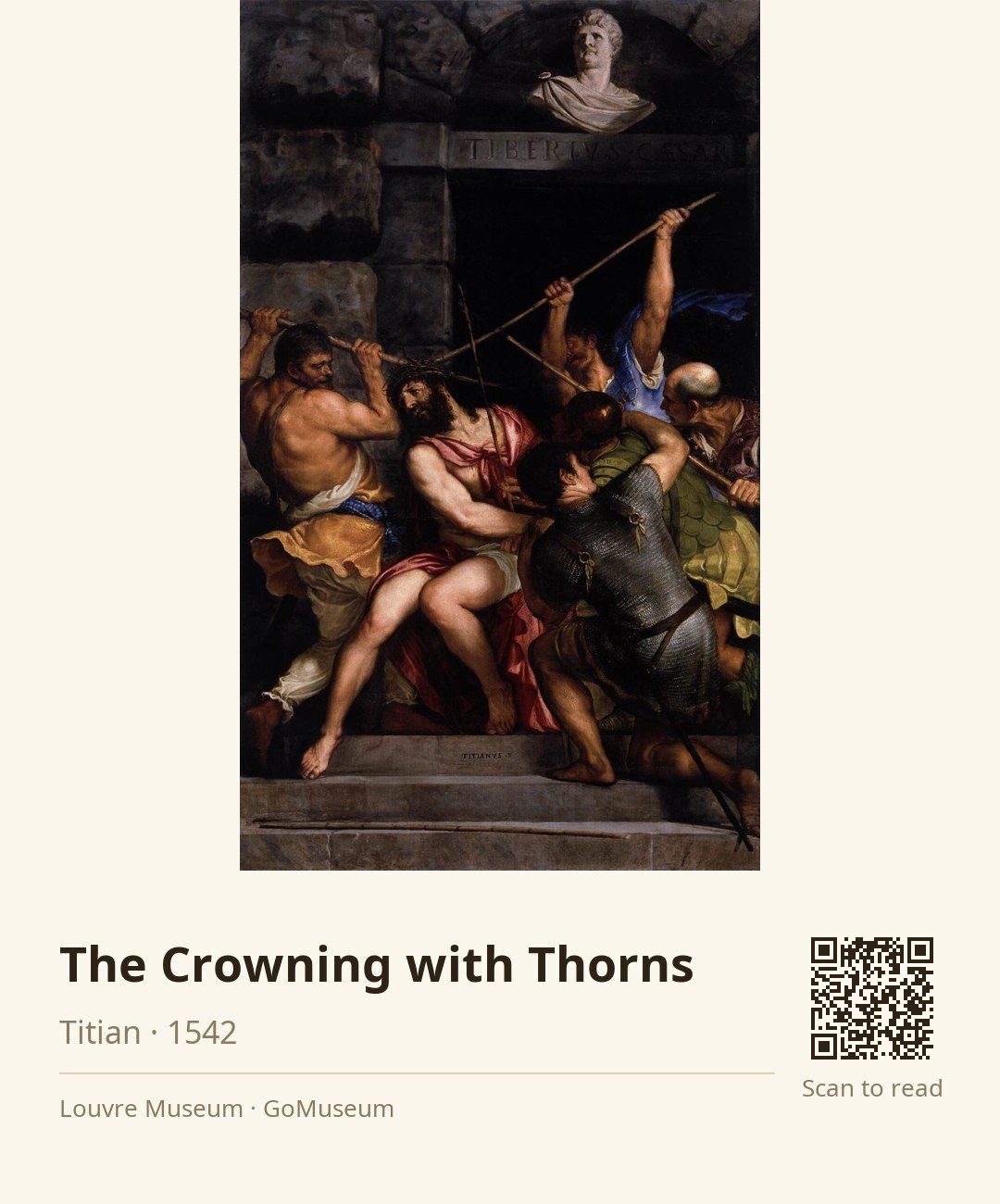
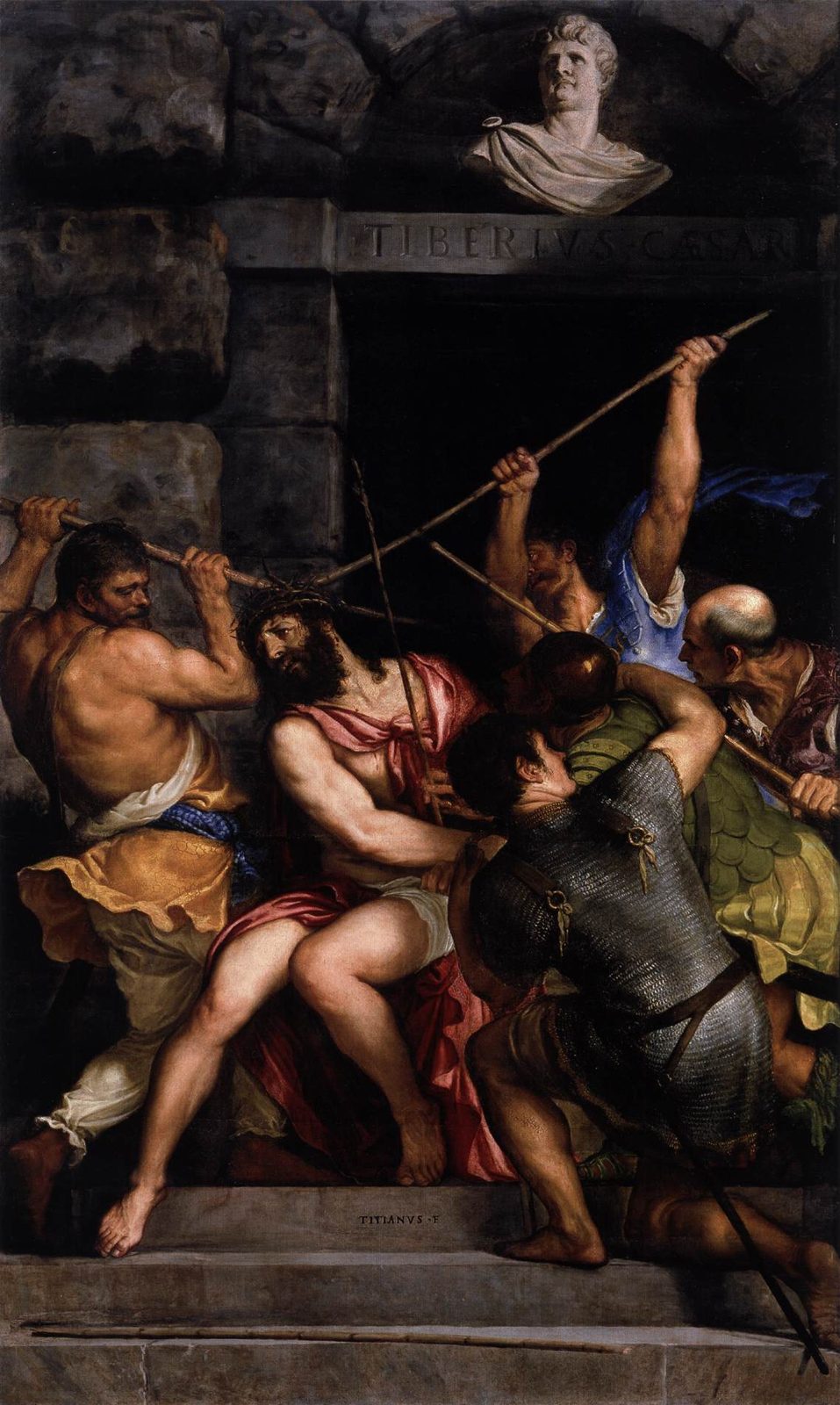
🎧 This work has audio narration — listen in the appTake a moment to really look at Titian's "The Crowning with Thorns." Notice how the figures seem to press in on Christ, their faces twisted with cruelty, yet there’s an undeniable beauty in the way Titian has captured the scene. Focus on the striking colors—especially the cold blues and greens that contrast with the warmth of Christ's flesh.
These details matter because they reveal Titian's genius in blending horror with beauty. The cold colors reflect the chilling brutality of the moment, while the vibrant hues of Christ's body evoke a sense of life and suffering, making his pain palpable. The cane, lying shadowless on the step, adds a haunting stillness, as if it’s waiting to strike again, a reminder of the violence that surrounds him.
Commissioned in 1542, this painting was created during a time when Titian was at the height of his powers, drawing inspiration from classical antiquity, as seen in the references to the Laocoön statue. This connection to the past enriches the emotional weight of the scene, linking Christ's suffering to a broader human experience.
As you stand here, think about the tension in this moment. What emotions does it stir in you? How does Titian's portrayal of suffering resonate with the struggles we face today?
Titian, born Tiziano Vecellio around 1488 in Pieve di Cadore, was a pivotal figure in the Italian Renaissance, particularly in Venetian painting. Renowned for his versatility, he excelled in portraits, landscapes, and mythological themes, becoming a sought-after artist among patrons, including the Habsburgs and the papacy. His innovative use of color and brushwork transformed the art of painting, liberating it from the rigid constraints of line and form that characterized earlier periods.
Titian's career began in Venice, where he trained under notable masters such as Giovanni Bellini and Giorgione. His early works reflected the influence of these artists, but he quickly developed a distinctive style that emphasized color and emotional depth. His masterpiece, "Assumption of the Virgin," showcased his ability to blend religious themes with dynamic composition, setting a new standard in Christian art.
Throughout his life, Titian's artistic evolution mirrored his personal experiences, including the loss of his wife and the challenges of his time. He became a prominent portraitist, capturing the essence of his subjects with remarkable realism. His legacy endures, influencing countless artists and solidifying his place as one of the greatest painters in Western art history. Titian passed away in 1576, leaving behind a rich body of work that continues to inspire and captivate audiences today.
Titian's 'The Crowning with Thorns' was commissioned in 1542 by the confraternity of Santa Maria delle Grazie in Milan, a group dedicated to charitable works. The painting was created during a pivotal moment in Titian's career, showcasing his mastery at a time when he was deeply influenced by classical antiquity. Following the Napoleonic conquest of Milan in 1797, the painting found its way to France and is now housed in the Musée du Louvre.
As you gaze at 'The Crowning with Thorns,' notice how Titian's brushwork creates a sense of urgency and tension. The figures are arranged on a shallow plane, almost pressing in on Christ, which heightens the drama of the scene. The cold blues and greens contrast sharply with the warm flesh tones of Christ, drawing your eye to his suffering. Titian's use of color is deliberate; the cooler hues evoke a chilling atmosphere, while the vibrant reds and warm tones of Christ's body pulsate with life. The composition is structured around a triangular formation, with the canes slicing through the massed figures, leading your gaze to Christ's anguished expression. This technique not only emphasizes the brutality of the moment but also creates a dynamic rhythm that keeps your eyes moving across the canvas. The cane lying shadowless on the step adds a haunting stillness, a reminder of the violence that looms just out of frame.
Titian's 'The Crowning with Thorns' is a pivotal piece in the Venetian school of painting, showcasing a masterful blend of religious themes and classical references. This work not only exemplifies Titian's innovative use of color and form but also influenced generations of artists who followed. The way he compresses the space and figures creates a sense of immediacy and emotional intensity, setting a standard for dramatic religious art. His techniques would resonate through the Baroque period and beyond, impacting artists like Caravaggio and Rubens. Remember, Titian didn’t just paint a scene; he transformed how pain and beauty could coexist on canvas, leaving a legacy that still inspires today.
Here's a fascinating tidbit: when Titian was commissioned to create 'The Crowning with Thorns,' it was meant for the confraternity of Santa Maria delle Grazie in Milan. But after Napoleon's conquest of the city in 1797, this masterpiece was whisked away to France, where it found a new home in the Louvre. Imagine the journey it took, from the heart of Italy to becoming a centerpiece in one of the world's most famous museums!
The figures are arranged on a shallow plane, creating a compressed space that intensifies the dramatic tension of the scene, making it feel as if they are physically pressing in on Christ.
The figure of Christ in the painting draws inspiration from the Laocoön statue, highlighting Titian's connection to classical antiquity and enriching the emotional depth of the scene.