Woman with a Mirror
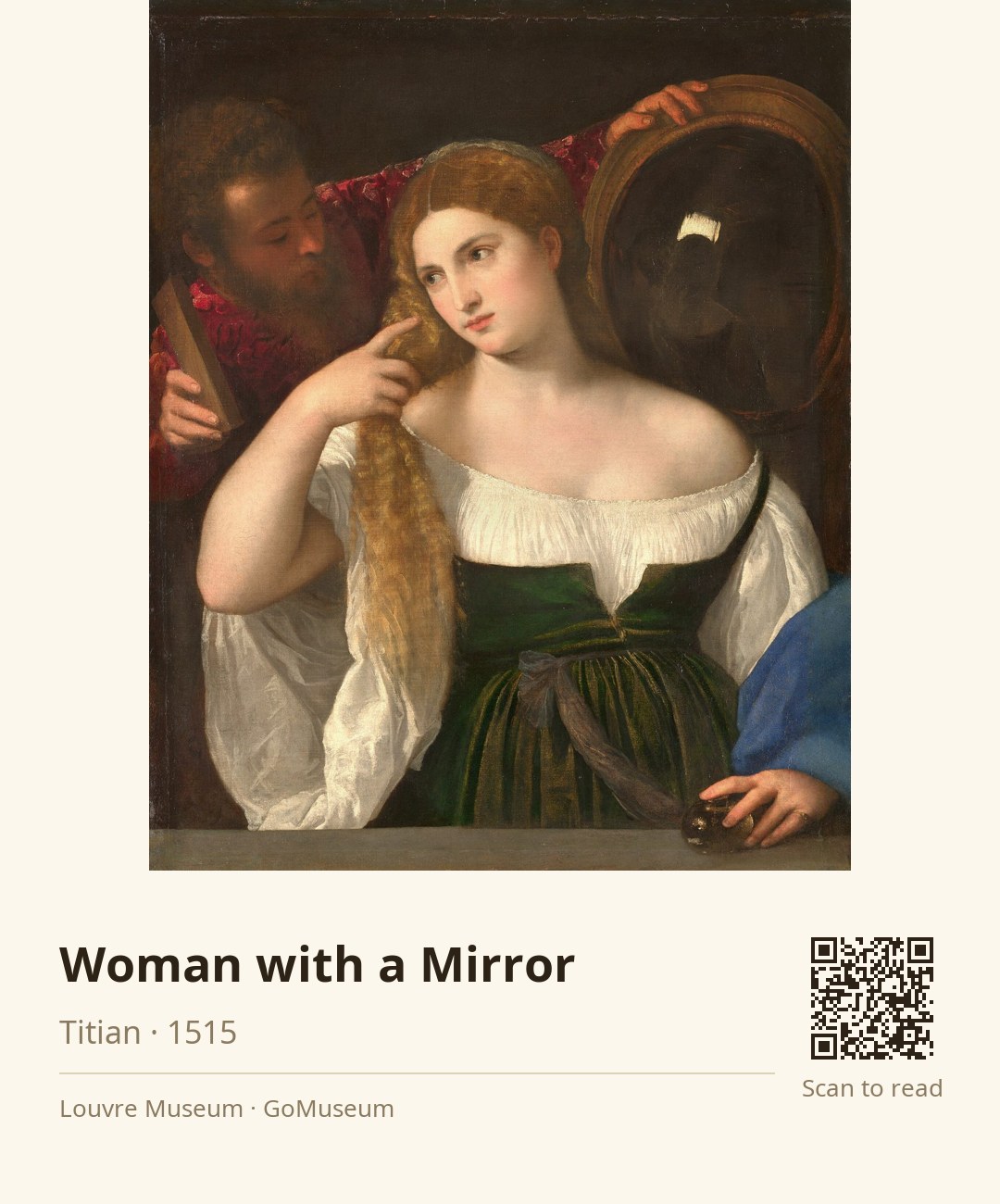
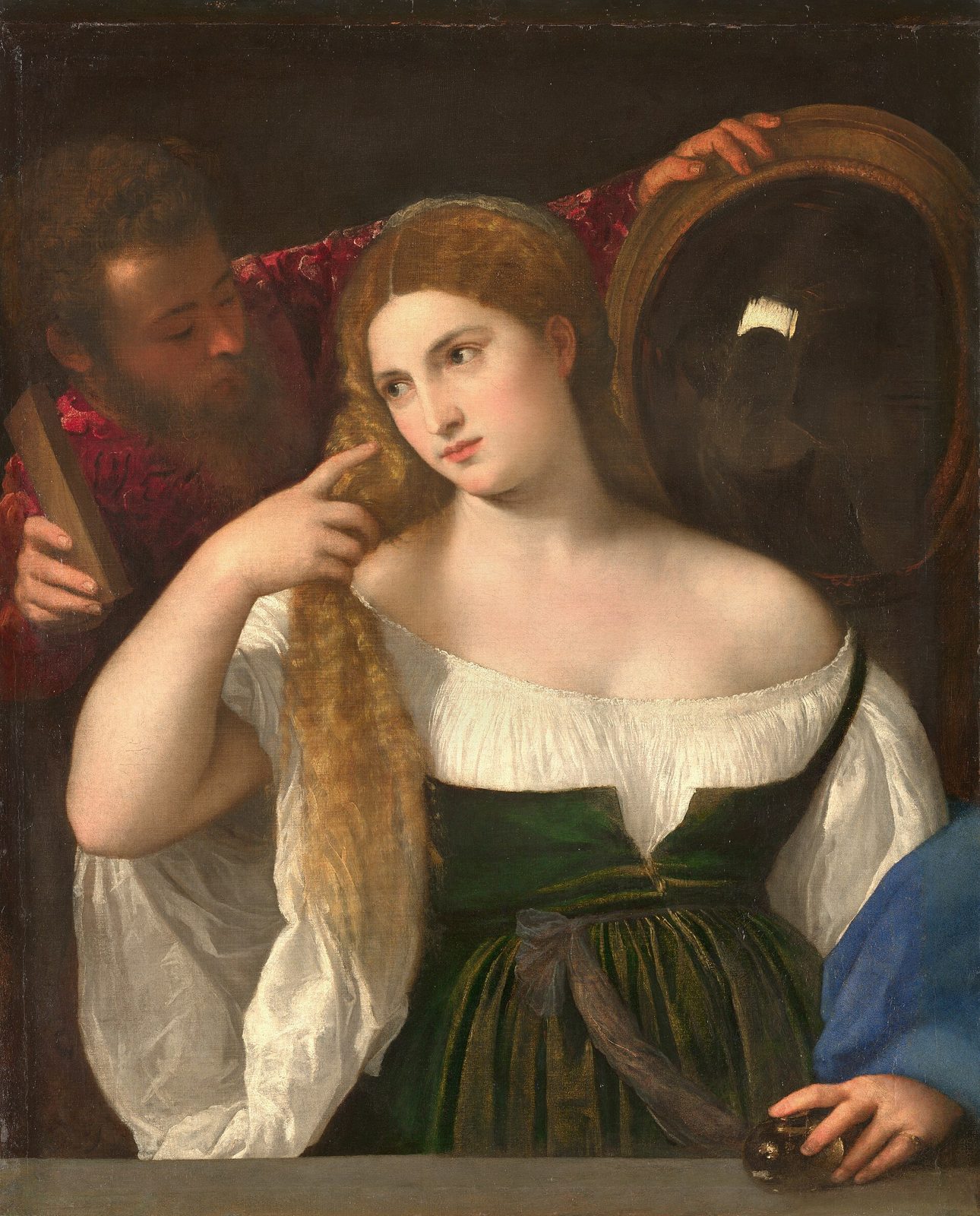
🎧 This work has audio narration — listen in the appTake a moment to really look at Titian's "Woman with a Mirror." Notice how the woman, with her flowing hair and graceful pose, seems to be caught in a private moment of reflection. Her hand gently caresses her hair, while her gaze is drawn to the mirror held by the man behind her. This interplay of gazes—hers towards her own beauty and his towards her—creates an intimate atmosphere that feels almost electric.
What’s fascinating here is how Titian captures not just the physical beauty of his subject, but also the complexity of self-perception. The mirrors symbolize more than just vanity; they reflect the Renaissance's exploration of perspective and the nature of art itself. The man’s role in holding the mirror suggests a dialogue about the act of seeing and being seen, a theme that resonates deeply in art history.
Painted around 1515, this work showcases Titian's early mastery of color and composition, setting the stage for his later masterpieces.
As you stand here, think about the layers of meaning in this scene. What do you see in her reflection? How does it change your perception of beauty and intimacy?
Titian, born Tiziano Vecellio around 1488 in Pieve di Cadore, was a pivotal figure in the Italian Renaissance, particularly in Venetian painting. Renowned for his versatility, he excelled in portraits, landscapes, and mythological themes, becoming a sought-after artist among patrons, including the Habsburgs and the papacy. His innovative use of color and brushwork transformed the art of painting, liberating it from the rigid constraints of line and form that characterized earlier periods.
Titian's career began in Venice, where he trained under notable masters such as Giovanni Bellini and Giorgione. His early works reflected the influence of these artists, but he quickly developed a distinctive style that emphasized color and emotional depth. His masterpiece, "Assumption of the Virgin," showcased his ability to blend religious themes with dynamic composition, setting a new standard in Christian art.
Throughout his life, Titian's artistic evolution mirrored his personal experiences, including the loss of his wife and the challenges of his time. He became a prominent portraitist, capturing the essence of his subjects with remarkable realism. His legacy endures, influencing countless artists and solidifying his place as one of the greatest painters in Western art history. Titian passed away in 1576, leaving behind a rich body of work that continues to inspire and captivate audiences today.
Titian's 'Woman with a Mirror' was painted around 1515 and has a rich history tied to the Gonzaga family in Mantua. Initially part of their collection, it was later acquired by Charles I of England. Following his execution, the painting changed hands and was eventually purchased by Louis XIV for the Palace of Versailles. Over the years, many have speculated about the identity of the woman in the painting, suggesting she could be Titian's lover or a muse for several of his works.
In 'Woman with a Mirror,' Titian showcases his early mastery of color and composition. The brushwork is fluid, capturing the softness of the woman's hair and the delicate play of light across her skin. Notice how the light from the window illuminates her figure, creating a warm glow that enhances her beauty. The composition is dynamic; the woman's pose is both relaxed and engaged, drawing the viewer's eye to her reflection. The use of mirrors adds complexity, inviting you to consider not just her physical appearance but also her self-perception. The juxtaposition of the two mirrors creates a layered visual experience, emphasizing the theme of vanity while also engaging with the Renaissance's exploration of perspective.
This painting influenced a wave of artists who followed, including those who explored similar themes of intimacy and self-reflection. The way Titian captures the sensuality and beauty of his subject, while engaging with the Renaissance Paragone debates on perspective, set a new standard for how women were depicted in art. Works like 'Girl Before the Mirror' and 'Woman at Her Toilet' owe their inspiration to this very piece, highlighting its enduring legacy in the realm of portrait painting. Remember, this isn't just a depiction of a woman; it's a conversation about beauty, identity, and the very act of looking at oneself.
Interestingly, 'Woman with a Mirror' is not the only version of this composition. Titian's workshop produced several replicas and variations, showcasing his popularity and the demand for his work. Some of these versions are considered nearly equal in quality to the original, demonstrating the artist's influence and the collaborative nature of art production during the Renaissance.
Initially, it was thought that the painting was commissioned by Federico II Gonzaga, but this theory has since been rejected, leaving the true identity of the commissioner unknown.