A Young Tiger Playing with its Mother
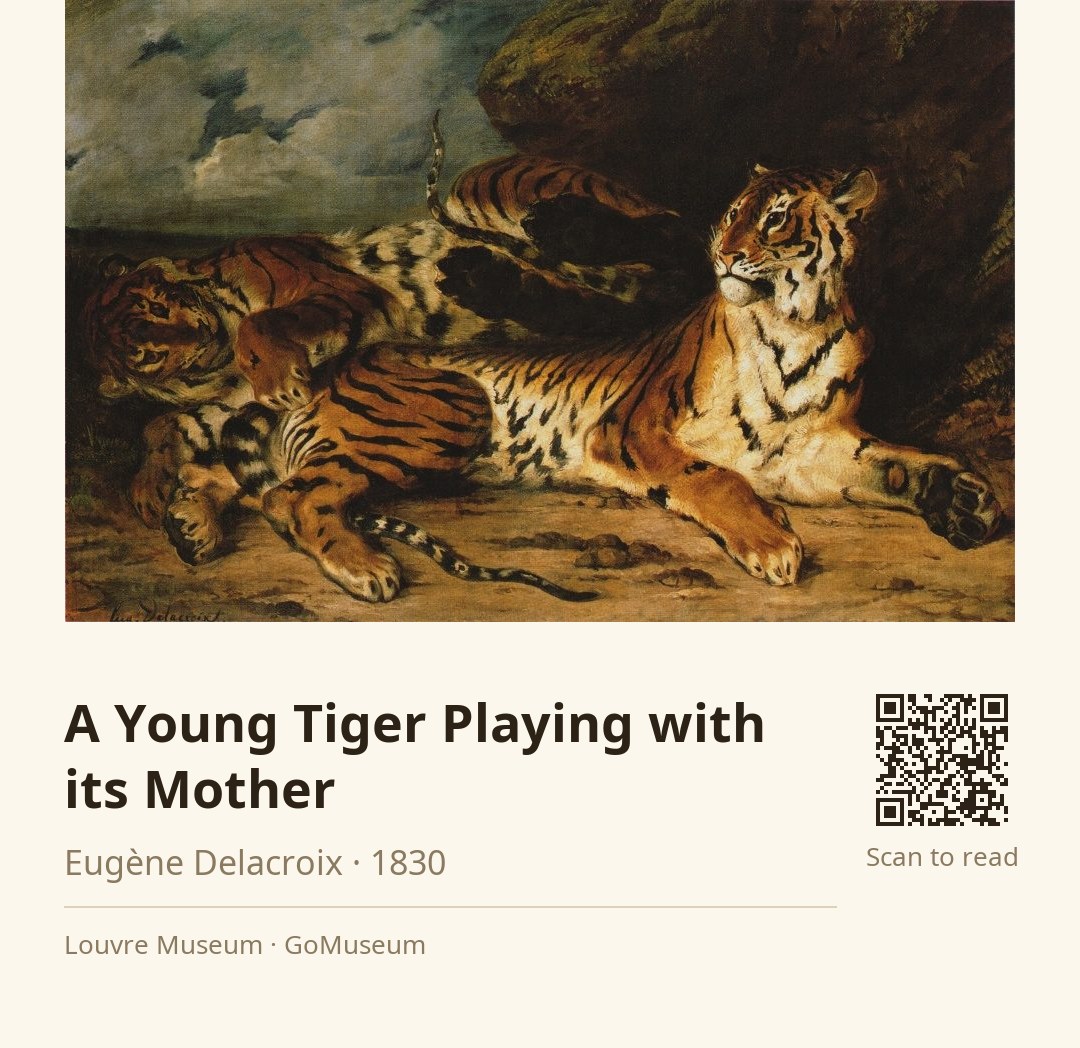
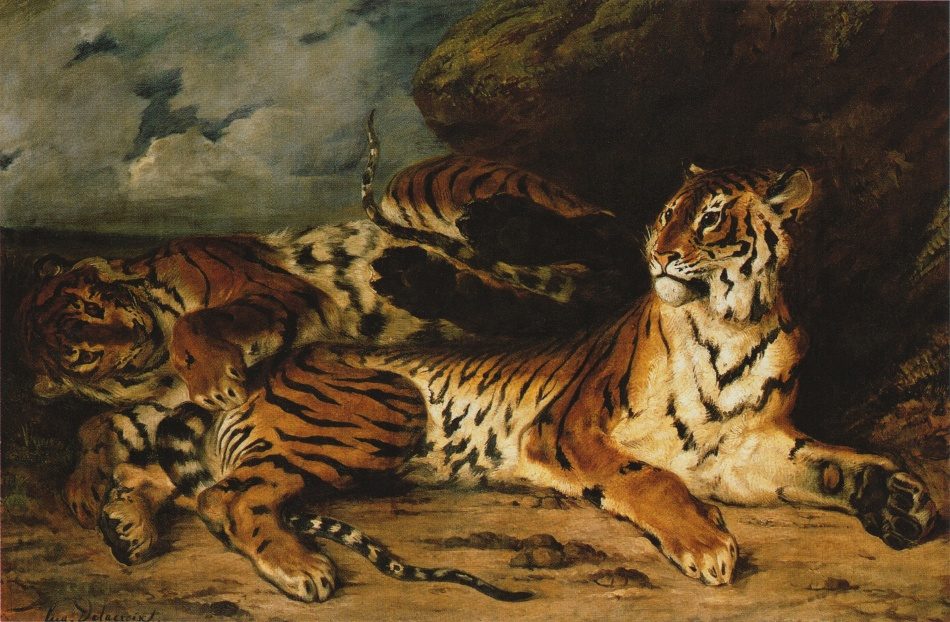
🎧 This work has audio narration — listen in the appLook closely at "A Young Tiger Playing with its Mother" by Eugène Delacroix. Can you see the playful energy radiating from the two tigers? Notice how the young tiger leans against its mother, their bodies almost entwined, as they frolic amidst the rocks. This tender moment is a striking contrast to the fierce reputation of these magnificent creatures.
Delacroix captures not just the physicality of the tigers but also a deeper emotional bond. Painted in 1830, this work reflects the Romantic fascination with nature and the wild, showcasing both the tenderness and ferocity of animal life. The way the light dances across their fur, highlighting the powerful muscles beneath, invites you to feel the raw energy of the scene.
Delacroix was known for his love of animals, often inspired by his own pet cat, and this painting is a perfect example of his ability to convey complex emotions through his subjects. It’s said that he observed tigers at the Jardin des Plantes, but here, he transforms them into symbols of human emotion—tenderness and strength intertwined.
As you stand here, think about how this artwork reflects not just the beauty of wildlife, but also the wildness within us. What emotions do you see in their play? How does this moment resonate with your own experiences of love and family?
Eugène Delacroix, born on April 26, 1798, in Charenton-Saint-Maurice, emerged as a pivotal figure in the French Romantic movement. He diverged from the Neoclassical ideals of his contemporaries, such as Ingres, drawing inspiration from the vibrant colors and dynamic forms of Rubens and the Venetian Renaissance. His works, characterized by dramatic themes and a passion for the exotic, often reflected his travels in North Africa and his fascination with the sublime forces of nature, influenced by literary figures like Lord Byron.
Delacroix's career was marked by both acclaim and controversy; his early painting, "The Barque of Dante," stirred public debate but was ultimately recognized by the state. His later masterpieces, including "Liberty Leading the People," showcased his ability to blend historical and contemporary narratives, solidifying his status as a master of expressive brushwork and color theory. His innovative techniques laid the groundwork for Impressionism and inspired the Symbolist movement.
Despite personal struggles, including early orphanhood and financial hardships, Delacroix's legacy endures. He is celebrated not only for his paintings but also for his lithographs and writings, which reveal his artistic philosophy. As one of the last old masters, his influence resonates through art history, marking him as a cornerstone of Romanticism and a precursor to modern artistic movements. Delacroix passed away on August 13, 1863, leaving a profound impact on the art world.
Eugène Delacroix's 'A Young Tiger Playing with its Mother' was painted between 1830 and 1831, early in his career when he was deeply fascinated by animal subjects. This particular piece was exhibited at the Salon of 1831, a significant event for the artist, as it showcased his evolving style. Interestingly, Delacroix paid 1,200 francs to insure the painting, reflecting its importance to him. The painting was also part of an exhibition at the Palais du Luxembourg, aimed at raising funds for citizens wounded in the July Revolution, highlighting its cultural relevance in a tumultuous time in France.
In 'A Young Tiger Playing with its Mother,' Delacroix employs dynamic brushwork that captures the playful energy of the tigers. The way he layers colors creates a sense of movement, as if the tigers are almost leaping off the page. Notice how the light interacts with their fur, with highlights that bring out the texture and depth, making the animals feel alive. The composition is structured to draw your eye towards the tender moment between the two tigers, with the background rocks and cloudy sky framing their interaction. Delacroix's choice of scale also plays a crucial role; the large dimensions of the work amplify the emotional weight of the scene, inviting you to immerse yourself in this intimate yet wild moment.
Eugène Delacroix's 'A Young Tiger Playing with its Mother' is a pivotal work that showcases his fascination with animal subjects, a theme that would resonate throughout his career. This painting, created in the early 1830s, not only reflects the Romantic era's obsession with nature and emotion but also marks a departure from the Neoclassical ideals of clarity and restraint. Delacroix's bold use of color and movement, influenced by artists like Rubens, helped pave the way for future movements, including Impressionism. His ability to convey the duality of ferocity and tenderness in animals mirrored the complexities of human emotions, making this work a significant exploration of the human-animal connection in art history.
Delacroix had a deep affection for animals, often drawing inspiration from his own pet cat, which he observed closely. This personal bond with animals allowed him to infuse his works with genuine emotion and understanding of their behavior.