The Barque of Dante
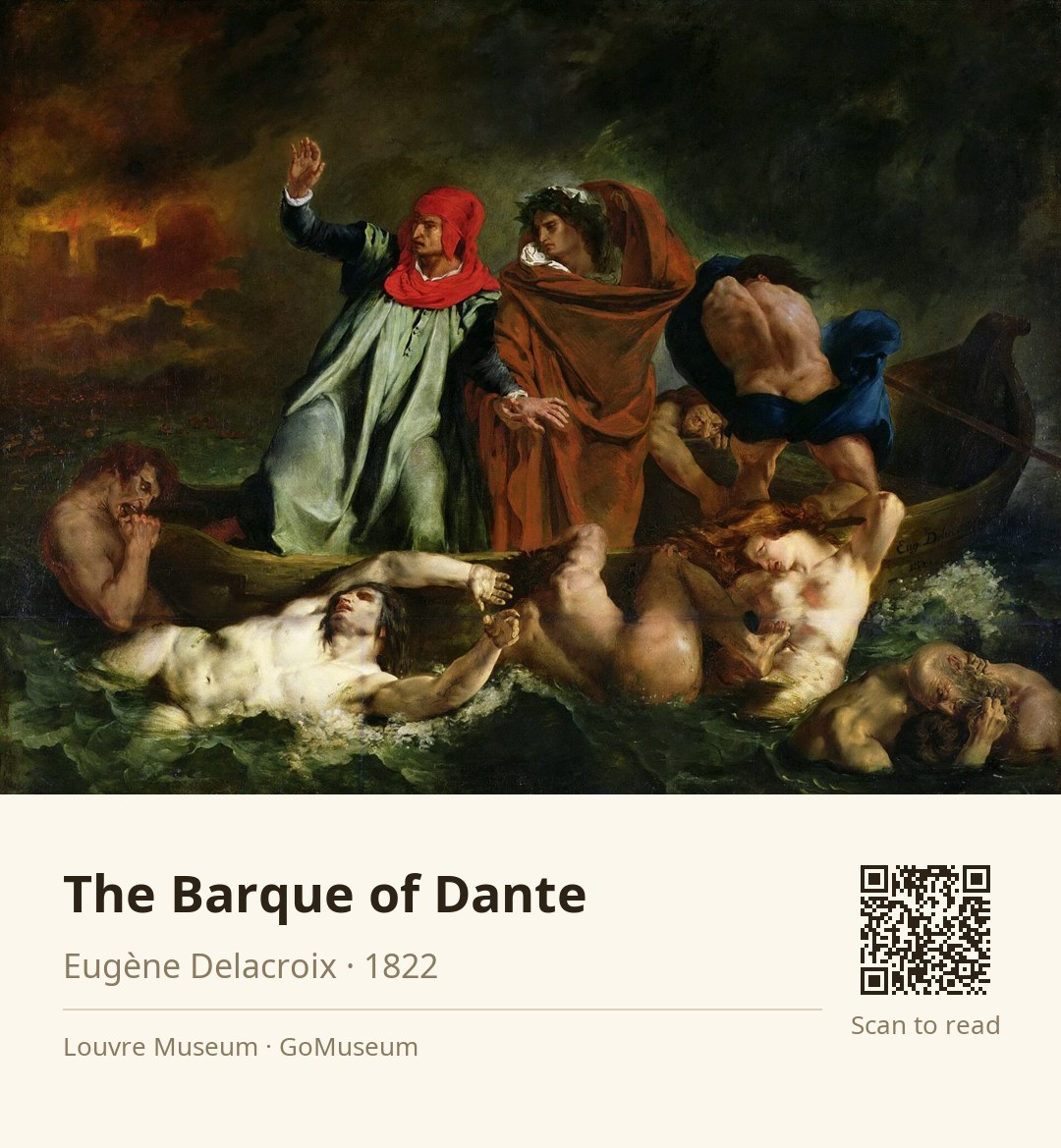
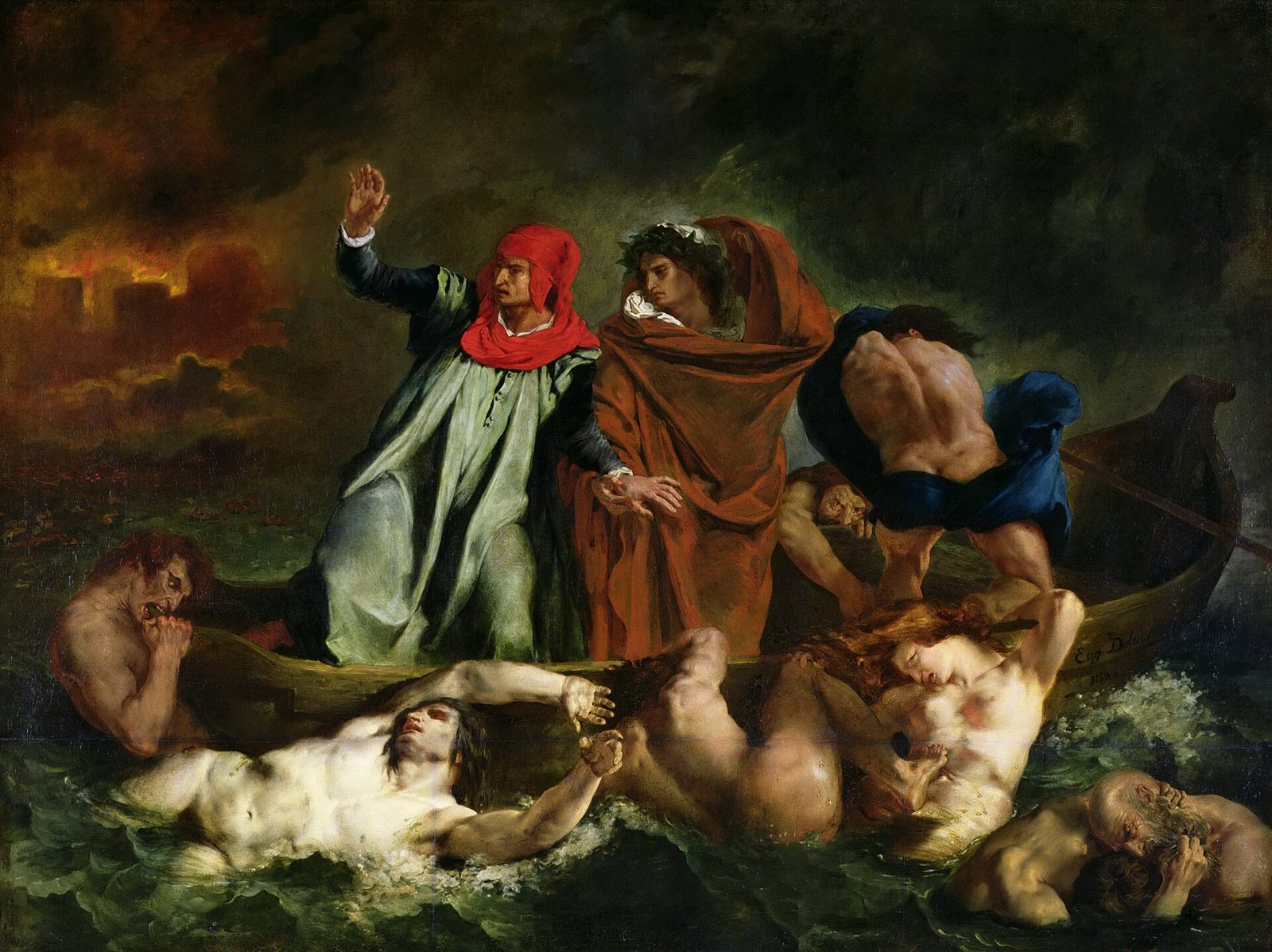
🎧 This work has audio narration — listen in the appTake a moment to really look at "The Barque of Dante" by Eugène Delacroix. Notice how the figures seem to be caught in a chaotic storm, with the boat precariously lifted by choppy waters. The expressions on Dante’s and Virgil’s faces tell a story of fear and determination, while the tormented souls reaching out from the river add a haunting urgency to the scene.
What’s fascinating here is the contrast between Dante’s vibrant red cowl and the dark, smoky backdrop of the City of Dis. This isn’t just a pretty picture; it’s a dramatic exploration of despair and the human condition. Delacroix captures the tension between hope and hopelessness, as Dante is steadied by Virgil, who remains calm amidst the chaos. This dynamic reflects the Romantic shift in art, moving away from the rigid structures of Neo-Classicism towards a more emotional and expressive style.
Painted in 1822, this was Delacroix's first major work, and it marked his entrance into the art world. Despite initial criticism, it was purchased by the state, signaling the beginning of his influential career. As you stand here, think about the emotional weight of this piece. How does it resonate with your own experiences of struggle and support?
Eugène Delacroix, born on April 26, 1798, in Charenton-Saint-Maurice, emerged as a pivotal figure in the French Romantic movement. He diverged from the Neoclassical ideals of his contemporaries, such as Ingres, drawing inspiration from the vibrant colors and dynamic forms of Rubens and the Venetian Renaissance. His works, characterized by dramatic themes and a passion for the exotic, often reflected his travels in North Africa and his fascination with the sublime forces of nature, influenced by literary figures like Lord Byron.
Delacroix's career was marked by both acclaim and controversy; his early painting, "The Barque of Dante," stirred public debate but was ultimately recognized by the state. His later masterpieces, including "Liberty Leading the People," showcased his ability to blend historical and contemporary narratives, solidifying his status as a master of expressive brushwork and color theory. His innovative techniques laid the groundwork for Impressionism and inspired the Symbolist movement.
Despite personal struggles, including early orphanhood and financial hardships, Delacroix's legacy endures. He is celebrated not only for his paintings but also for his lithographs and writings, which reveal his artistic philosophy. As one of the last old masters, his influence resonates through art history, marking him as a cornerstone of Romanticism and a precursor to modern artistic movements. Delacroix passed away on August 13, 1863, leaving a profound impact on the art world.
Eugène Delacroix's 'The Barque of Dante' was unveiled in 1822 at the Salon, marking his official entry into the art world. Commissioned for this prestigious exhibition, it was met with mixed reviews; some critics dismissed it as chaotic, while others, like the influential Baron Gros, championed its emotional depth. Despite the initial backlash, the French state purchased the painting for 2,000 francs, securing its place in the Luxembourg Galleries. This acquisition was a pivotal moment for Delacroix, as it not only validated his talent but also set the stage for his future career. The painting later returned to the Louvre in 1874, where it continues to captivate audiences today.
Delacroix's technique in 'The Barque of Dante' is a masterclass in emotional expression through paint. The brushwork is dynamic, almost frenetic, capturing the tumultuous energy of the scene. Notice how the figures are arranged in a way that draws your eye across the canvas, from the central, illuminated characters to the shadowy, desperate souls clinging to the boat. The use of color is particularly striking; the vivid red of Dante's cowl contrasts sharply with the smoky backdrop, creating a visual tension that mirrors the emotional stakes of the narrative. Delacroix's innovative approach to depicting water droplets on the damned—using four different pigments to create a realistic effect—was groundbreaking for its time and showcases his commitment to pushing the boundaries of color and form.
Delacroix, unable to afford an ornate frame for the Salon, enlisted a carpenter from his building to create a simple one. To mimic the gold leaf typically used, he applied fish glue and gold powder, but this makeshift frame fell apart. Fortunately, Baron Gros, a supporter of Delacroix, had it replaced with a proper frame, ensuring the painting was presented in its best light at the exhibition.
Delacroix couldn't afford an ornate frame for 'The Barque of Dante', so he had a carpenter create a simple one, applying fish glue and gold powder to mimic gold leaf. Unfortunately, this makeshift frame fell apart, and it was later replaced by a proper frame thanks to the support of Baron Gros.
Despite facing mixed reviews, Delacroix had influential supporters like Baron Gros who championed his work, helping to secure its purchase by the French state. This early backing was crucial for Delacroix's career, as it provided him with recognition and financial stability.
Delacroix employed a groundbreaking technique for the water droplets, using four different pigments to create a realistic effect, which was rare for the time. This meticulous approach not only showcased his skill but also influenced future artists in their use of color and form.