Young Woman with Unicorn
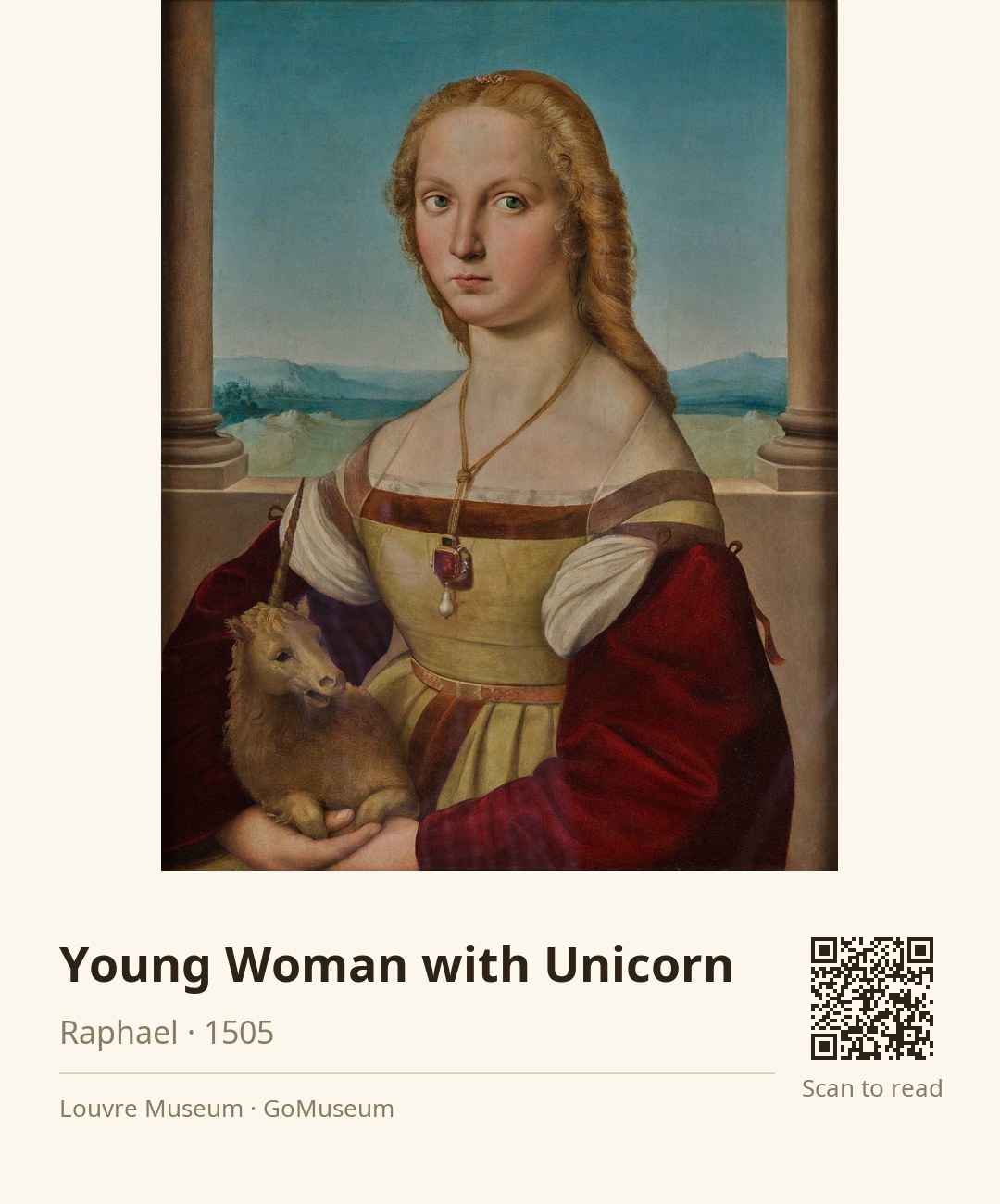
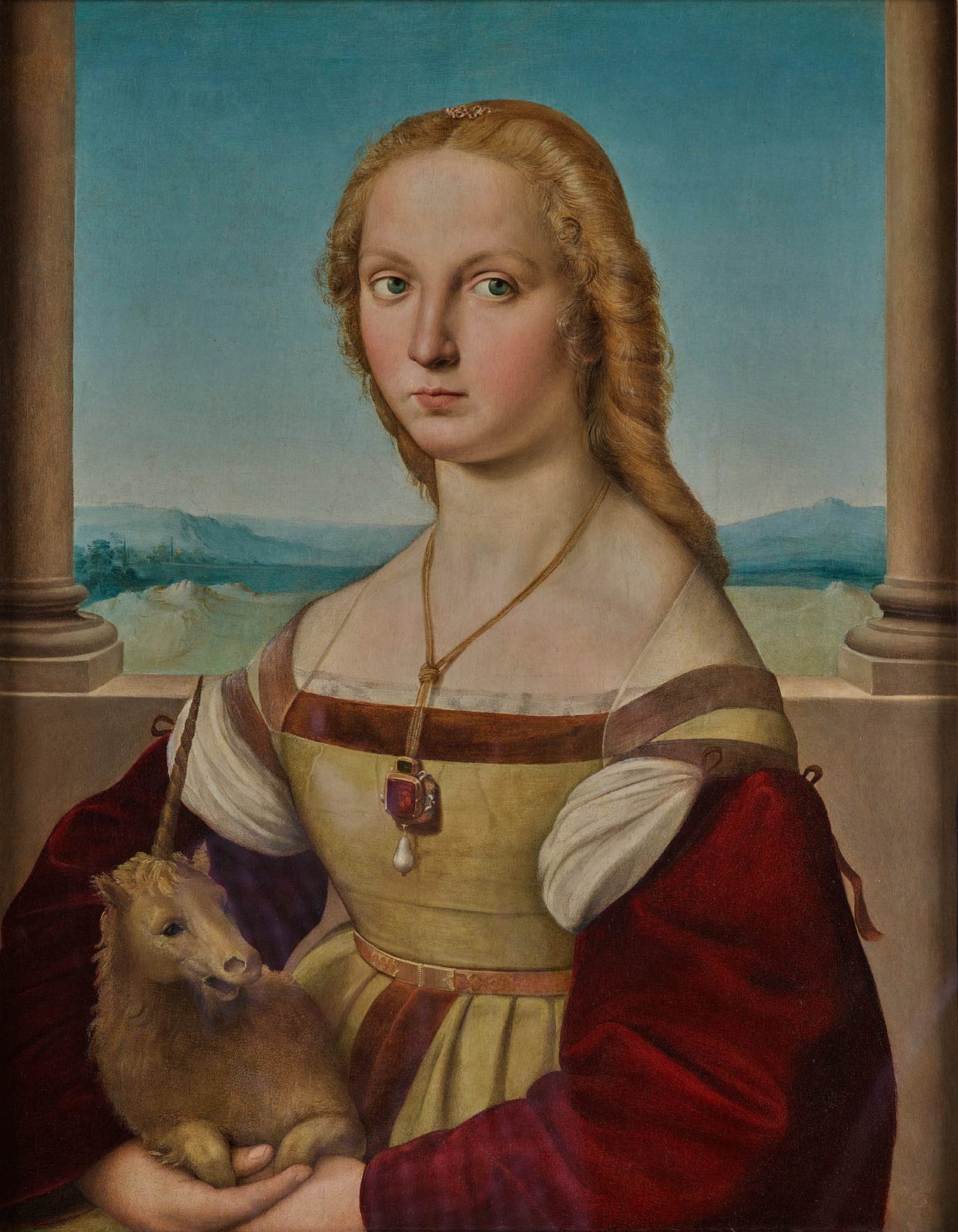
🎧 This work has audio narration — listen in the appTake a moment to really look at this painting, "Young Woman with Unicorn" by Raphael. Notice how the young woman’s gaze seems to pierce right through you, her expression both serene and watchful. Now, focus on the unicorn nestled in her arms. It’s not just a whimsical creature; it symbolizes purity and chastity, making this portrait a possible betrothal gift, showcasing the woman’s virtue.
Raphael painted this around 1505, during a time when such symbols were crucial in portraying a woman’s suitability for marriage. The unicorn’s presence suggests she was seen as an ideal candidate, embodying the values of her noble lineage. Interestingly, art historians believe this piece was influenced by Leonardo da Vinci’s "Mona Lisa," yet while Da Vinci’s subject is enigmatic, this woman’s confidence speaks volumes.
Originally, this painting faced significant alterations, with a later artist obscuring the unicorn and adding elements associated with Saint Catherine. It wasn’t until restorations in the 20th century that the original beauty of Raphael’s work was revealed, including the discovery of a small dog beneath the unicorn, a symbol of fidelity that Raphael never completed.
As you stand here, consider: Who do you think this young woman is? What stories might she hold, and how does her gaze connect with you today?
Raffaello Sanzio da Urbino, known as Raphael, was an Italian painter and architect of the High Renaissance, born in Urbino in 1483. Orphaned by age eleven, he managed his family's workshop and trained under Pietro Perugino, establishing himself as a master by 1500. His move to Rome in 1508 marked the beginning of a prolific period, where he received significant commissions, including the renowned frescoes in the Vatican's Raphael Rooms. His art is celebrated for its clarity, harmonious composition, and embodiment of Neoplatonic ideals. Raphael's influence was profound, shaping the trajectory of Western art and serving as a model for academies until the 19th century. His legacy, characterized by serenity and grace, was later revived in the 18th and 19th centuries, contrasting with the dramatic styles of his rival Michelangelo. Despite his early death at 37, Raphael's extensive body of work and innovative techniques left an indelible mark on the art world, influencing generations of artists and extending into contemporary culture.
Raphael's "Young Woman with Unicorn" was likely commissioned as a betrothal portrait, reflecting the values of purity and chastity in the early 16th century. This painting, created around 1505-1506, showcases a young noblewoman holding a unicorn, a traditional symbol of virginity. Speculation surrounds her identity, with some suggesting she might be Laura Orsini della Rovere, a girl of marriageable age from a wealthy family. The painting's journey is quite dramatic; in 1682, an unknown artist obscured the unicorn and added elements associated with Saint Catherine, leading to misattributions for centuries. It wasn't until the 20th century that the original work was restored, revealing the unicorn and even a small dog beneath it, a symbol of fidelity that Raphael never completed. This restoration process highlighted the painting's rich history and the layers of interpretation it underwent over time.
When you look closely at the painting, notice how Raphael's brushwork creates a sense of both movement and stillness. The young woman's pose is carefully constructed, echoing the compositional elegance of Leonardo's works, yet it feels more direct and confident. The use of light is masterful; it gently illuminates her face, drawing your attention to her piercing gaze. The color palette is soft yet striking, with the deep reds and blues of her attire contrasting beautifully against the pale background. This choice not only enhances her presence but also emphasizes the unicorn, which symbolizes her purity. The three-quarter length format allows the viewer to feel as if they are part of the scene, creating an intimate connection with the subject. Raphael's attention to detail, from the delicate fabric of her dress to the intricate rendering of the unicorn, showcases his technical prowess and deep understanding of human emotion.
Raphael's 'Young Woman with Unicorn' is a striking example of the High Renaissance portraiture that influenced generations of artists. This painting, created around 1505, showcases Raphael's ability to blend elegance with symbolism. The unicorn, a traditional emblem of purity and chastity, hints at the painting's possible role as a betrothal portrait, elevating the subject's status as a virtuous marriage candidate. Its composition draws inspiration from Leonardo's 'Mona Lisa', yet Raphael imbues his subject with a distinct watchfulness that sets her apart. This work not only reflects the ideals of its time but also helped shape the trajectory of portrait painting, influencing artists long after Raphael's untimely death. Remember, this piece is more than a portrait; it's a conversation between the past and future of art.
One intriguing aspect of "Young Woman with Unicorn" is the hidden dog beneath the unicorn, which symbolizes fidelity. During the restoration process in the 1950s, radiographic imaging revealed this small dog, which Raphael had sketched but never completed.
Before restoration, the painting had undergone significant alterations in 1682, where an unknown artist obscured the unicorn and added elements associated with Saint Catherine, which misled viewers and historians for centuries.
During the restoration process in the 20th century, radiographic imaging uncovered a small dog beneath the unicorn, which Raphael had sketched but never completed, adding another layer of meaning to the work.