 Image: Unknown authorUnknown author
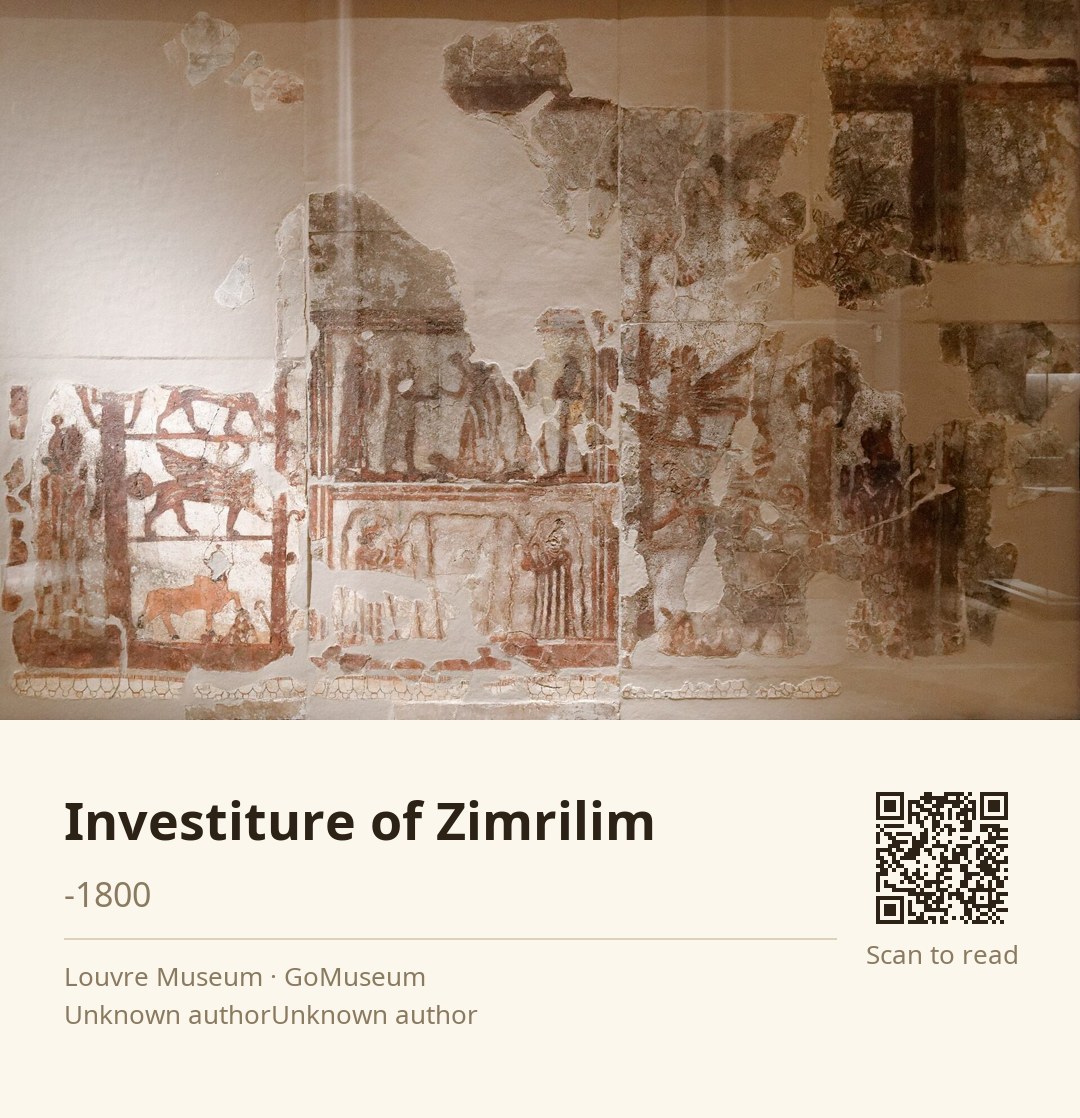
Investiture of Zimrilim
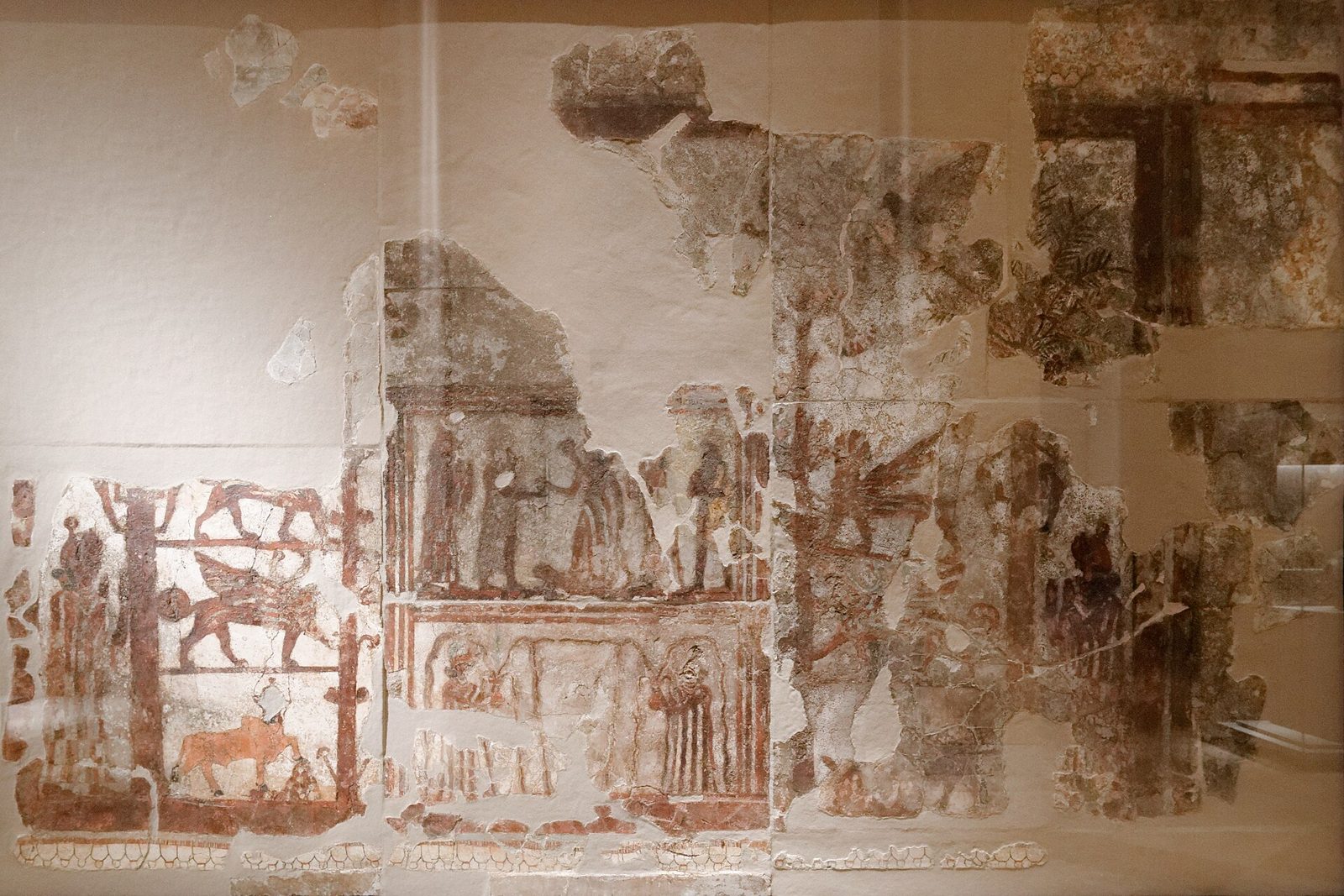
🎧 This work has audio narration — listen in the appTake a moment to really look at the vibrant colors and intricate details of this mural, "Investiture of Zimrilim." Notice how the central figure, Zimrilim, reaches out to the goddess Ishtar, who presents him with the rod and ring—symbols of kingship. This moment isn’t just a ceremonial gesture; it signifies the divine approval of his rule and the connection between the earthly and the divine.
Now, focus on Ishtar’s fierce expression and the weapons she wields. This isn’t just a goddess of love; she embodies power and protection, a reminder that leadership in ancient times was as much about strength as it was about benevolence. The mural captures a pivotal moment in Zimrilim’s reign, reflecting the ideals of authority and divine favor that were crucial in Mesopotamian culture.
Discovered in the ruins of the Royal Palace of Mari, this artwork dates back to around 1800 BC, a time when such divine investitures were essential for legitimizing a ruler's power. Imagine the grandeur of the palace, where this scene would have been a daily reminder of the king’s responsibilities and the gods’ watchful eyes.
As you stand here, think about the significance of this moment. What does it mean to you to see a ruler receiving authority from a divine figure? How do you think this ancient ceremony resonates with the way we view leadership today?
The 'Investiture of Zimrilim' mural was unearthed in the Royal Palace of Mari, a significant city-state in ancient Mesopotamia, during the 1935-1936 excavations led by French archaeologist André Parrot. This vibrant fresco, dating back to around 1800 BC, was found on a wall opposite the grand entrance to the throne room, a place where it would have been seen by those entering the seat of power. After its discovery, the mural made its way to the Musée du Louvre in Paris, where it continues to captivate audiences today. The mural has undergone several restorations due to its fragile state, especially after the palace was damaged in a fire during the sack of Mari by Hammurabi around 1760 BC.
As you gaze at the 'Investiture of Zimrilim,' take a moment to appreciate the meticulous craftsmanship that went into its creation. The mural is structured in three vertical panels, with the central one dominating the scene, framed symmetrically by the outer panels. This symmetry not only enhances the visual impact but also reflects the architectural design of the palace itself. Notice how the middle panel is divided into two horizontal registers, each framed by colorful lines that guide your eye through the narrative. The brushwork is both bold and delicate, with vibrant colors that have been carefully layered to create depth and movement. The figures are rendered with a sense of realism that draws you into the moment—Zimrilim's outstretched hand towards Ishtar, who stands regally, adorned with weapons that symbolize her power. The lower register, depicting the goddess Lama pouring water, symbolizes fertility and prosperity, contrasting beautifully with the more solemn upper scene of divine investiture. This interplay of light and color, along with the dynamic poses of the figures, creates a palpable tension that captures the significance of this moment in Zimrilim's reign.
This positioning underscores its role in reinforcing the king's authority and the divine legitimacy of his rule. Additionally, the restoration process revealed hidden elements, such as fish swimming in the water, which had been obscured over time. These details not only enhance the visual richness of the mural but also deepen our understanding of the cultural significance of water as a symbol of life and prosperity in Mesopotamian society.
The mural's symmetry and structure mirror the architectural design of the Royal Palace of Mari, emphasizing the connection between the artwork and the physical space where it was displayed.
The symbols and iconography of the mural are often compared to those on the Stele of Hammurabi, suggesting a shared visual language in depicting authority and divine sanction in ancient Mesopotamian art.