Paris and Helen
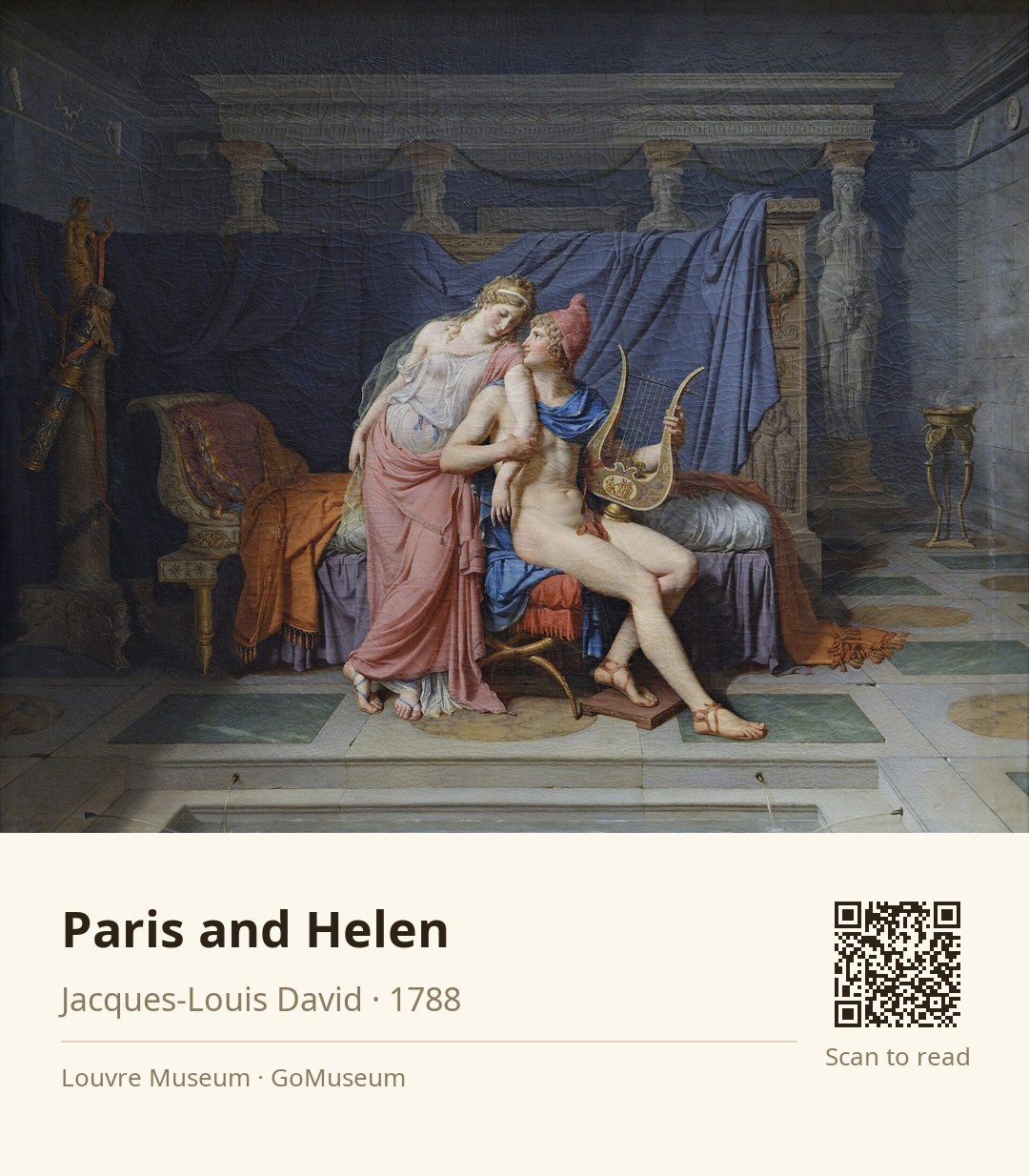
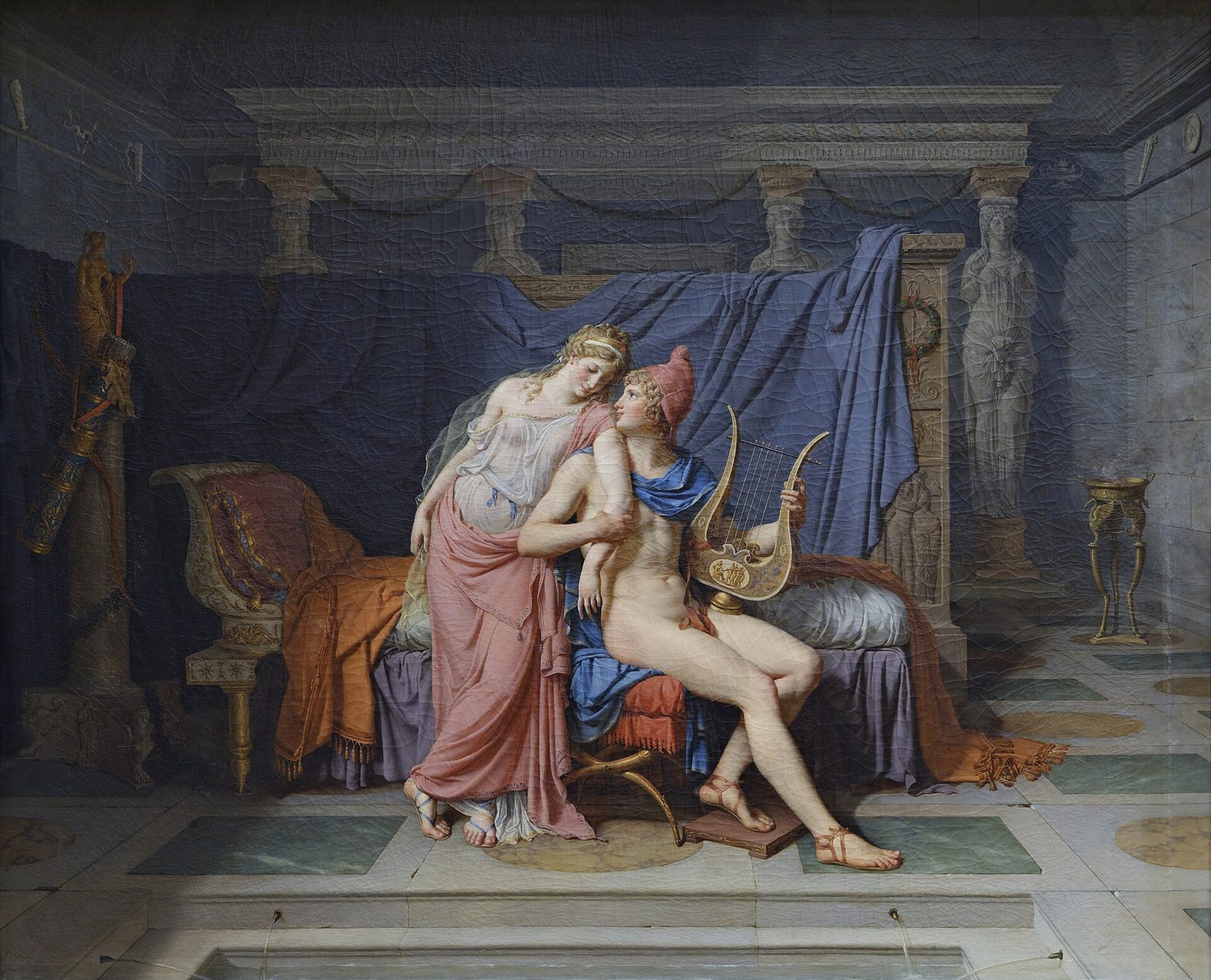
🎧 This work has audio narration — listen in the appAs you stand before Jacques-Louis David's "Paris and Helen," take a moment to really absorb the scene. Notice how Paris, with his confident posture, leans in toward Helen, who gazes at him with a mix of longing and uncertainty. Their expressions are a captivating dance of desire and hesitation, perfectly encapsulating the tension of their fabled love story.
These details matter because they reveal the emotional complexity that David masterfully captures. This isn’t just a romantic moment; it’s a commentary on the nature of love itself, reflecting the societal norms of the late 18th century. David, known for his neoclassical style, uses these figures to critique the frivolity of the aristocracy, subtly mocking the very patrons who commissioned the work, like the comte d'Artois.
Created in 1788, this painting marks a pivotal moment in David's career, transitioning from grand historical narratives to more intimate, personal stories. It’s a time when the ideals of the Enlightenment were beginning to challenge the established order, much like the relationship between Paris and Helen, which ultimately leads to the Trojan War.
As you take in this striking tableau, think about the choices we make in love and the consequences they can bring. What do you think David is trying to say about desire and duty in this moment?
Jacques-Louis David was a pivotal French painter born on August 30, 1748, in Paris. He emerged as the leading figure of the Neoclassical movement, marking a significant shift in artistic taste from the frivolity of Rococo to a more austere and emotionally charged classical style. His early life was marked by personal tragedy, losing his father at a young age, which shaped his character and determination to pursue art against familial expectations.
David's career flourished during the tumultuous political landscape of France, where he became an ardent supporter of the French Revolution, aligning himself with figures like Robespierre. His political engagement influenced his art, producing iconic works such as "The Death of Marat" and "The Coronation of Napoleon," which reflect both historical narratives and his personal convictions. After the fall of Napoleon, David faced exile but continued to influence generations of artists, establishing a legacy that shaped academic painting in the early 19th century. His works remain celebrated in major museums, particularly the Louvre, solidifying his status as a cornerstone of Western art history. David's life and art were inextricably linked to the evolving identity of France, embodying the spirit of revolution and the quest for artistic integrity.
Jacques-Louis David's 'Paris and Helen' was painted in 1788, commissioned by the comte d'Artois, a prominent figure of the French aristocracy. This painting emerged during a transformative period in David's career, shifting from grand historical narratives to more intimate portrayals. Critics interpreted it as a satire on the frivolous manners of the comte d'Artois himself, reflecting the growing tensions of the late 18th century. The painting's provenance is notable as it now resides in the Louvre Museum, a testament to its enduring significance in the art world.
In 'Paris and Helen', David employs a meticulous technique that showcases his mastery of neoclassical style. The brushwork is both precise and expressive, creating a sense of movement and emotional depth. Notice how the figures are arranged in a triangular composition, drawing your eye toward the central interaction between Paris and Helen. The use of light is particularly striking; it highlights their faces, enhancing the emotional tension between desire and hesitation. This careful handling of light and color, along with the thoughtful composition, amplifies the painting's impact, inviting viewers to engage with the complex narrative unfolding before them.
This work, commissioned by the comte d'Artois, captures the mythological figures of Helen of Troy and Paris, embodying the ideals of beauty and heroism that were central to the Neoclassical movement. David's approach marked a departure from the frivolity of Rococo, steering art towards a more serious and moralistic tone that resonated with the political climate of the time. Remember, this was more than just a painting; it was a statement that helped redefine the role of art in society, pushing it toward a more profound engagement with history and morality.
Did you know that Jacques-Louis David's painting 'Paris and Helen' was actually commissioned by the comte d'Artois? But here's the twist: many art critics of the time interpreted it as a sly satire on the comte's own lavish lifestyle and manners. Imagine a painting that was meant to please a patron but ended up poking fun at him instead! David was in his 'galante' phase, which added layers of intrigue to this work, making it not just a depiction of mythological figures, but also a commentary on the society surrounding him.
David faced significant challenges in his youth, including the death of his father and struggles with speech due to a facial tumor, which fueled his passion for drawing and ultimately led him to pursue a career in painting against his family's wishes.