Self-portrait Bare-headed with Gold Chain
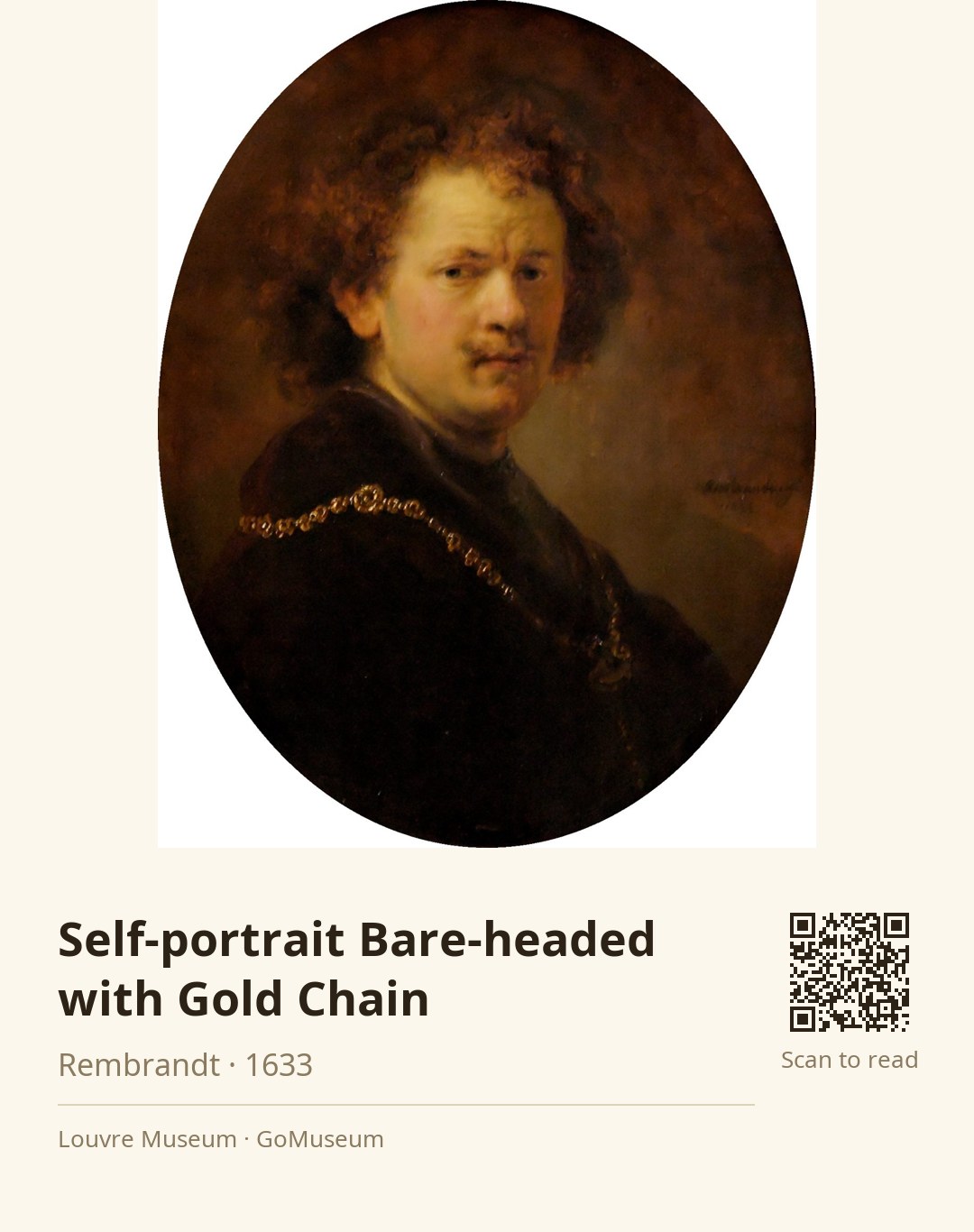
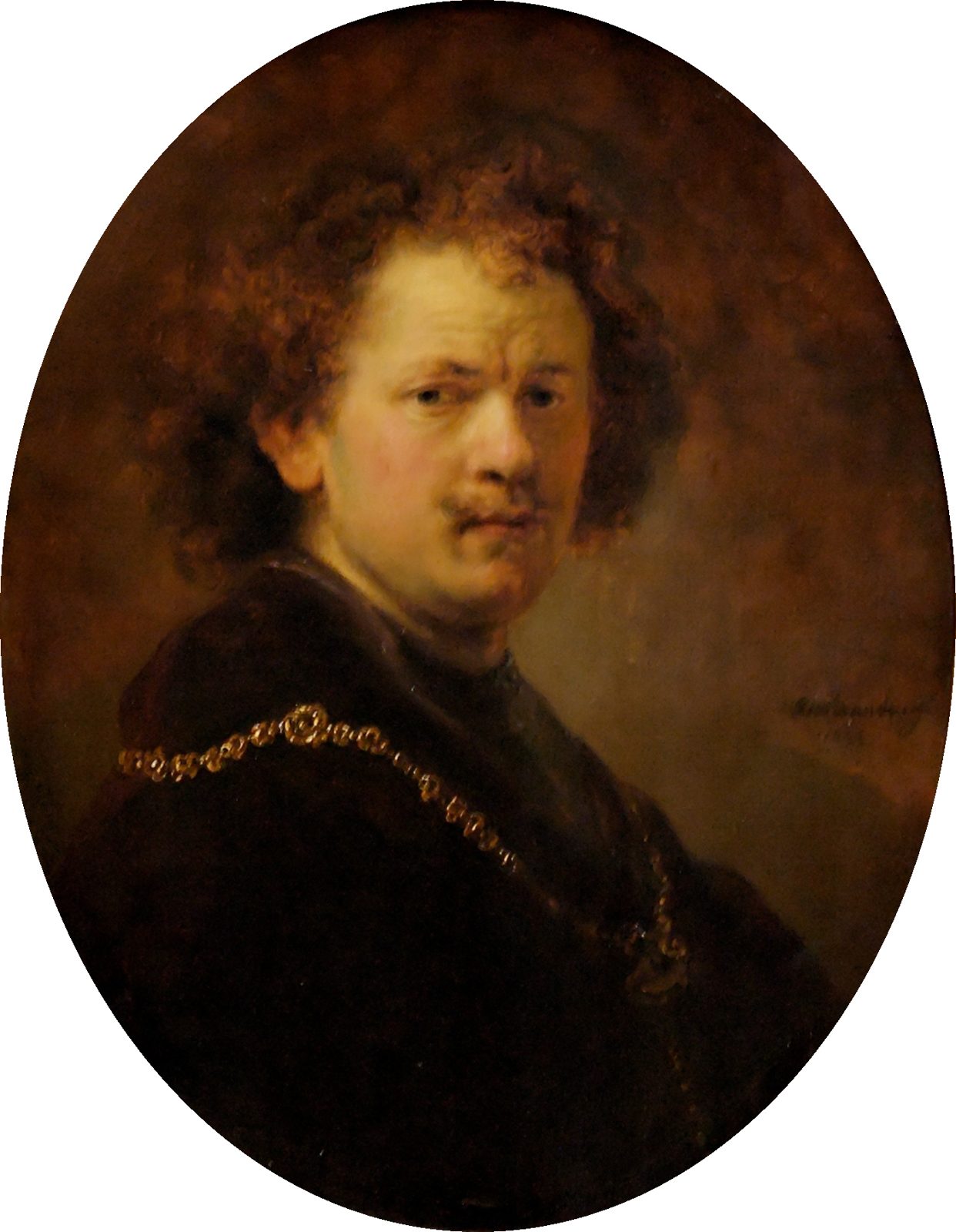
🎧 This work has audio narration — listen in the appThe gold chain draped around the neck of the man in this self-portrait catches the light, contrasting beautifully with the dark fabric of his garment. His curly hair frames a face that gazes directly at you, inviting a connection that feels both intimate and immediate. The warm, muted brown background enhances the lifelike quality of his expression, making it almost as if he’s stepping out of the canvas to engage with you.
This portrayal, created in 1633, reflects Rembrandt's mastery in capturing not just likeness but the very essence of his subjects. The choice to present himself bare-headed suggests a vulnerability and honesty, a departure from the more formal representations typical of his contemporaries. The gold chain, a symbol of wealth and status, juxtaposes this vulnerability, hinting at the duality of his life as both a celebrated artist and a man facing personal struggles.
Rembrandt's self-portraits serve as a visual autobiography, chronicling his evolution as an artist and individual. Over his lifetime, he created around one hundred self-portraits, making them a significant part of his oeuvre. This particular work stands as a testament to his ability to blend personal narrative with artistic innovation.
Rembrandt Harmenszoon van Rijn, born on July 15, 1606, in Leiden, was a pivotal figure of the Dutch Golden Age and is celebrated as one of the greatest artists in Western art history. His oeuvre includes around three hundred paintings, three hundred etchings, and numerous drawings, showcasing a remarkable range of styles and subjects, from intimate portraits to grand historical and biblical scenes.
Rembrandt's artistic journey began in Leiden, where he was influenced by both Dutch and Italian masters. He opened his studio in 1625 and quickly gained recognition for his portrait work. His move to Amsterdam marked a significant turning point, as he became a sought-after portraitist and married Saskia van Uylenburgh, a union that brought both joy and tragedy. The couple faced immense personal losses, including the deaths of their children and Saskia's own passing in 1642, which deeply affected his work.
Despite financial struggles later in life, Rembrandt's innovative techniques, particularly in etching, transformed the medium into a respected art form. His mastery of light and shadow, known as chiaroscuro, and his empathetic portrayal of human experience set him apart from his contemporaries. Rembrandt's legacy endures through his profound ability to capture the complexities of the human condition, making him a cornerstone of art history.
In this self-portrait, Rembrandt employs oil on wood, a medium that allows for rich texture and depth. The brushwork is masterful; you can see the smooth transitions of color that create lifelike skin tones and the intricate details of his curly hair. The gold chain is painted with a finesse that captures its reflective quality, contrasting sharply against the dark fabric of his garment. The warm brown background serves to enhance the figure, drawing your attention directly to his expressive face. The composition is intimate, with Rembrandt occupying most of the canvas, which invites a personal connection with the viewer.
Jan Lievens was a friend and colleague of Rembrandt with whom he shared a studio early in his career.