The Raft of the Medusa
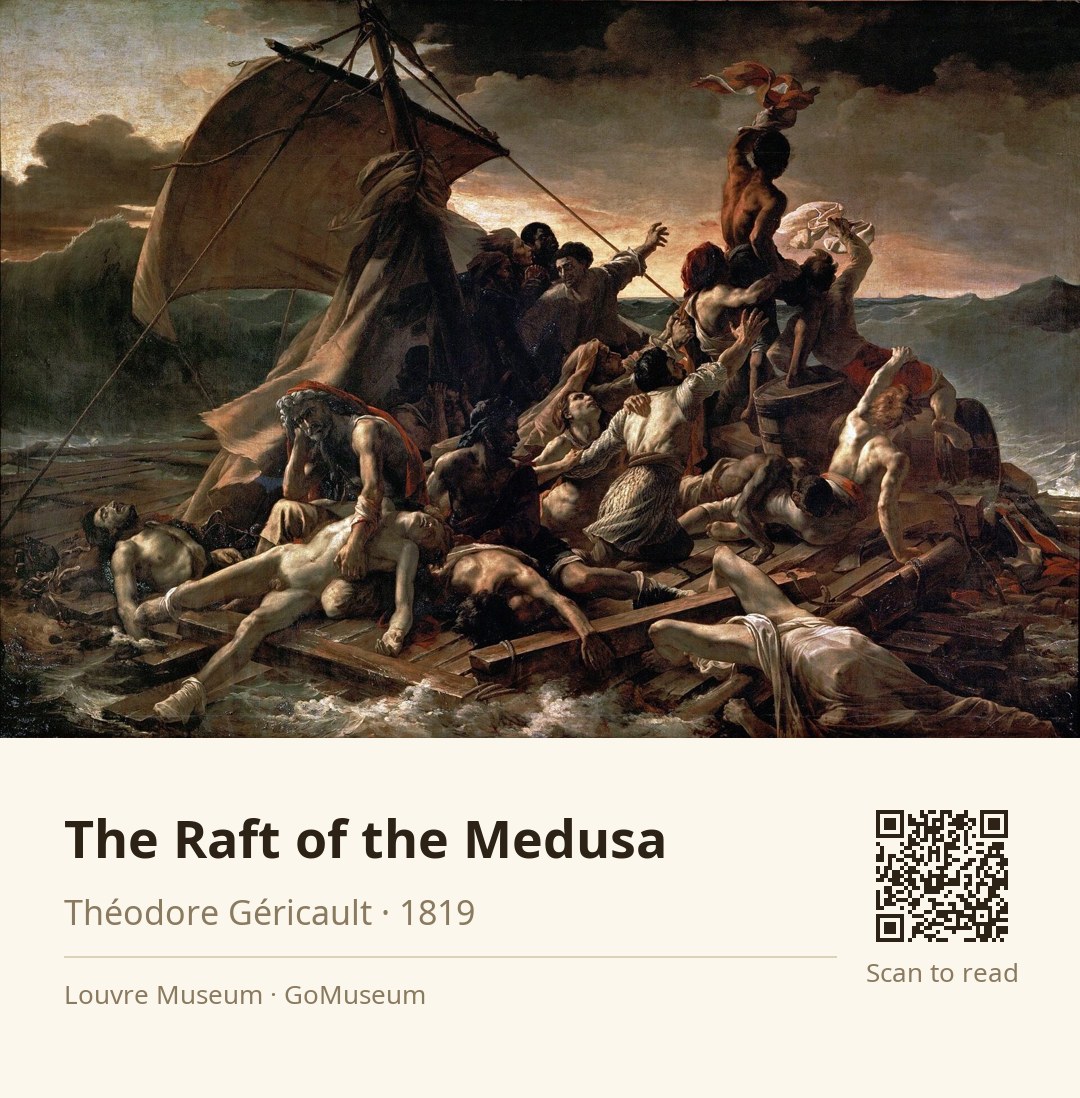
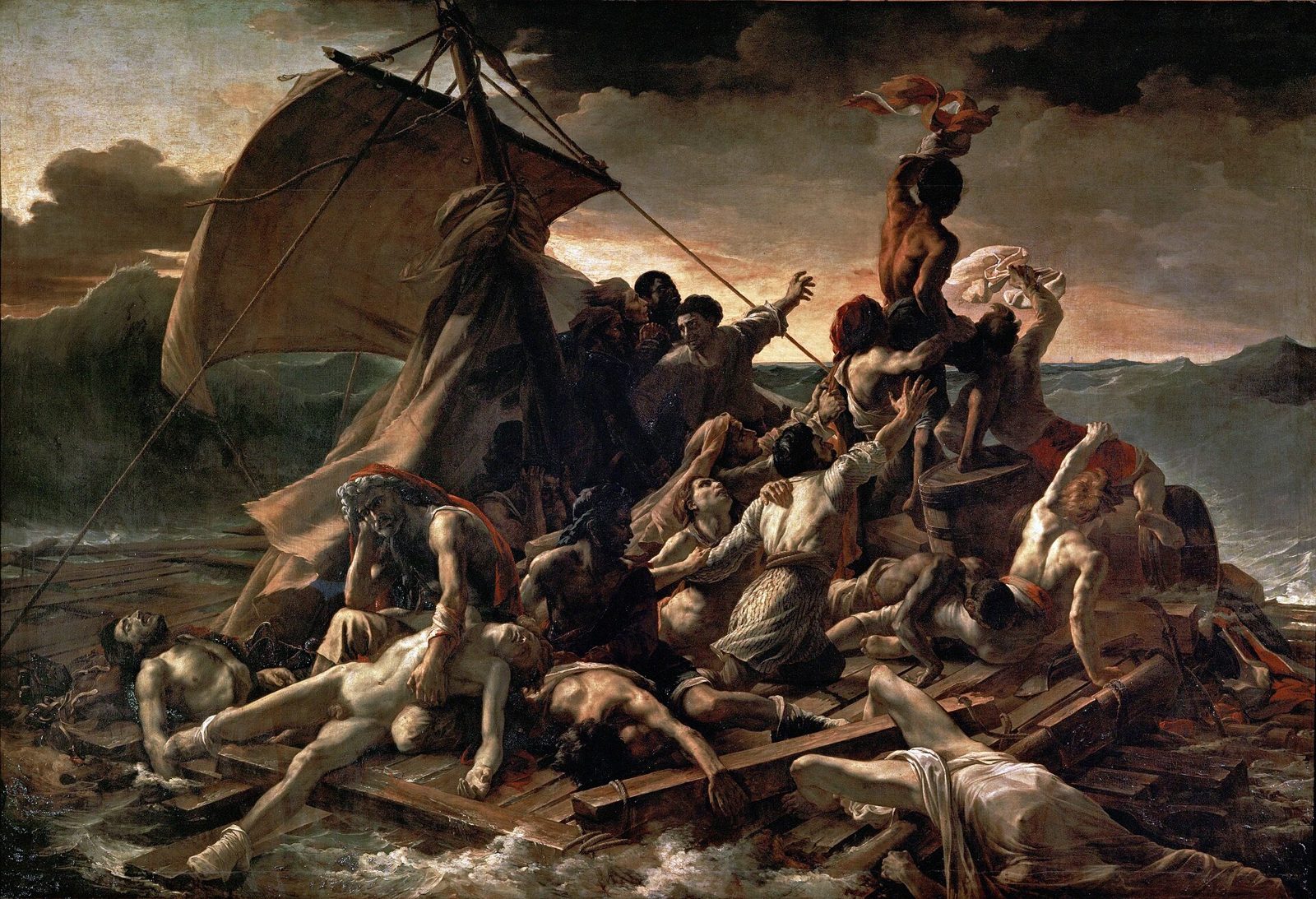
🎧 This work has audio narration — listen in the appTake a moment to really absorb the intensity of Théodore Géricault's "The Raft of the Medusa." Look closely at the figures, especially the man at the top, desperately waving his arms. Can you feel the sheer desperation radiating from him? Now, notice the stark contrast between the dark, chaotic mass of bodies on the raft and the bright, almost ethereal light illuminating the distant ship on the horizon. This isn’t just a painting; it’s a powerful statement about survival and the human spirit in the face of unimaginable despair.
These details matter because they encapsulate the horror of a real-life shipwreck that took place in 1816, where over 150 people were left adrift on a makeshift raft after the French frigate Méduse ran aground. Géricault didn’t just paint a scene; he captured the raw emotion of tragedy and the struggle against nature, reflecting the societal outrage at the incompetence of the captain who abandoned his crew. This painting became a symbol of Romanticism, highlighting the conflict between man and the elements, and challenging the calm order of Neoclassicism.
Géricault was only 27 when he created this monumental work, dedicating himself to extensive research, including interviews with survivors and visits to morgues to study the human form in death. His commitment to authenticity and emotional depth set a new standard in art, making "The Raft of the Medusa" a pivotal piece in the history of painting.
As you stand here, think about the stories behind the faces. What do you imagine they were feeling in those harrowing moments? How does this painting resonate with our own struggles today?
Jean-Louis André Théodore Géricault was a French painter and lithographer born on September 26, 1791, in Rouen. He moved to Paris as a child, where his artistic talent was nurtured by family connections in the art world. Géricault's life was marked by a passionate pursuit of art, characterized by a fascination with the human condition and dramatic themes. His early works, influenced by the classical tradition, evolved into a distinctive style that bridged Neoclassicism and Romanticism.
Géricault's most renowned painting, The Raft of the Medusa, created between 1818 and 1819, reflects his deep engagement with contemporary issues, depicting the aftermath of a tragic shipwreck that became a national scandal. This monumental work showcased his ability to convey intense emotion and the struggle against nature, establishing him as a pioneer of the Romantic movement. Despite his brief life—he died at just 32—Géricault's innovative approach and exploration of human suffering left a lasting impact on the art world, influencing future generations of artists. His legacy endures, celebrated for its emotional depth and dramatic intensity.
In the summer of 1816, the French frigate Méduse set sail under the command of Viscount Hugues Duroy de Chaumareys, a captain whose appointment was steeped in political favoritism rather than merit. This ill-fated voyage aimed to restore French colonial power in Senegal, but poor navigation led the ship to run aground off the coast of Mauritania on July 2. With only limited lifeboats available, 147 people were hastily loaded onto a makeshift raft, which soon became a floating hell. After being abandoned by the boats meant to rescue them, the survivors faced starvation, dehydration, and even cannibalism over the next 13 harrowing days. The scandal of the shipwreck ignited public outrage, particularly against the captain's incompetence, and became a national talking point. Géricault, only 27 at the time, was captivated by the tragedy and chose to depict this moment for his first major work, which he unveiled at the Paris Salon in 1819. The painting sparked intense debate, garnering both fervent praise and sharp criticism, but it ultimately established Géricault's reputation as a leading figure in the Romantic movement. The Louvre acquired the painting shortly after Géricault's untimely death in 1824, ensuring its place in art history.
As you stand before Géricault's monumental canvas, take a moment to appreciate the sheer scale of this work—over 16 feet tall and nearly 24 feet wide. The size alone commands attention, but it’s the technique that truly captivates. Géricault employed a dramatic interplay of light and shadow, using chiaroscuro to enhance the emotional weight of the scene. Notice how the figures are arranged in a pyramidal composition, drawing your eye toward the desperate man at the top, waving for help. The brushwork feels restless, almost frenetic, capturing the chaos and despair of the moment. Géricault's choice of color is striking, with deep, dark tones contrasting sharply against the lighter hues of the distant ship, symbolizing hope amidst despair. Each figure is rendered with a raw, visceral quality, showcasing Géricault's meticulous studies of anatomy, which he undertook in morgues and hospitals. This attention to detail not only adds realism but also amplifies the emotional impact, making the viewer feel the weight of their suffering. The painting's dramatic tension and emotional depth mark a significant departure from the calm order of Neoclassicism, paving the way for the expressive freedom of Romanticism.
Created by Théodore Géricault in 1819, this monumental work became a defining piece of French Romanticism, illustrating not only a tragic shipwreck but also the darker side of human nature and political incompetence. Géricault's intense research, including interviews with survivors and visits to morgues, imbued the painting with a raw, visceral energy that challenged the calm, orderly aesthetics of Neoclassicism. Its dramatic portrayal of suffering and survival resonated deeply, influencing artists like Eugène Delacroix and Gustave Courbet, and paving the way for future explorations of emotion and realism in art.
One intriguing aspect of Géricault's process was his dedication to authenticity. He didn't just rely on imagination; he interviewed survivors of the shipwreck and even constructed a detailed scale model of the raft to ensure accuracy in his depiction.
Géricault's family had close ties to the French navy, with relatives involved in colonial affairs and even a naval officer who died defending French interests in West Africa. This background likely influenced his fascination with maritime subjects and the tragic events surrounding the Méduse shipwreck.
Géricault's commitment to authenticity included interviewing survivors of the shipwreck and constructing a detailed scale model of the raft, which allowed him to accurately depict the scene's emotional and physical realities. His visits to morgues to study the human form further enhanced the painting's visceral quality.
Upon its debut at the Salon of 1819, The Raft of the Medusa sparked intense controversy, receiving both passionate praise and sharp criticism. This divisive reception highlighted the painting's bold departure from Neoclassical ideals and its engagement with contemporary social issues.